Scale to Grams
Can Your Phone Actually Weigh Things? The Honest Answer
Quick Answer
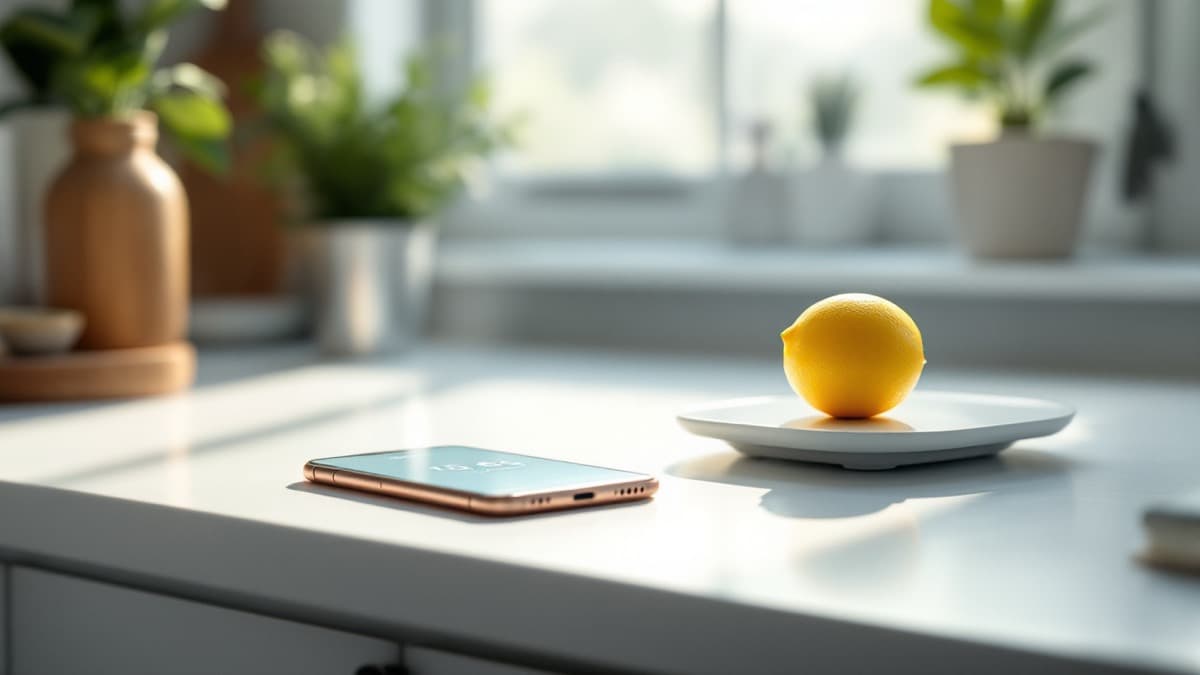
Phones have no hardware that measures weight, so any app claiming your screen is a scale is a novelty or a prank. What genuinely works is AI photo estimation: identify the object, use visual reference points for size, and estimate weight from density data. Expect roughly 85-90% accuracy - good for cooking, portions and everyday questions, not for jewelers or pharmacists.
Try the AI Digital ScalePhones with weight sensors
0
No model, any brand
AI photo estimation
~85-90%
typical accuracy
Real scale
99.9%
still the precision king
The Short Answer: There Is No Weight Sensor in Your Phone
No smartphone ever shipped with hardware that measures mass. A real scale works with load cells - components that deform microscopically under weight and convert that deformation into an electrical signal. Phones simply do not contain them. The sensors a phone does have (accelerometer, gyroscope, barometer, camera) measure motion, orientation, air pressure and light, none of which respond to an object resting on the screen. Apple removed pressure-sensitive 3D Touch screens years ago, and even those measured touch force, not weight, and were never accurate enough to weigh objects.
So What Are All Those "Scale Apps" Doing?
They fall into three buckets. Prank apps show a fake needle that settles on a random or preset number - entertainment, clearly labeled or not. Vibration or touch-area apps try to infer weight from how a finger press or a vibrating object dampens the accelerometer signal; results are wildly inconsistent and limited to a few grams. And AI photo estimation apps do something completely different: they never claim to sense weight, they look at a photo, recognize what the object is, estimate its size from visual references, and calculate weight from known density data. Only the third category produces genuinely useful numbers.
How AI Photo Weight Estimation Actually Works
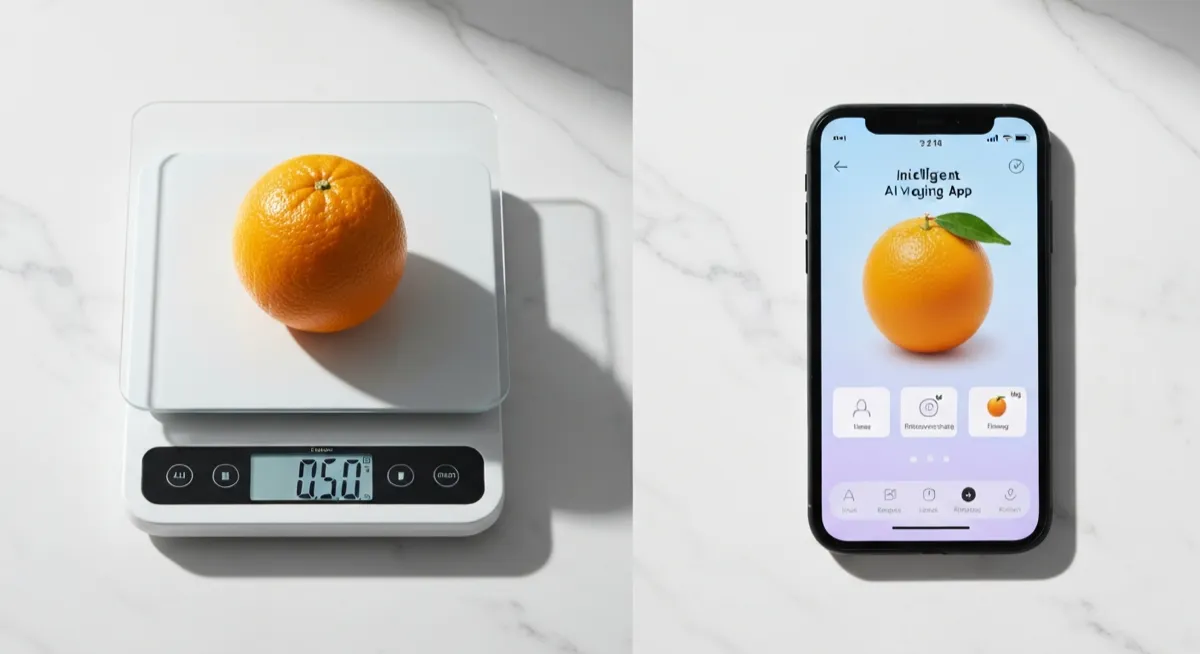
When you upload a photo to an AI scale, three things happen. First, the model identifies the object - a banana, a letter, a gold ring, a chicken breast. Second, it estimates real-world size using reference objects in frame (a hand, a coin, a plate, standard packaging) and perspective cues. Third, it combines size with density data for that object class: a medium banana runs 118g, printer paper is 4.5g per sheet, cooked rice is about 200g per cup. The output is an estimate with an error range, not a sensor reading - and for most everyday questions, that is exactly enough.
| Method | Range | Typical accuracy | Verdict |
|---|---|---|---|
| Prank needle apps | Any (fake) | 0% | Entertainment only |
| Vibration/touch tricks | 1-100g | Very poor, inconsistent | Novelty, not usable |
| AI photo estimation | Grams to tons | ~85-90% | Genuinely useful |
| Real digital scale | 0.01g-180kg | 99.9%+ | Unbeatable for precision |
When AI Estimation Is Good Enough
Portion sizes and calorie tracking, checking if a letter needs extra postage, estimating produce weight at home, luggage sanity-checks before the airport, ballparking a package for shipping labels, settling "how heavy is that" debates. In all of these, being within 10-15% changes nothing about the decision you are making, and the phone you are holding beats the scale you do not own.
When You Still Need a Real Scale
Precious metals and gemstones, medication, baking recipes where hydration ratios matter, legal or commercial weighing, and anything where a 10% error costs real money. A basic kitchen scale costs $10-15 and a 0.01g jewelry scale about $20 - if you weigh these categories weekly, buy the hardware and use AI estimation for everything else.
Why This Question Matters More Than It Seems
The app stores are full of scale apps with millions of downloads and one-star reviews from people who expected their screen to weigh gold. Knowing the physics protects you from wasting time on vibration gimmicks and from dismissing the approach that does work. The honest pitch for AI weighing is simple: it is not a sensor, it is an educated expert guess made in two seconds from a photo - and for everyday life, an expert guess is usually all you needed.
Frequently Asked Questions
Can an iPhone weigh grams with the screen?+
No. iPhones have no weight-sensing hardware. Older 3D Touch models could crudely rank touch pressure, but Apple removed that hardware, and it was never able to weigh objects. Any app claiming otherwise is a novelty.
Are Android "working scale" apps real?+
A few honestly try to infer tiny weights from vibration damping using the accelerometer. They require a perfectly balanced setup, work only over a few grams, and drift badly. Fun experiment, not a measurement tool.
How accurate is weighing by photo?+
For recognizable objects with visible size references, AI estimation typically lands within 10-15% of a real scale. Accuracy drops for unusual objects, extreme close-ups without references, or containers whose contents are hidden.
Can AI weigh something in a photo taken earlier?+
Yes - that is one advantage over any physical scale. Any clear photo works, including old ones, as long as the object and some size reference are visible.
Try These Tools
Put what you learned into practice with our free AI tools: