Scale to Grams
How Much Does a Cup of Flour Weigh? The Baking Guide
Quick Answer
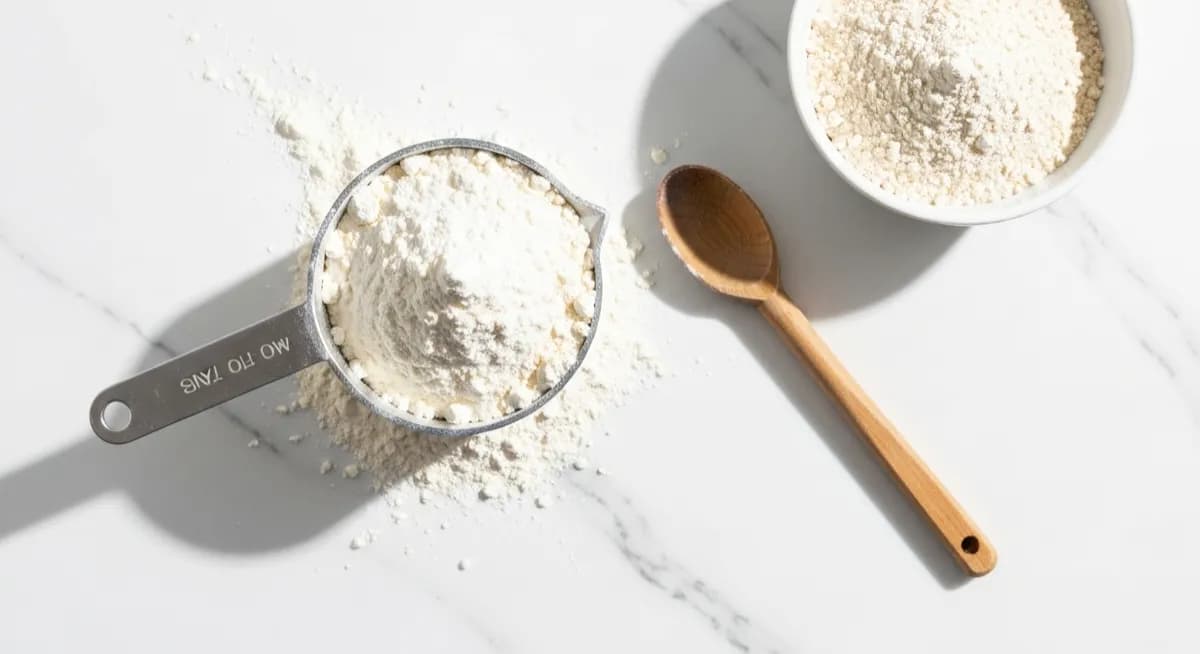
A US cup of all-purpose flour weighs 4.4 oz (125g) when spooned and leveled. Scooping directly from the bag packs in 4.9-5.6 oz (140-160g), enough extra flour to dry out a cake. For consistent baking, weigh in grams.
Try the AI Kitchen ScaleAll-purpose (spooned)
4.4 oz
125g per US cup
Scooped from bag
4.9-5.6 oz
140-160g, too much
1 lb of flour
~3.6 cups
roughly 450g
Cup of Flour Weight by Type
Different flours have different densities, so a cup is not interchangeable across types.
| Flour type | Per cup (oz) | Per cup (g) |
|---|---|---|
| All-purpose | 4.4 oz | 125g |
| Bread flour | 4.5 oz | 127g |
| Cake flour | 4.0 oz | 114g |
| Whole wheat | 4.5 oz | 128g |
| Self-rising | 4.4 oz | 125g |
| Almond flour | 3.4 oz | 96g |
| Coconut flour | 4.5 oz | 128g |
| Rye flour | 3.6 oz | 102g |
| Tapioca starch | 4.2 oz | 120g |
Why Flour Measurement Ruins Recipes
Scooping a cup directly into the flour bag packs in an extra 15-35g per cup. Across a 4-cup recipe that is up to 140g (almost a full extra cup) of flour. Result: dry, dense, crumbly baked goods. This single error causes more baking failures than any other.
The Spoon-and-Level Method
Fluff the flour with a fork to aerate. Spoon into the cup until heaped over the rim. Never tap or shake. Level with a knife edge. Takes 15 seconds longer than scooping and gives you a true 125g per cup for all-purpose.
Why Pros Use a Scale
Professional bakers weigh in grams: faster, more accurate, fewer dishes. A $10-15 kitchen scale pays for itself the first time your bread actually rises. Weigh into the same bowl, zero between each ingredient.
Recipe Conversions
1 tbsp all-purpose = 0.28 oz (8g). 1 lb (450g) = ~3.6 cups. 5 lb bag = ~18 cups. UK and Australian cups are 250ml (130g of flour), not the US 240ml (125g). Always trust the gram weight over the cup count when both are listed.
Frequently Asked Questions
How many grams in a cup of flour?+
A US cup of all-purpose flour weighs about 125 grams when spooned and leveled. Bread flour is 127g, cake flour is 114g, whole wheat is 128g.
How many cups in a pound of flour?+
A pound (450g) of all-purpose flour is about 3.6 cups when measured by spooning. A standard 5-pound bag holds about 18 cups.
Why does my flour weigh more than 125g per cup?+
You are scooping the cup directly into the bag, which packs the flour. Use the spoon-and-level method (fluff, spoon into cup, level with knife) to get the true 125g per cup.
Is bread flour heavier than all-purpose?+
Yes, slightly. Bread flour weighs 127g per cup vs 125g for all-purpose because of higher protein content and slightly tighter milling.
How much does 2 cups of flour weigh?+
2 US cups of all-purpose flour weigh 8.8 oz (250g) when spooned and leveled. Scooped from the bag, the same 2 cups can weigh 10-11 oz (280-320g).
Should I weigh flour in grams or measure in cups?+
Weigh in grams for any recipe where texture matters: bread, cakes, pastry. Cups are fine for forgiving recipes like cookies and quick breads where 10-15g is not catastrophic.
Try These Tools
Put what you learned into practice with our free AI tools: