Scale to Grams
How Much Does a Cup of Butter Weigh? Sticks, Grams & Tablespoons
Quick Answer
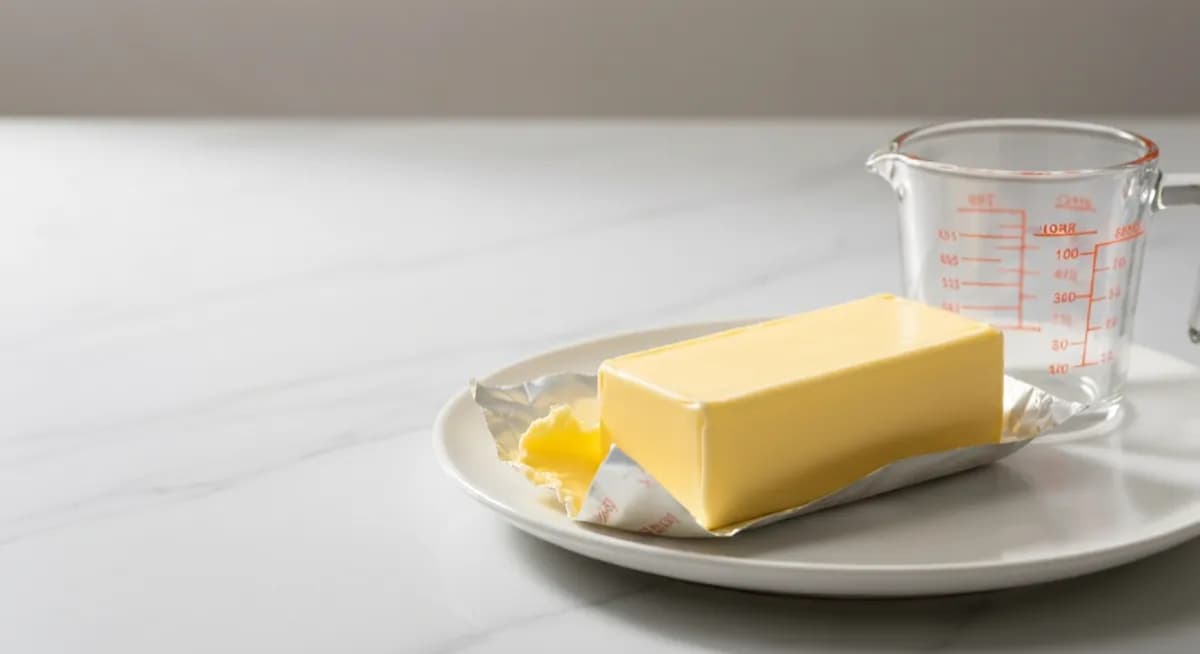
A US cup of butter weighs exactly 8 oz (227g) and equals 2 sticks. Each stick is 4 oz (113g) or 1/2 cup. One tablespoon of butter is 0.5 oz (14g) and 102 calories.
Try the AI Kitchen Scale1 cup of butter
8 oz
227g, 2 sticks, 1,628 cal
1 stick of butter
4 oz
113g, 1/2 cup, 810 cal
1 tbsp butter
0.5 oz
14g, 102 cal
Butter Conversion Chart
US butter is the most consistent baking ingredient because sticks are standardized to exactly 4 oz (113g).
| US measure | Sticks | Weight (oz) | Weight (g) |
|---|---|---|---|
| 1 tbsp | 1/8 stick | 0.5 oz | 14g |
| 2 tbsp | 1/4 stick | 1 oz | 28g |
| 1/4 cup (4 tbsp) | 1/2 stick | 2 oz | 57g |
| 1/3 cup | ~2/3 stick | 2.7 oz | 76g |
| 1/2 cup (8 tbsp) | 1 stick | 4 oz | 113g |
| 2/3 cup | ~1.3 sticks | 5.3 oz | 151g |
| 3/4 cup | 1.5 sticks | 6 oz | 170g |
| 1 cup (16 tbsp) | 2 sticks | 8 oz | 227g |
| 1 lb (US box) | 4 sticks | 16 oz | 454g |
Butter Calories
Butter is one of the most calorie-dense common foods at 717 cal per 100g. 1 tbsp = 102 cal. 1 stick = 810 cal. 1 cup = 1,628 cal. Macros are almost pure fat: 1 cup = 184g fat (115g saturated), 2.4g carbs, 1.9g protein.
Measuring Butter Correctly
Cold butter: cut at the tablespoon marks on the wrapper. Softened: pack into a dry cup with no air gaps, level with a knife. Melted: measure as a liquid in a measuring cup with a spout. For European recipes in grams, use a scale.
European vs US Butter
European butter is 82-86% butterfat vs 80% for US butter. Slightly higher density and richer flavor. If a European recipe calls for 250g, use 1 cup + 1 tbsp of US butter. Worth using European butter for croissants, shortbread, and butter sauces where butter is the star.
Frequently Asked Questions
How many grams in a cup of butter?+
A US cup of butter weighs exactly 227 grams (8 oz). This equals 2 standard US sticks of butter.
How many tablespoons in a stick of butter?+
One US stick of butter is 8 tablespoons. The wrapper is marked at each tablespoon line, so you can cut exact amounts without a scale.
How much does a stick of butter weigh?+
A standard US stick of butter weighs 4 oz (113.5g) and equals 1/2 cup or 8 tablespoons. A pound box contains 4 sticks (16 oz / 454g total).
How many calories in a stick of butter?+
One stick (4 oz / 113g) of butter contains 810 calories, almost entirely from fat. One tablespoon has 102 calories.
How much butter is 250g?+
250g of butter is about 1 cup plus 1 tablespoon, or just over 2 US sticks. European butter is commonly sold in 250g blocks.
Can I substitute oil for butter in baking?+
Often yes, but use 3/4 the volume of butter (so 3/4 cup oil for 1 cup butter). Texture changes: cookies spread more, cakes are moister, pastry loses flakiness. Use neutral oils like canola for best swap.
Try These Tools
Put what you learned into practice with our free AI tools: