Scale to Grams
How to Weigh Yourself Without a Scale: 5 Creative Methods
Quick Answer
The easiest no-scale option is a public pharmacy or gym scale (CVS, Walgreens, Planet Fitness). At home, the height + waist circumference formula gets within 10-15% of your real weight. For exact tracking, a basic bathroom scale is $15-25.
Try the AI Digital ScalePharmacy scales
Free / $0.25
CVS, Walgreens, Rite Aid
Body formula accuracy
±10-15%
height + waist method
Basic bathroom scale
$15-25
cheapest accurate option
Where to Find a Free Public Scale
Most US adults have multiple free or cheap scale options within a few miles.
| Location | Cost | Accuracy |
|---|---|---|
| CVS / Walgreens / Rite Aid | Free or $0.25 | Good, calibrated regularly |
| Planet Fitness / 24 Hour Fitness | Free with day pass | Excellent, commercial scales |
| YMCA | Free with membership | Excellent |
| Doctor's office | Free at appointments | Excellent, medical grade |
| UPS / FedEx Office | Free or $0.50 | Excellent, NTEP certified |
| Truck stop CAT scale | $11-13 | Most accurate, by weight |
Estimate from Body Measurements
For US adults with average body composition, these formulas land within 10-15%. Use height and waist circumference. Men: Weight (lbs) ≈ (Waist in × 4.15) + (Height in × 1.25) - 128. Women: Weight (lbs) ≈ (Waist in × 3.45) + (Height in × 1.08) - 92. Less accurate for very muscular or very small/large individuals.
Bathroom Scale Subtraction Trick
If you have a working bathroom scale, weigh yourself once. Then to track changes day-to-day, hold a known weight (gallon of water = 8.34 lbs) and check the difference. Useful when your scale is acting up or you suspect drift.
Water Displacement Method
Fill a bathtub to a marked line. Get in, mark new line. The volume between marks in liters approximately equals your body weight in kg (human density ~985 kg per cubic meter). Accurate within 5-10% with careful water measuring. Mostly a curiosity.
Reference Weight Comparison
Lift two 5-gallon water bottles (~84 lbs total). If they feel like half your weight, you are roughly 170 lbs. Bags of cement come in 50, 60, or 80 lbs. Last doctor visit weight is reasonably current if your clothing fit has not changed.
Frequently Asked Questions
Where can I weigh myself for free?+
CVS, Walgreens, and Rite Aid pharmacies have scales (free or $0.25). Planet Fitness, 24 Hour Fitness, and YMCAs have free scales with membership or day passes. Your doctor's office weighs you at every appointment.
How accurate are pharmacy scales?+
Pharmacy scales are typically accurate to within 1-2 lbs because they are calibrated regularly. Truck stop CAT scales are the most accurate at within 0.2% (a few oz on a 200-lb person).
Can I estimate my weight from my height and waist?+
Yes. For men: (Waist in × 4.15) + (Height in × 1.25) - 128 = approximate weight in lbs. For women: (Waist in × 3.45) + (Height in × 1.08) - 92. Accurate within 10-15% for average-built adults.
How can I tell if I gained or lost weight without a scale?+
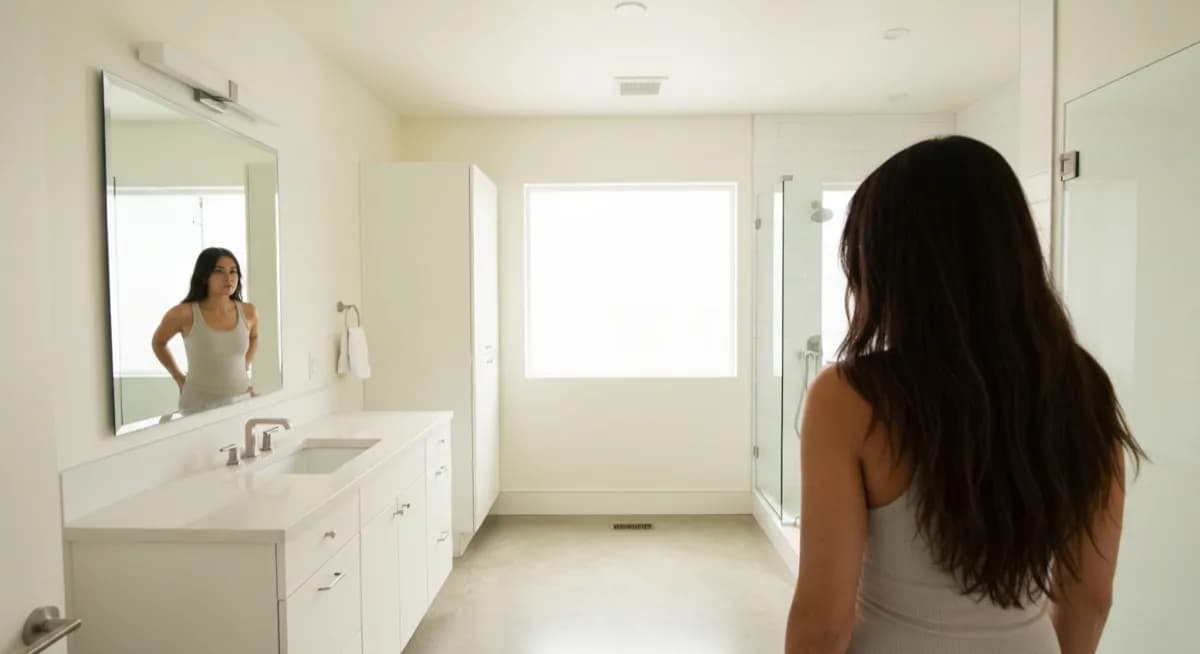
Track waist circumference (more sensitive than weight to body composition changes), use the same pair of jeans as a fit check, take monthly progress photos in the same lighting, or use the bathroom mirror waist test.
Are bathroom scales accurate?+
Quality bathroom scales ($30-60) are accurate within 1-2 lbs. Cheap scales ($10-15) drift over time. Smart scales add body composition estimates that are roughly accurate within 5-10% of DEXA results.
How much does a bathroom scale cost?+
A basic mechanical bathroom scale is $15-25. A digital scale with high accuracy is $30-50. Smart scales with body composition (Withings, Renpho) run $40-100. All are cheaper than the time spent estimating without one.
Try These Tools
Put what you learned into practice with our free AI tools: