Scale to Grams
How Much Does a Watermelon Weigh? Sizes, Rind & Edible Weight
Quick Answer
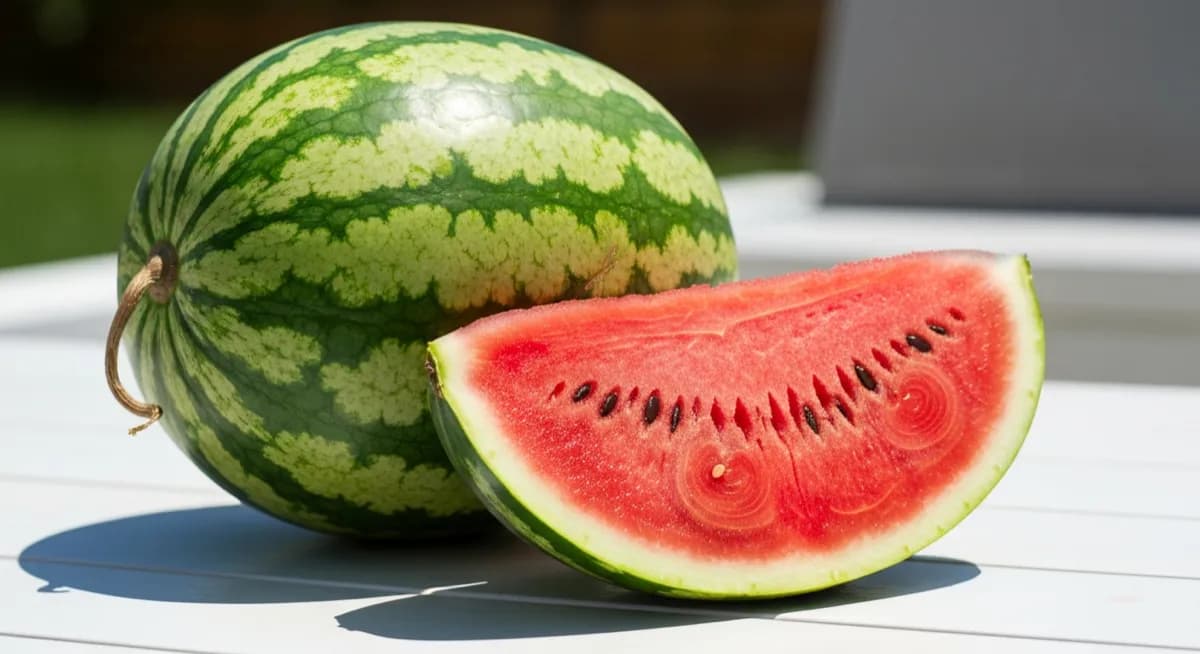
A medium watermelon weighs about 20 lbs (9 kg) and serves 10-15 people. About 68% is edible red flesh (13.5 lbs / 6.1 kg) and 32% is rind. Watermelon is the lowest-calorie common fruit at 30 cal per 100g.
Weigh Food From a PhotoMedium watermelon
20 lbs
9 kg, supermarket standard
Edible portion
68%
~13.5 lbs / 6.1 kg of flesh
Calories
~30 cal
per 100g flesh
Watermelon Weight by Size
Watermelons are one of the heaviest common fruits with a huge size range. The standard supermarket size is "medium" at about 20 lbs (9 kg).
| Size | Weight | Edible flesh | Servings |
|---|---|---|---|
| Personal / mini | 4-9 lbs / 2-4 kg | 2.7-6.1 lbs / 1.2-2.7 kg | 2-4 |
| Small | 9-15 lbs / 4-7 kg | 6.1-10 lbs / 2.7-4.6 kg | 6-8 |
| Medium | 15-25 lbs / 7-11 kg | 10-17 lbs / 4.6-7.5 kg | 10-15 |
| Large | 25-30 lbs / 11-14 kg | 17-20 lbs / 7.5-9.3 kg | 15-20 |
| Giant (competition) | 100+ lbs / 45+ kg | 68 lbs / 31 kg | 60+ |
Edible vs Rind Weight
About 68% of total weight is edible red flesh, 32% is rind. A medium 20 lb (9 kg) watermelon yields about 13.5 lbs (6.1 kg) of fruit. Plan 7-8 oz (200-250g) of edible fruit per person at a party. A medium watermelon serves 24-30.
Watermelon Calories
Watermelon is 91% water, which makes it the lowest-calorie common fruit at 30 cal per 100g. A 1-cup (150g) serving has only 46 calories. A standard 10 oz (280g) wedge (1/16 of a medium melon) has 84 calories.
Choosing a Heavy Watermelon
Heavier melons of the same visual size are juicier. Look for a creamy yellow field spot (where it sat on the ground) for full ripeness. The melon should feel heavy for its size, have a dull surface, and sound hollow when tapped.
Frequently Asked Questions
How much does a watermelon weigh?+
A medium supermarket watermelon weighs about 20 lbs (9 kg). Personal-size mini watermelons are 4-9 lbs (2-4 kg). Large can hit 25-30 lbs (11-14 kg).
How many calories in a watermelon?+
A whole medium watermelon (13.5 lbs / 6.1 kg of edible flesh) has about 1,830 calories. A single serving (1 cup / 150g) has 46 calories.
How many servings in a watermelon?+
A medium 20-lb watermelon serves 10-15 people as a side dish, or 24-30 people as a small dessert (7-8 oz / 200-250g per serving).
How much of a watermelon is edible?+
About 68% of a watermelon by weight is edible red flesh. The rind (white and green outer layer) accounts for 32%. The rind is technically edible (used in pickles), but most people discard it.
How much does a cup of watermelon weigh?+
One US cup of diced watermelon weighs about 5.3 oz (150g) and has 46 calories.
How can I tell if a watermelon is ripe by weight?+
Heavier of two same-sized melons is juicier. Look for a creamy yellow field spot (ripe), dull rind surface (not shiny), and a deep hollow sound when tapped. The melon should feel dense for its size.
Try These Tools
Put what you learned into practice with our free AI tools: