Scale to Grams
How to Weigh Food Without a Scale: 7 Practical Methods
Quick Answer
You can estimate food weight without a scale using hand portions (a fist is about 1 cup / 200g), an AI photo tool, or volume-to-weight conversions. For most cooking and calorie tracking, these methods land within 10-20% of a real scale.
Try the AI Food ScaleFist (cooked rice)
1 cup
~7 oz / 200g
Palm (meat)
3-4 oz
85-115g
AI photo accuracy
~85-90%
within 10-20% of scale
Hand Portion Method
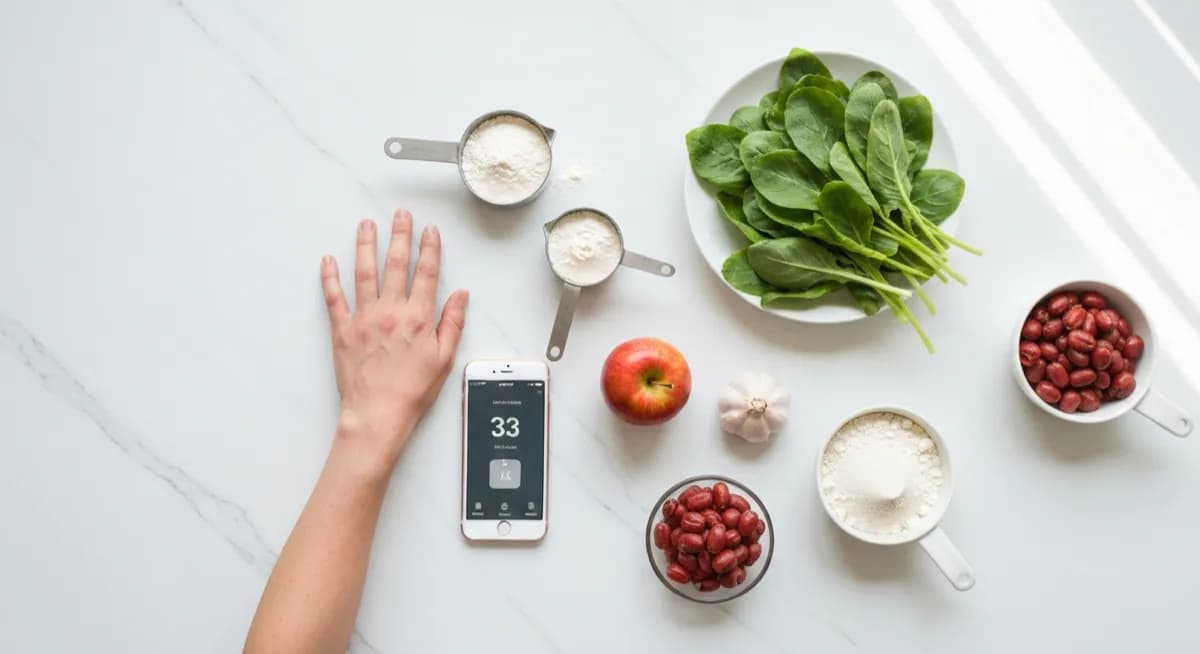
Your hand is the most reliable scale you always have. A clenched fist is about 1 cup (7 oz / 200g of cooked rice or pasta). A flat palm without fingers is about 3-4 oz (85-115g) of meat or fish, roughly a deck of cards. A cupped hand holds about 1 oz (28g) of nuts. A thumb tip is about 1 tablespoon (0.5 oz / 15g) of butter or peanut butter.
| Hand part | Portion | Use for |
|---|---|---|
| Fist | 1 cup / 7 oz / 200g | Rice, pasta, cereal |
| Palm (no fingers) | 3-4 oz / 85-115g | Meat, fish, poultry |
| Cupped hand | 1 oz / 28g | Nuts, seeds, snacks |
| Thumb tip | 1 tbsp / 0.5 oz / 15g | Butter, oils, peanut butter |
| Two thumbs | 2 tbsp / 1 oz / 30g | Salad dressing, cheese |
AI Photo Estimation
AI tools estimate weight from a single photo by identifying the food and using reference points (plate, utensils, hand) for scale. Snap from above, keep the lighting even, and you typically land within 10-20% of a real scale. Fastest method when you are eating out or traveling.
Volume-to-Weight Conversion
If you have measuring cups, you can convert to weight with standard ratios. Useful for baking and meal-prep when a recipe lists grams but you only own cups.
| Ingredient | 1 cup | 1/2 cup |
|---|---|---|
| All-purpose flour | 4.4 oz / 125g | 2.2 oz / 63g |
| Granulated sugar | 7 oz / 200g | 3.5 oz / 100g |
| White rice (uncooked) | 6.5 oz / 185g | 3.3 oz / 93g |
| Rolled oats | 3.2 oz / 90g | 1.6 oz / 45g |
| Milk or water | 8.5 oz / 240g | 4.2 oz / 120g |
| Butter | 8 oz / 227g | 4 oz / 113g |
Reference Object Weights
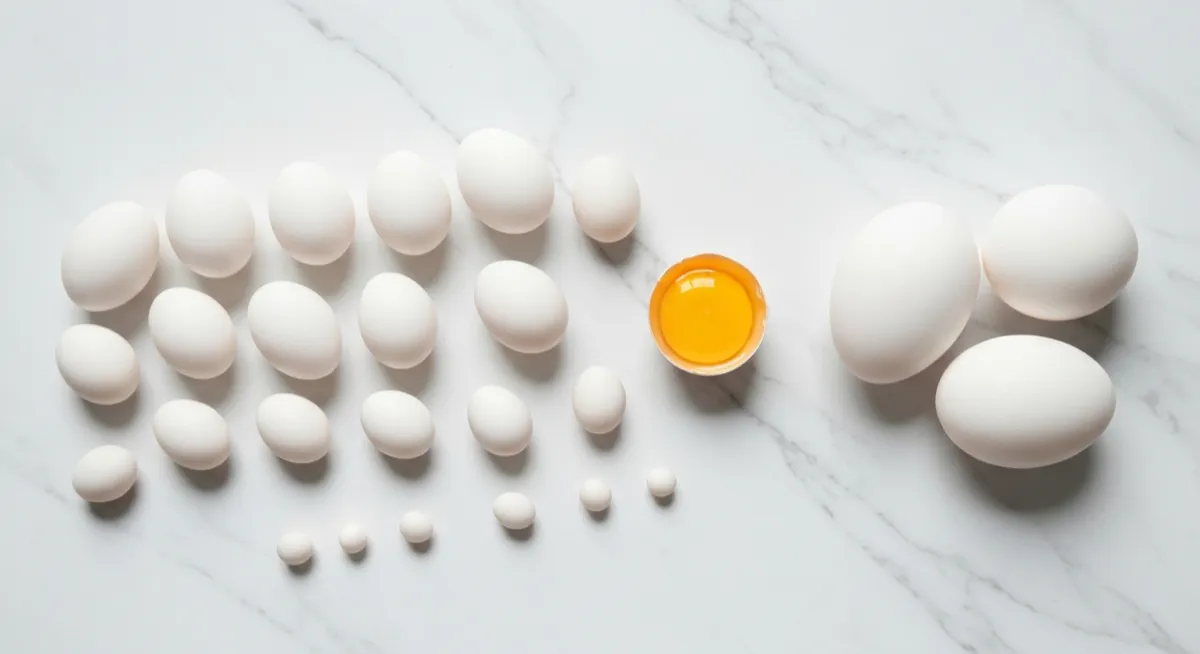
Memorize a few household reference weights and you can eyeball-compare anything against them. A US quarter is 0.2 oz (5.67g), a stick of butter is exactly 4 oz (113g), a standard smartphone is 6-7 oz (170-200g), and a Large egg is 2 oz (57g) with shell.
Count-Based Estimation
For uniform foods, counting times standard weight is faster than weighing. One almond is 0.04 oz (1.2g), so 20 almonds = 0.8 oz (24g). A grape is 0.18 oz (5g). A cherry tomato is 0.5 oz (15g). A slice of deli meat is 1 oz (28g).
Which Method Is Most Accurate?
For everyday cooking and tracking, AI photo estimation and hand portions are the most practical. Volume conversion is best for baking. Water displacement (1ml = 1g for water-dense foods) is the most precise for small irregular items. For exact baking, a $10-15 kitchen scale is still unbeatable.
Frequently Asked Questions
How accurate is weighing food without a scale?+
Hand portions and AI photo estimation are typically within 10-20% of a real scale, which is fine for calorie tracking and most cooking. For baking, use volume-to-weight conversions or a real scale.
How can I measure 4 oz of meat without a scale?+
Use your palm without fingers as a reference. A flat palm is about 3-4 oz (85-115g) of cooked meat or fish, roughly the size of a deck of cards.
How many grams is one cup without a scale?+
It depends on the ingredient. One US cup of flour is about 125g, sugar is 200g, rice is 185g, and water or milk is 240g.
Can my phone weigh food?+
Phones cannot physically weigh food, but AI tools can estimate weight from a photo. Tools like Scale to Grams analyze the image and reference objects to give an estimate within 10-20% of a real scale.
What weighs exactly 100 grams?+
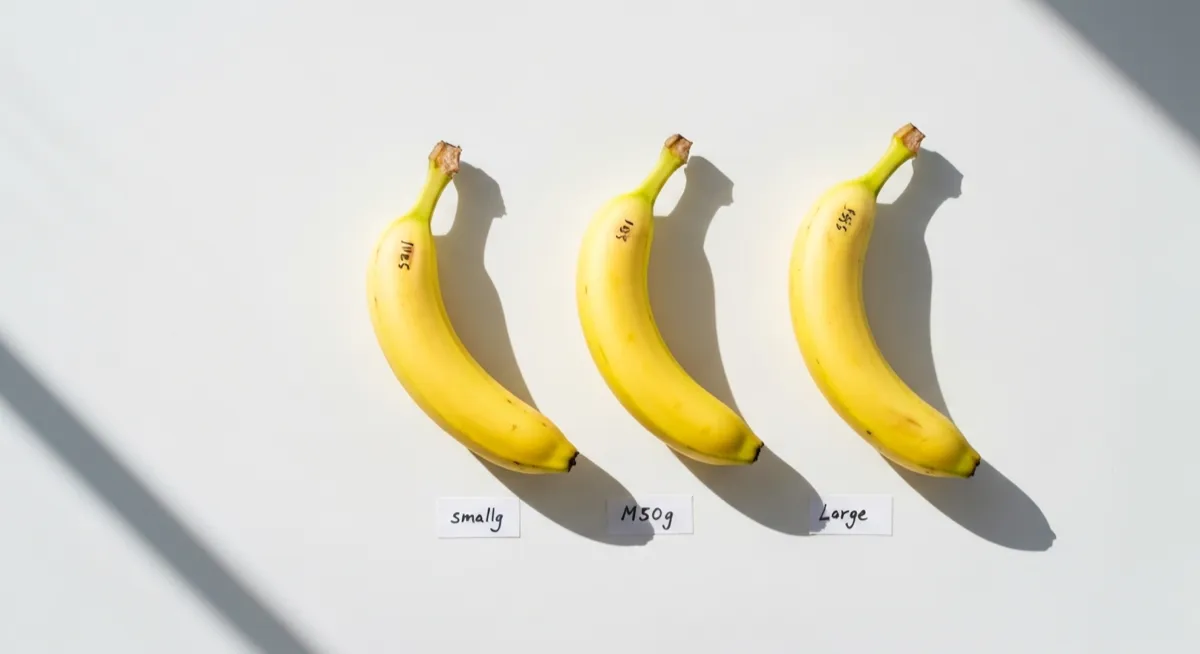
A medium banana (peeled) is about 100g. So is a deck of cards, a stick of butter cut to 88%, or 20 US quarters (5.67g each = 113g).
Is a kitchen scale worth buying?+
Yes if you bake, meal prep, or track calories closely. A basic digital kitchen scale costs $10-15 and pays for itself in better results and less guesswork.
Try These Tools
Put what you learned into practice with our free AI tools: