Scale to Grams
How to Translate Handwriting from a Photo: AI Handwriting Guide
Quick Answer
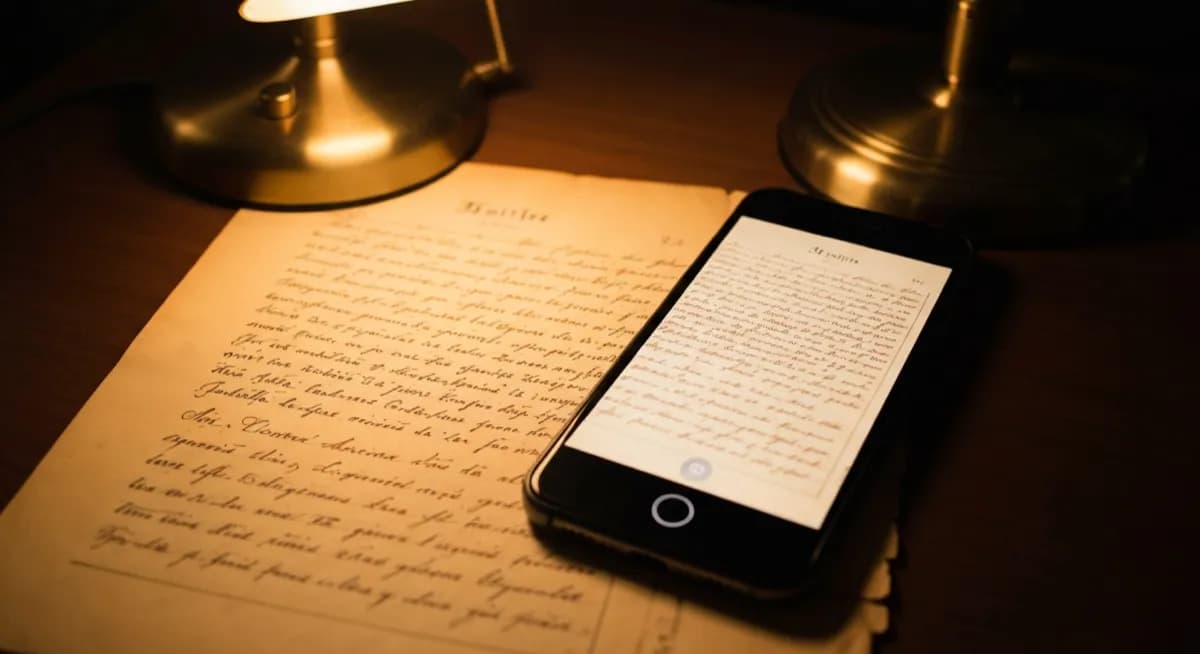
Photograph the handwriting flat with even side lighting, no shadows. Modern AI handles 100+ languages including Japanese, Chinese, Arabic, and Cyrillic handwriting. Neat printed letters get 90%+ accuracy. Doctors' notes and historical scripts drop to 50-75%.
Try the Handwriting TranslatorLanguages supported
100+
top photo translators
Neat handwriting accuracy
90%+
printed letters
Cursive / messy accuracy
60-80%
modern languages
Handwriting Recognition Accuracy by Source
Quality of recognition depends on the script and the writer.
| Source | Accuracy | Tip |
|---|---|---|
| Printed block letters | 95-99% | Easiest case |
| Neat cursive (modern) | 85-95% | Most letters |
| Messy cursive | 60-80% | Multiple shots |
| Doctor's prescription | 40-60% | Cross-check with pharmacist |
| Historical script (1800s) | 50-75% | May need expert |
| Calligraphy | 60-80% | Stylization hides letters |
| Asian handwriting (kanji, hanzi) | 80-90% | Get high resolution |
How AI Reads Handwriting
Two stages. A neural network trained on millions of handwriting samples segments and classifies each character. Then translation converts the extracted text to English. Modern AI handles cursive, slanted, and stylized writing where the same letter can look 10 different ways.
Photography Tips
Even diffused light from the side, no shadows across the page. Flatten curled or wrinkled paper completely. Shoot straight down. Full text in sharp focus. For faint pencil or aged ink, brighten exposure to add contrast.
When AI Struggles
Hasty notes with abbreviations. Historical documents with archaic letter forms. Extreme calligraphy where art trumps readability. Tiny writing that does not resolve in the photo. For tough cases, try multiple photos with different light angles to bring out faded ink.
Common Use Cases
Family history (old letters from immigrant ancestors). Travel notes from hotel staff or markets. Foreign prescriptions and medical notes. Recipes in a grandmother's handwriting. Academic primary sources. Legal documents in foreign archives.
Frequently Asked Questions
Can AI translate handwriting from a photo?+
Yes. Modern photo translators (Scale to Grams, Google Translate, Apple Translate) read handwriting in 100+ languages. Neat printed letters hit 95%+ accuracy. Messy cursive drops to 60-80%.
What is the best app to translate handwritten letters?+
Top free options are Scale to Grams Handwriting Translator, Google Translate camera mode, Apple Translate, and Microsoft Translator. Google Translate is best for European languages, Scale to Grams works in any browser.
Can I translate cursive handwriting?+
Yes for modern cursive in major languages with 85-95% accuracy. Calligraphy and historical cursive forms (Spencerian, Copperplate) drop to 60-75%.
Will AI translate Japanese handwriting?+
Yes for printed kanji and hiragana at 80-90% accuracy. Cursive sosho and gyosho styles are much harder, often requiring a Japanese script specialist.
Can AI read old historical handwriting?+
Modern AI hits 50-75% accuracy on 19th-century handwriting in major European languages. Older scripts (medieval, ancient) typically need a paleographer for accurate transcription.
How can I read a doctor's prescription with AI?+
You can try, but doctors' handwriting accuracy is only 40-60% even for modern AI. Always confirm prescriptions with your pharmacist before taking medication.
Try These Tools
Put what you learned into practice with our free AI tools: