Scale to Grams
How to Measure a Room for Furniture: Complete Guide
Quick Answer
Measure room length, width, and ceiling height with a tape, then mark furniture footprints with painter tape on the floor before ordering. Always plan at least 36 inches (90 cm) of walkway clearance and 24 inches (60 cm) of side clearance around the bed.
Try the Room Measure ToolFurniture return rate
~30%
doesn't fit is #1 reason
Walkway clearance
36 in
90 cm primary path
Coffee table to sofa
14-18 in
35-45 cm
Required Furniture Clearances
Use these standard US clearances when sketching a layout. Skip them and even technically-fitting furniture will feel cramped.
| Situation | Clearance | Why |
|---|---|---|
| Primary walkway | 36 in (90 cm) | Two people can pass |
| Secondary walkway | 24 in (60 cm) | One person, no pets |
| Coffee table to sofa | 14-18 in (35-45 cm) | Reach drinks, leg room |
| Dining chair pulled out | 36 in (90 cm) | Stand up, walk behind |
| Bed side clearance | 24 in (60 cm) | Make the bed, walk around |
| Desk chair pull-back | 36 in (90 cm) | Roll back to stand |
| TV to seating | 7-8 ft per 50 in | Comfortable viewing |
Essential Measurements
Measure room length, width, and ceiling height. Note every window (width, height, sill height from floor). Measure every doorway with swing direction. Capture fireplaces, columns, radiators. Critically, measure the entire delivery path from the front door to the destination room.
Measuring with AI Photo Tools
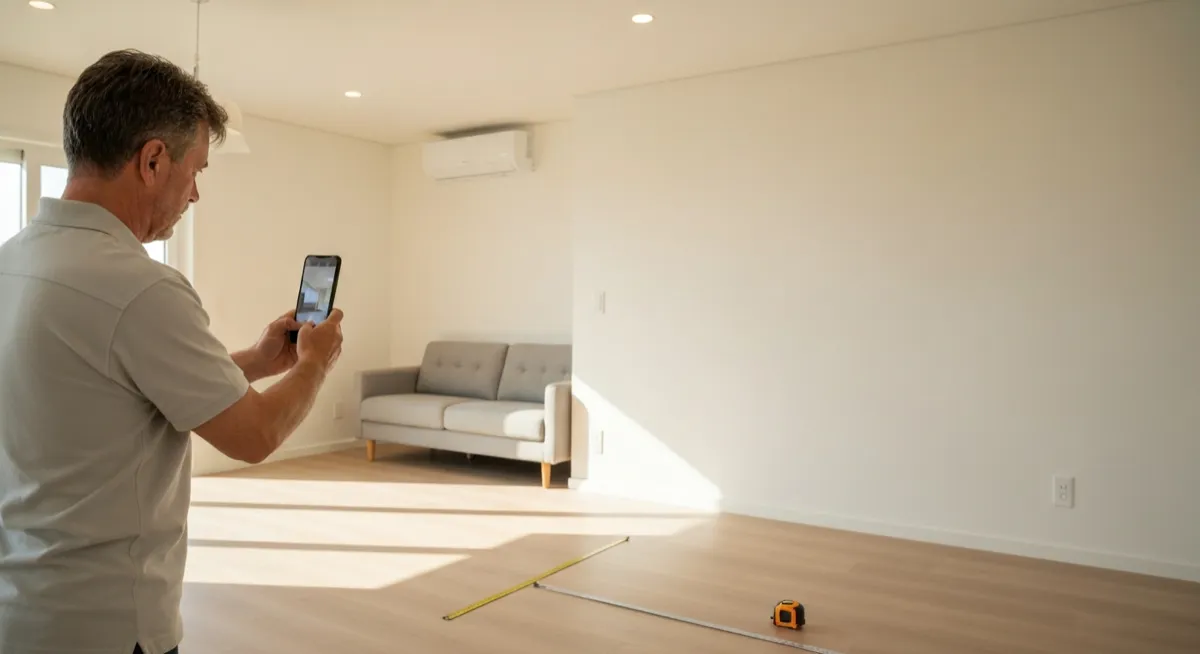
No tape measure? AI tools estimate room dimensions from a corner photo. Include a doorway in frame so the AI can use the standard 80 in (203 cm) door height as a reference. Accuracy is within 5-10%, fine for first-pass planning. Confirm with a tape before clicking Buy.
Easy-to-Forget Details
Outlet locations decide TV and lamp placement. Baseboards push furniture 0.5-1 in away from the wall. Closet and room doors must still swing open. Radiators and heating vents need clearance for airflow.
Make a Quick Floor Plan
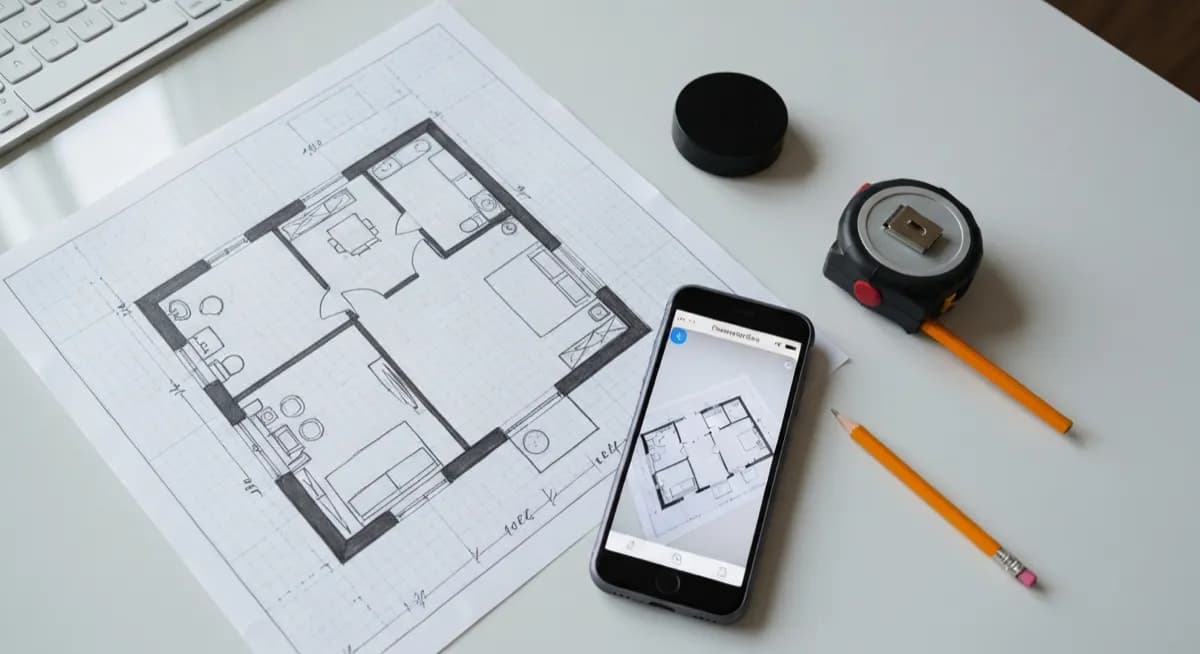
Sketch the room on graph paper, one square per foot. Mark door arcs, windows, outlets. Cut paper rectangles to scale for the furniture you are considering and move them around. Ten minutes here prevents a $1,000 mistake. Free apps like Magicplan or RoomScan do the same digitally.
Frequently Asked Questions
How do I measure a room for furniture?+
Measure length, width, and ceiling height. Note each window, doorway, and architectural feature. Mark furniture footprints on the floor with painter tape before ordering.
What size sofa fits a 12x14 room?+
A 12x14 ft (3.7x4.3 m) living room comfortably fits a sofa up to 84 inches (213 cm) wide. Leave 36 inches of walkway and a 14-18 inch gap between the sofa and coffee table.
How much space do I need to walk around furniture?+
Plan 36 inches (90 cm) for primary walkways and 24 inches (60 cm) for secondary paths. For dining chairs, allow 36 inches behind the chair to pull it out and stand.
Can I measure a room with my iPhone?+
Yes. The built-in iPhone Measure app uses the LiDAR sensor on Pro models for accurate room scans. Magicplan and Scale to Grams Measure Room work on any phone using AI photo estimation.
How tall are standard ceilings in the US?+
Standard US ceilings are 8 feet (244 cm). Newer homes often have 9 ft (274 cm) ceilings on the main floor. Vaulted ceilings can run 10-12 ft or higher.
How much clearance do I need around a queen bed?+
A queen bed (60x80 in / 152x203 cm) needs at least 24 inches (60 cm) of clearance on each side and 36 inches (90 cm) at the foot. So a queen needs roughly an 11x11 ft room minimum to feel comfortable.
Try These Tools
Put what you learned into practice with our free AI tools: