Scale to Grams
How to Measure Furniture Before Buying Online
Quick Answer
Before buying furniture online, measure your space with a tape or AI room tool, then check the listing dimensions or use a photo measurement tool on product shots. Always allow at least 2 inches of clearance on every doorway and turn.
Try the Furniture Measure ToolFurniture return rate
12-15%
"didn't fit" is #1 reason
Doorway clearance needed
2 in
5 cm min on each side
Standard interior door
32-36 in wide
80 in / 203 cm tall
Standard Doorway and Hallway Sizes
Knowing the standard openings in a US home tells you what your furniture needs to fit through. Always check the narrowest point on the entire path, not just the destination room.
| Opening | Width | Height |
|---|---|---|
| Front door | 36 in (91 cm) | 80 in (203 cm) |
| Interior door | 30-32 in (76-81 cm) | 80 in (203 cm) |
| Apartment hallway | 36-48 in (91-122 cm) | 96 in (244 cm) |
| Standard elevator | 40-48 in (102-122 cm) wide | 84 in (213 cm) |
| Stairwell turn | 36 in (91 cm) clearance | varies |
Using AI to Measure Furniture from Photos
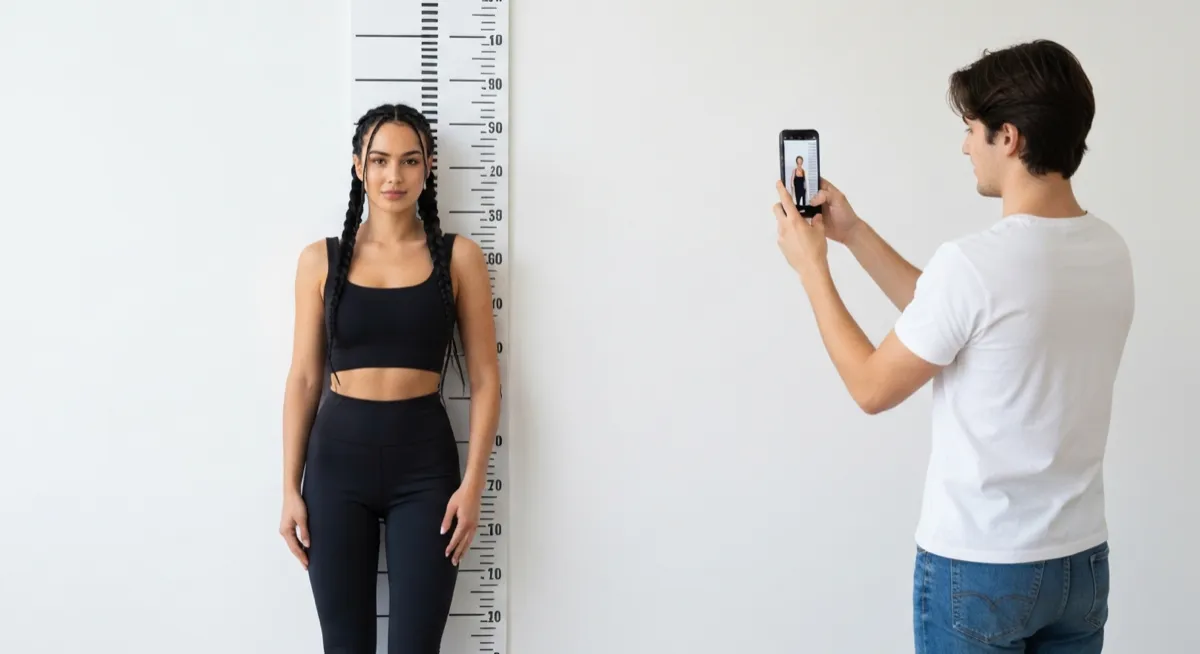
AI tools estimate dimensions from a single photo by identifying the furniture type and using reference objects (doors, outlets, people) for scale. For a typical retail product shot, expect accuracy within 2-4 inches (5-10 cm). Useful when a Facebook Marketplace seller forgot to list dimensions.
How to Measure Your Space
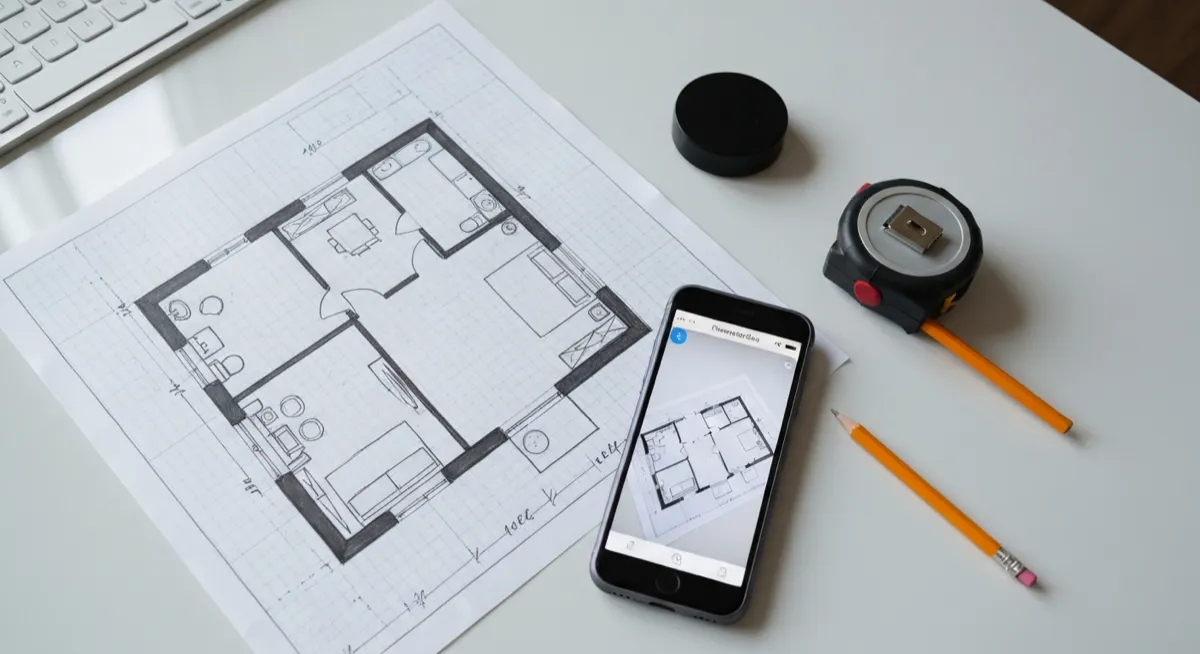
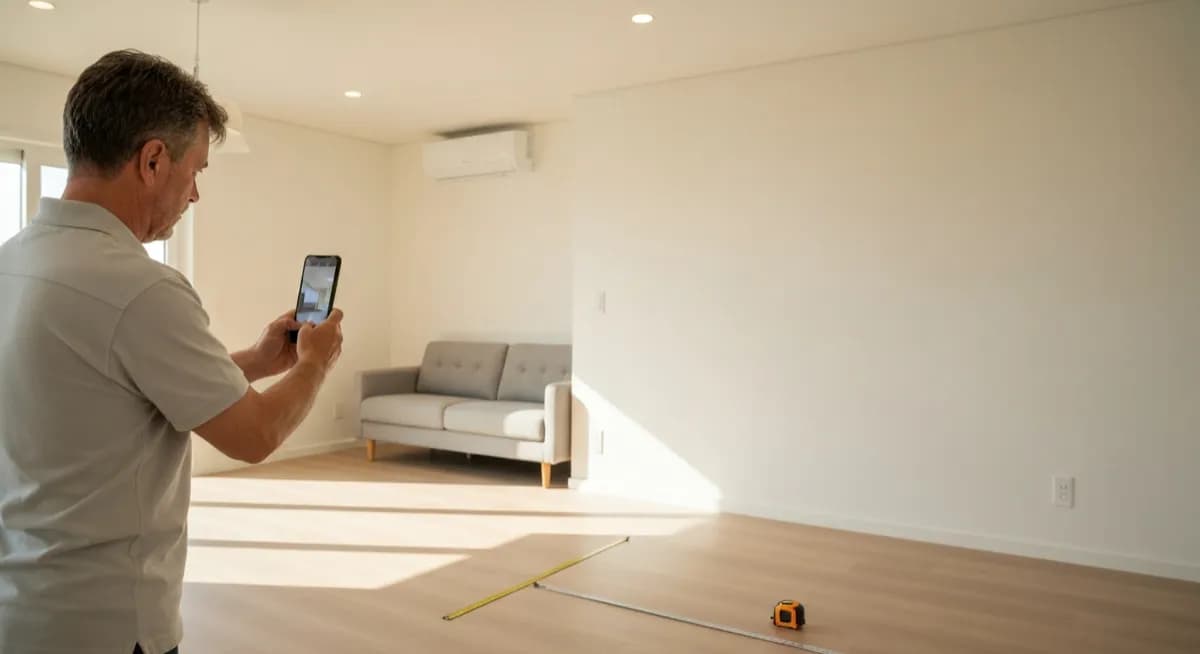
Use a tape measure for the destination spot, then mark the footprint on the floor with painter tape. Stand back and look at it for a day before ordering. For irregular rooms, snap a photo from a corner with the doorway in frame so the AI can use standard 80-inch (203 cm) door height as a reference.
Don't Forget the Path
The biggest mistake is measuring the room but not the path to it. Walk the route from truck to room and measure every doorway, stairwell turn, and elevator. For L-shaped hallways you need diagonal clearance, which is roughly hallway width plus 30%.
Online Shopping Tips
Always find the dimensions tab before buying. If the listing has none, use AI photo measurement on the product shots. Customer review photos give better scale than studio shots. When borderline, size down. A slightly small coffee table works, an oversized sofa does not.
Frequently Asked Questions
How do I know if a sofa will fit through my door?+
Compare the smaller of the sofa's height or depth to your doorway width, since sofas can be tilted on end. Most US doorways are 30-36 inches wide, so any sofa under 36 inches deep usually clears with tilting.
How accurate are AI furniture measurement tools?+
On clear retail product photos, AI measurement tools land within 2-4 inches (5-10 cm). Accuracy improves when a known reference object like a door or outlet is in frame.
How much clearance do I need around furniture?+
For walking paths, leave 30-36 inches (76-91 cm). For doorways, leave at least 2 inches (5 cm) on each side. For couch viewing distance, plan 7-8 ft (2-2.4 m) from the TV.
What is the standard US doorway width?+
Interior doors are typically 30-32 inches (76-81 cm) wide and 80 inches (203 cm) tall. Front doors are 36 inches (91 cm) wide. Apartment hallways are 36-48 inches.
Can I measure a room with my phone?+
Yes. iPhone Measure (built-in), Magicplan, and AI tools like Scale to Grams Measure Room let you scan or photograph a room and get dimensions within a few inches.
What if my furniture does not fit through the door?+
Options are removing the door from its hinges (gains about 2 inches), tilting the piece on end, removing legs or arms, or using a window with a furniture lift. For sectionals, look for "knock-down" or modular designs.
Try These Tools
Put what you learned into practice with our free AI tools: