Scale to Grams
How to Measure Your Child's Height at Home (Accurately)
Quick Answer
Stand the child barefoot against a wall, place a hardcover book flat on their head, mark the wall where the book meets it, and measure from the floor to the mark with a tape measure. Best done in the morning.
Get unlimited height measurements in the app.

Best time of day
Morning
tallest then
Avg 5-year-old
3'7"
109 cm
Avg 10-year-old
4'6"
138 cm
What You Need
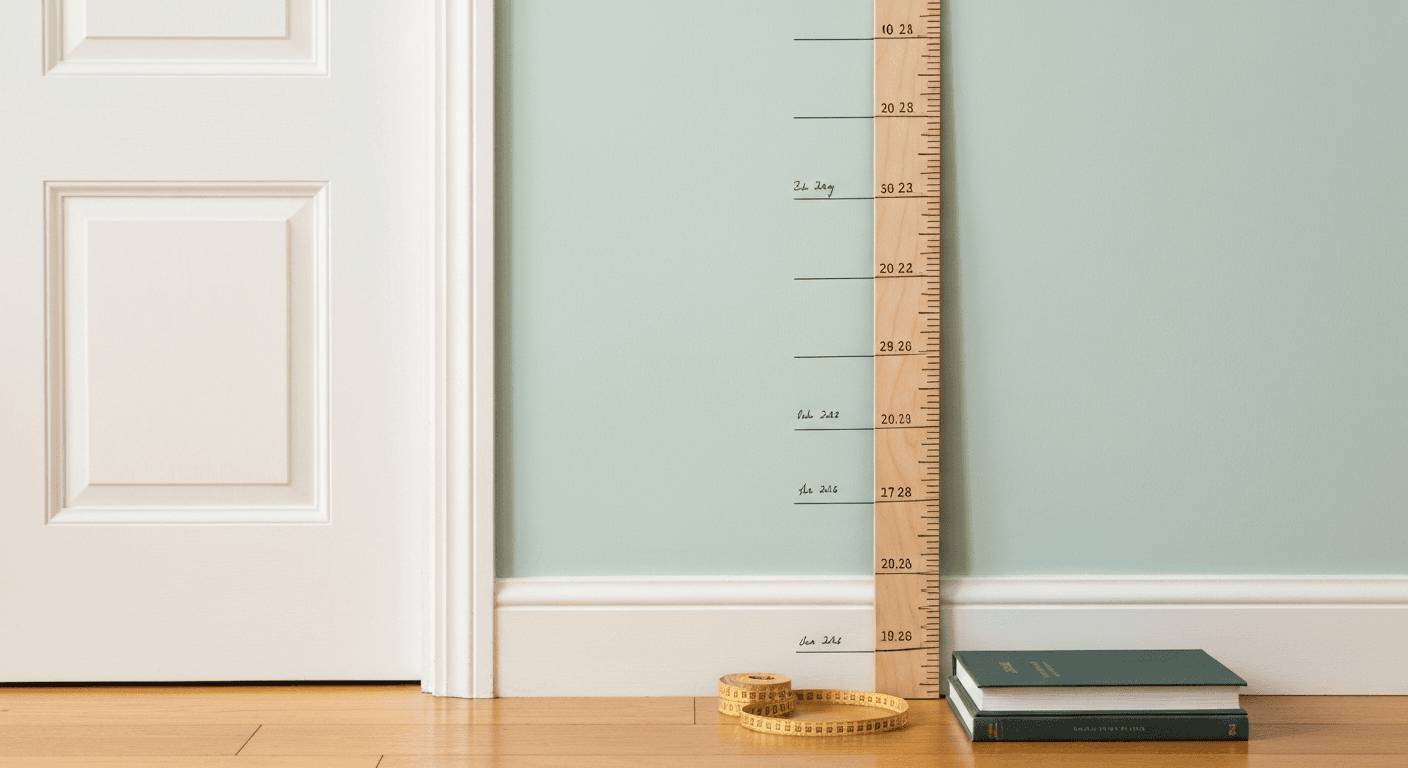
A flat wall (no baseboard interference), a hardcover book or right-angle ruler, a pencil, and a tape measure (in inches and centimeters). A doorframe also works if the floor is flat.
Step-by-Step
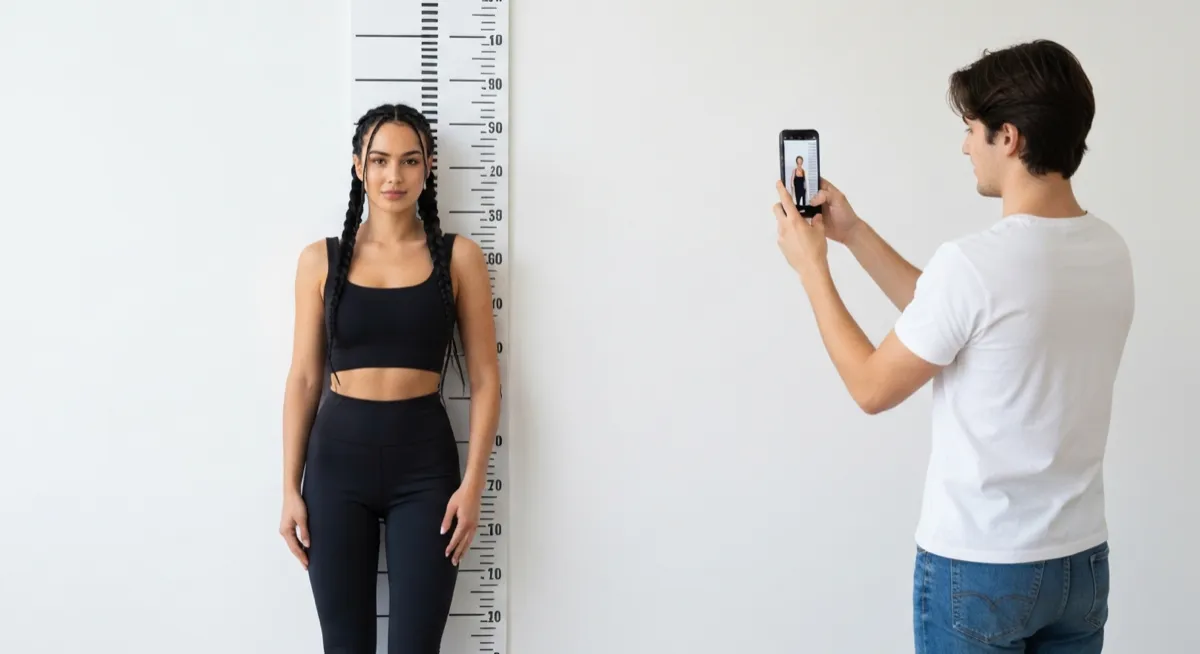
1. Have your child remove shoes, hats, and bulky hairstyles. Hair pulled flat. 2. Stand them with heels, butt, shoulders, and back of head touching the wall. 3. Look straight ahead, chin level (eyes parallel to floor). 4. Place a hardcover book flat on top of the head, perpendicular to the wall. 5. Mark the wall where the bottom of the book meets it. 6. Have the child step away. 7. Measure from the floor straight up to the mark with a tape.
Average Height by Age
CDC growth chart 50th percentile heights. Half of kids are taller, half shorter. A range of about 4 in (10 cm) on either side is considered normal.
| Age | Boys | Girls |
|---|---|---|
| 1 year | 2'6" | 2'5" |
| 2 years | 2'10" | 2'10" |
| 3 years | 3'2" | 3'1" |
| 4 years | 3'4" | 3'4" |
| 5 years | 3'7" | 3'6" |
| 6 years | 3'9" | 3'9" |
| 7 years | 4'0" | 4'0" |
| 8 years | 4'2" | 4'2" |
| 9 years | 4'4" | 4'4" |
| 10 years | 4'6" | 4'6" |
| 11 years | 4'8" | 4'9" |
| 12 years | 4'11" | 5'0" |
| 13 years | 5'1" | 5'2" |
| 14 years | 5'5" | 5'3" |
| 15 years | 5'7" | 5'4" |
| 16 years | 5'8" | 5'4" |
| 17 years | 5'9" | 5'4" |
| 18 years | 5'9" | 5'4" |
When to Re-Measure
Kids typically grow 2-3 in (5-7 cm) per year between ages 4-10. Pediatricians measure at every well-child visit, but at home every 6 months is plenty for tracking growth charts. Sudden growth spurts during puberty (ages 10-13 for girls, 12-15 for boys) can add 4 in (10 cm) in a single year.
When to Talk to a Doctor
If your child is consistently below the 5th percentile or above the 95th, or if they cross 2+ percentile lines on their growth chart, mention it at the next pediatric visit. Most outliers are healthy, but tracking matters. Always measure at the same time of day for consistency.
Frequently Asked Questions
When is the best time to measure my child's height?+
First thing in the morning, before activity. Spinal discs compress slightly during the day, so kids are about 0.4 in (1 cm) shorter by evening.
How often should I measure my child's height?+
Every 6 months is enough for tracking growth at home. Pediatricians measure at every well-child visit (every 1-3 years for school-age kids).
My child is shorter than average. Should I worry?+
Not on its own. About half of all kids are below average and most grow up healthy. Worry only if growth slows dramatically or your child crosses major percentile lines on their chart.
Can you predict adult height from current height?+
Yes, roughly. The "double height at age 2" rule predicts adult height within ~3 in (8 cm) for most kids. The "midparental height" formula (average of both parents' heights, then add 2.5 in for boys or subtract 2.5 in for girls) is also a decent estimate.
How do I measure my baby's height (under 2)?+
Lie the baby flat on their back. Have someone hold the head flat against a wall or ruler at the top, then gently straighten the legs and mark where the heels reach. Measure that distance. This is called "recumbent length" rather than height.
Should I measure with shoes on?+
No, always barefoot. Shoes add 0.5-1.5 in (1.3-3.8 cm) and ruin growth chart accuracy.

Measure Height App
Get unlimited height measurements in the app.
Try These Tools
Put what you learned into practice with our free AI tools: