Scale to Grams
How to Identify Mushrooms from a Photo: AI Guide
Quick Answer
Photograph the cap top, the underside (gills or pores), and the stem base, then upload to an AI mushroom identifier. Treat the result as a starting point only. Never eat a wild mushroom based on AI alone.
Try the Mushroom IdentifierSpecies recognized
5,000+
top AI identifiers
Accuracy on common species
85-95%
with multi-angle photos
Photos to take
4 angles
top, gills, stem, cross-section
How AI Mushroom Identification Works
AI mushroom tools use deep learning trained on millions of labeled photos. The model analyzes cap shape and color, gill or pore pattern, stem features, and surface texture, then matches against its species database. You get common name, scientific name, family, habitat, and edibility flags in seconds.
What to Photograph
One angle is almost never enough. Take four photos: cap from above, underside (gills, pores, teeth, or smooth), full stem including the base, and a cross-section if you can sacrifice the specimen. Add a coin or finger for scale. Use natural light, never flash.
| Angle | Reveals | Critical for |
|---|---|---|
| Cap top | Color, shape, texture, slime | Initial narrowing |
| Underside | Gills vs pores vs teeth | Family identification |
| Stem and base | Volva, ring, bulb | Distinguishing toxic Amanitas |
| Cross-section | Color change, hollow vs solid | Confirming species |
Critical Safety Warning
Never eat a wild mushroom based on AI alone. The Death Cap (Amanita phalloides) resembles edible paddy straw mushrooms. The Destroying Angel mimics young button mushrooms. Both can kill within 48 hours of a single bite. AI is for learning and pre-screening only. Final confirmation must come from an experienced mycologist.
Mushrooms AI Identifies Reliably
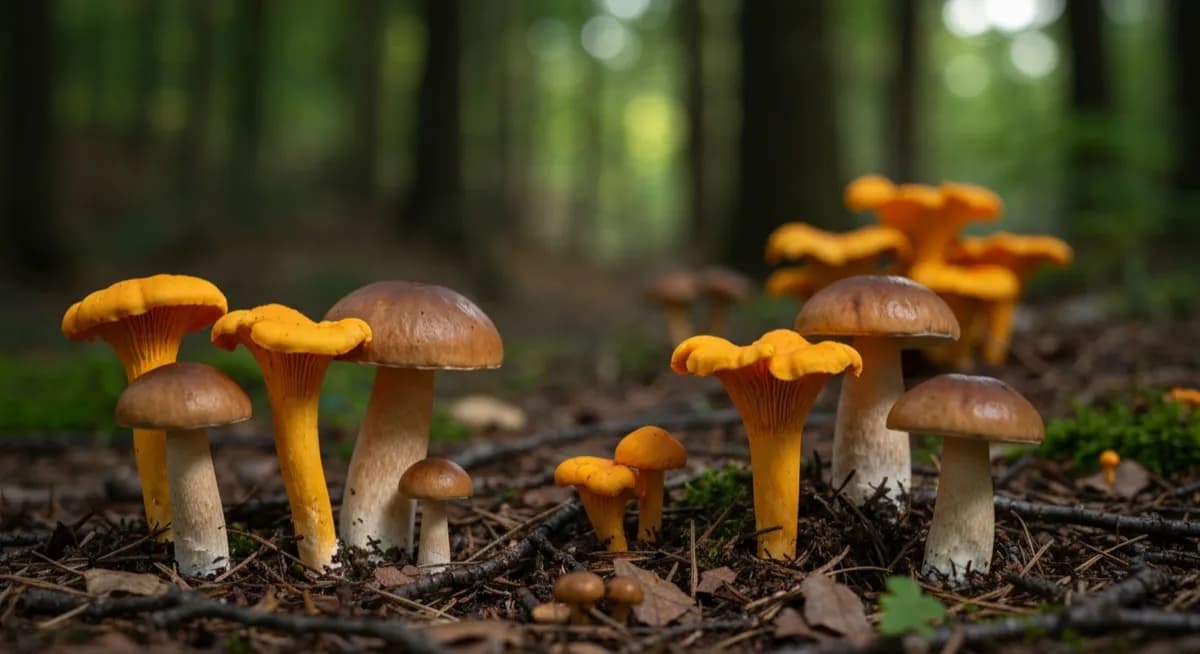
AI is most accurate on visually distinctive species: chanterelles (golden, false gills), morels (honeycomb cap), chicken of the woods (bright orange shelves), lion's mane (white spines), turkey tail (concentric rings). All common supermarket mushrooms (button, cremini, portobello, shiitake, oyster) hit near-perfect accuracy.
When AI Struggles
Young mushrooms before features develop, large look-alike genera like Cortinarius (2,000+ species), damaged or dried specimens, and the LBM category (Little Brown Mushrooms) are all hard. If confidence is low or the AI lists multiple candidates, treat it as unidentified.
Using AI as a Learning Tool
AI identification is most valuable as a learning aid. Photograph mushrooms on every hike and you build a mental library of your local species. Note habitat (nearby trees, soil, season) since ecology often matters more than visual features for confirmation.
Frequently Asked Questions
What is the best mushroom identifier app?+
Top options include Scale to Grams Mushroom Identifier, Picture Mushroom, iNaturalist, and Shroomify. iNaturalist gets human expert review, Picture Mushroom is fastest, Scale to Grams pairs ID with care info.
Is it safe to eat wild mushrooms identified by an app?+
No. AI is accurate but not infallible, and several deadly species look nearly identical to edible ones. Always confirm with an experienced mycologist or local mushroom society before eating any wild find.
How accurate is AI mushroom identification?+
For visually distinct species like chanterelles or morels, AI hits 90-95% accuracy with good photos. For look-alike genera like Cortinarius or LBMs, accuracy drops below 50%.
Can mushroom apps identify deadly mushrooms?+
Yes, most apps flag known toxic species like Death Cap and Destroying Angel. But the same apps can misidentify a deadly species as edible if photo quality is poor, so never use them as the only check.
Do I need internet to identify mushrooms by photo?+
Most AI identifiers require internet to query their species database. A few cache models for offline use but with reduced species coverage.
What information do I need besides a photo?+
Habitat (which trees are nearby), substrate (soil, wood, dung), season, and region. These ecological clues often distinguish look-alike species better than visual features alone.
Try These Tools
Put what you learned into practice with our free AI tools: