Scale to Grams
How to Identify Insects from a Photo: AI Bug Identifier Guide
Quick Answer
Photograph the insect from above with a coin or fingertip for scale, in focus against a contrasting background. AI identifies common species in seconds at 85-95% accuracy and flags whether it bites, stings, or damages property.
Try the Insect IdentifierSpecies recognized
50,000+
top AI databases
Accuracy on common bugs
85-95%
clear macro photo
Best photo angle
Top-down
shows wings and segments
How AI Insect Identification Works
The AI analyzes body segmentation (head, thorax, abdomen), number of legs (6 for insects, 8 for spiders, more for centipedes), wing type, antenna shape, and color pattern. With size from a reference object, it narrows the match against tens of thousands of species.
Dangerous US Species to Recognize
These are the species most worth knowing on sight in the US.
| Species | Region | Risk | Tell |
|---|---|---|---|
| Black widow spider | All US | Neurotoxic bite | Red hourglass on belly |
| Brown recluse spider | Central / South US | Necrotic bite | Violin mark on back |
| Deer tick | NE / Midwest US | Lyme disease | Sesame-seed sized |
| Fire ant | Southern US | Painful sting | Reddish, mound nests |
| Africanized honey bee | Southern US | Aggressive swarming | Looks like honey bee |
| Kissing bug | Southern US | Chagas disease | Cone-nose bug |
| Asian giant hornet | Pacific NW | Severe sting | 1.5-2 in long, orange head |
How to Photograph Insects
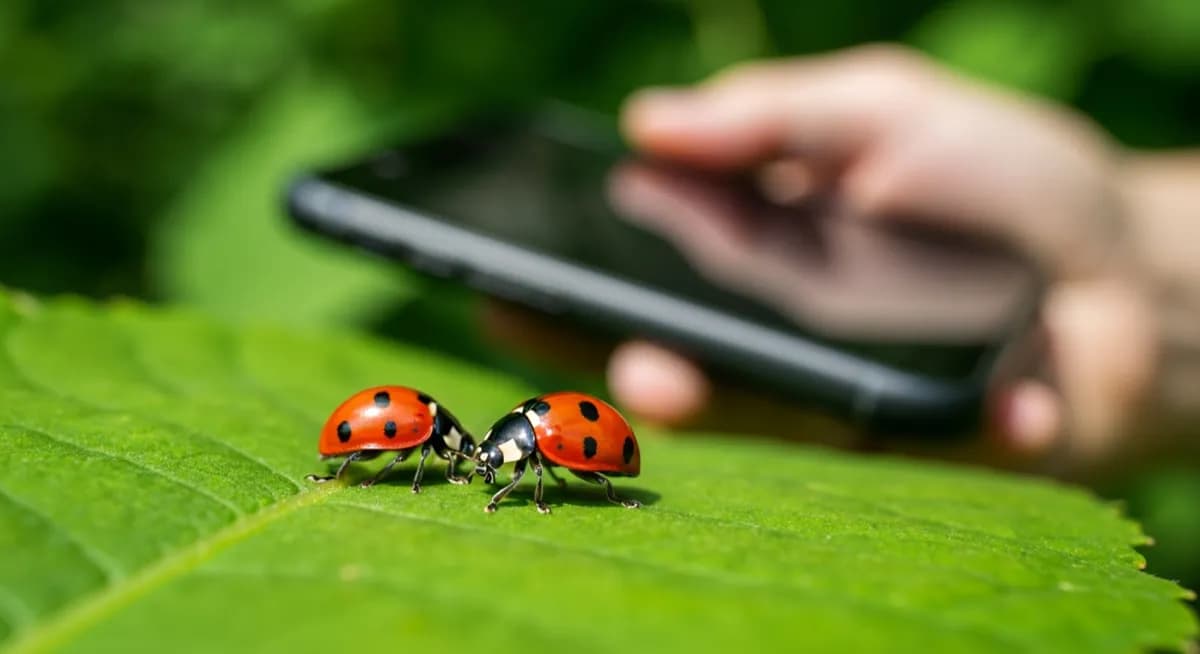
Use macro mode or maximum zoom. Top-down view of the whole body is most useful. Multiple angles raise confidence on tricky IDs. Include a coin or fingertip for scale. Trap home insects under a glass on plain paper. Photograph outdoor bugs in their habitat for context.
Beneficial Insects to Protect
Ladybugs eat aphids (one ladybug can eat 5,000 aphids in its lifetime). Praying mantises eat almost any garden pest. Green lacewing larvae eat aphids and mealybugs. Ground beetles eat slugs and snails. Parasitic wasps control caterpillar populations naturally. Always identify before spraying.
When AI Identification Is Limited
Tiny insects below ~5mm need extreme close-ups. Distinguishing closely related ant or fly species often requires microscopy. Fast-moving insects in blurred photos drop accuracy below 60%. For serious entomology, follow up with iNaturalist for human expert review.
Frequently Asked Questions
What is the best app to identify bugs from a photo?+
Top free options are Scale to Grams Insect Identifier, Picture Insect, iNaturalist Seek, and Google Lens. iNaturalist gives expert review on tough specimens.
Can AI identify spiders from a photo?+
Yes, including the most medically important US species like black widow and brown recluse. For accurate ID, photograph the body markings (red hourglass on widow underside, violin mark on recluse back).
How can I tell if a bug is dangerous?+
Use an AI identifier to flag medical risk. The most dangerous US species are black widow, brown recluse, deer tick, fire ant, kissing bug, and Africanized honey bee. If bitten by a suspected dangerous species, photograph the bug then seek medical attention.
Can a bug identifier tell me how to get rid of pests?+
Most identifiers tell you whether the species is a pest plus basic control suggestions. For active infestations of termites, bed bugs, or cockroaches, contact a licensed pest control professional.
Why does the AI keep saying "Order Diptera" instead of a species?+
The species is too visually generic for confident ID without microscopy. Order or family-level results are common for small flies, ants, and beetles.
Can I identify a butterfly or moth from a photo?+
Yes, butterfly identification is among the most accurate categories. Photograph the wings spread open from above for best results. Dedicated tools like Scale to Grams Butterfly Identifier specialize in wing patterns.
Try These Tools
Put what you learned into practice with our free AI tools: