Scale to Grams
How to Identify Fish from a Photo: AI Fish Identification Guide
Quick Answer
Hold the fish in profile with all fins fanned out, photograph in natural light, and upload to an AI fish identifier. You will get the species, size class, edibility, and basic legal notes in seconds. Always tell the AI whether you caught it in fresh or saltwater.
Try the Fish IdentifierSpecies recognized
10,000+
top AI identifiers
Best photo angle
Side profile
fins fanned, full body
Accuracy
85-95%
fresh fish, good photo
Common US Sportfish to Recognize
Some species look nearly identical and are regulated differently. Check state limits before keeping.
| Pair | Habitat | Tell |
|---|---|---|
| Largemouth vs Smallmouth Bass | Freshwater | Largemouth jaw extends past eye |
| Smallmouth vs Spotted Bass | Freshwater | Spotted has tooth patch on tongue |
| Striped Bass vs White Bass | Both | White Bass smaller, broken stripes |
| Walleye vs Sauger | Freshwater | Sauger has spotted dorsal fin |
| Black Crappie vs White Crappie | Freshwater | White Crappie has 6 dorsal spines |
| King vs Coho Salmon | Saltwater | King has black gum line |
| Red Snapper vs Vermillion | Saltwater Atlantic/Gulf | Red Snapper has red iris |
How to Photograph Fish
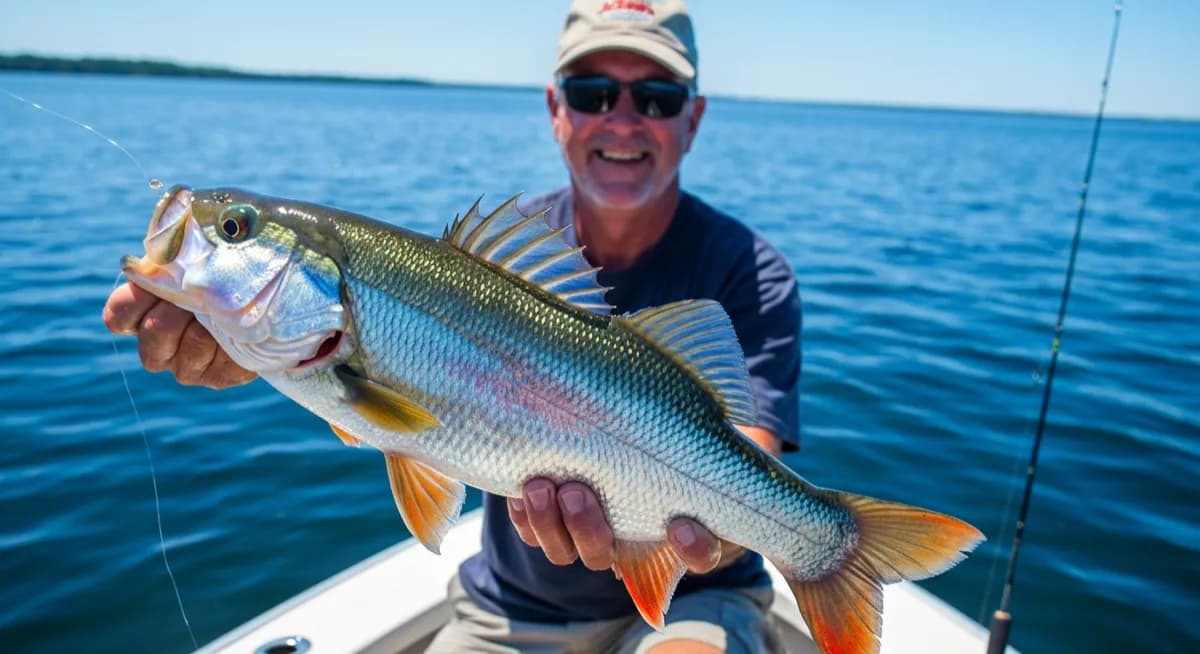
Hold the fish in profile, full body, head-to-tail and dorsal-to-belly visible. Fan out the dorsal, pectoral, and tail fins. Show the mouth and jaw clearly. Photograph in natural light, not under fish-cleaning fluorescents which shift colors. For small fish, lay flat with a ruler for scale. Wet your hands first to protect the slime coat.
Features the AI Analyzes
Body shape (deep, streamlined, elongated). Fin position and count. Mouth position (terminal, sub-terminal, superior). Color patterns (lateral line, spots, vertical bars, horizontal stripes). Scale size. Some species nail it from one feature: sailfish dorsal, hammerhead head, flounder body.
Freshwater vs Saltwater
Location is the strongest narrowing clue. Always tell the AI whether you caught the fish in fresh or saltwater, and ideally the region. A bass in a Minnesota lake is a completely different ID from a "bass" in Florida saltwater.
Safety: Fish to Handle Carefully
Some fish have venomous spines (lionfish, stonefish, catfish). Pufferfish are toxic if eaten without proper preparation. Large pelagic predators (tuna, swordfish, king mackerel) accumulate mercury, so limit to once a week. AI identification flags these.
Frequently Asked Questions
What is the best free fish identifier app?+
Top free options are Scale to Grams Fish Identifier, FishVerify, and Picture Fish. FishVerify includes US state-by-state regulations.
Can AI tell me if a fish is legal to keep?+
Modern fish identifiers return the species and basic regulatory info, but state and seasonal limits change. Always confirm with your state DNR or wildlife agency before keeping a borderline catch.
How accurate is fish identification by photo?+
For a clear profile photo of a fresh fish, modern AI hits 85-95% accuracy. Faded colors after death drop accuracy to 70-80%. Add geographic location for tighter matches.
Why do my fish photos lose color after a few minutes?+
Iridescent colors and pigments fade quickly once a fish dies. Photograph immediately while the fish is still in or just out of the water for the most accurate ID.
Can I identify a fish from a fillet or partial photo?+
Identifying a whole fish is much more accurate. Fillets can be identified by texture, color, and flake pattern but accuracy drops to 50-70%. For a fillet, also note where it was caught and any markings on the skin if visible.
Are some fish dangerous to eat?+
Yes. Pufferfish without licensed preparation, certain tropical reef fish (ciguatera risk), and large predators with high mercury (eat once weekly max). AI identifiers flag known risk species.
Try These Tools
Put what you learned into practice with our free AI tools: