Scale to Grams
How to Identify Dog Breeds from a Photo: AI Guide
Quick Answer
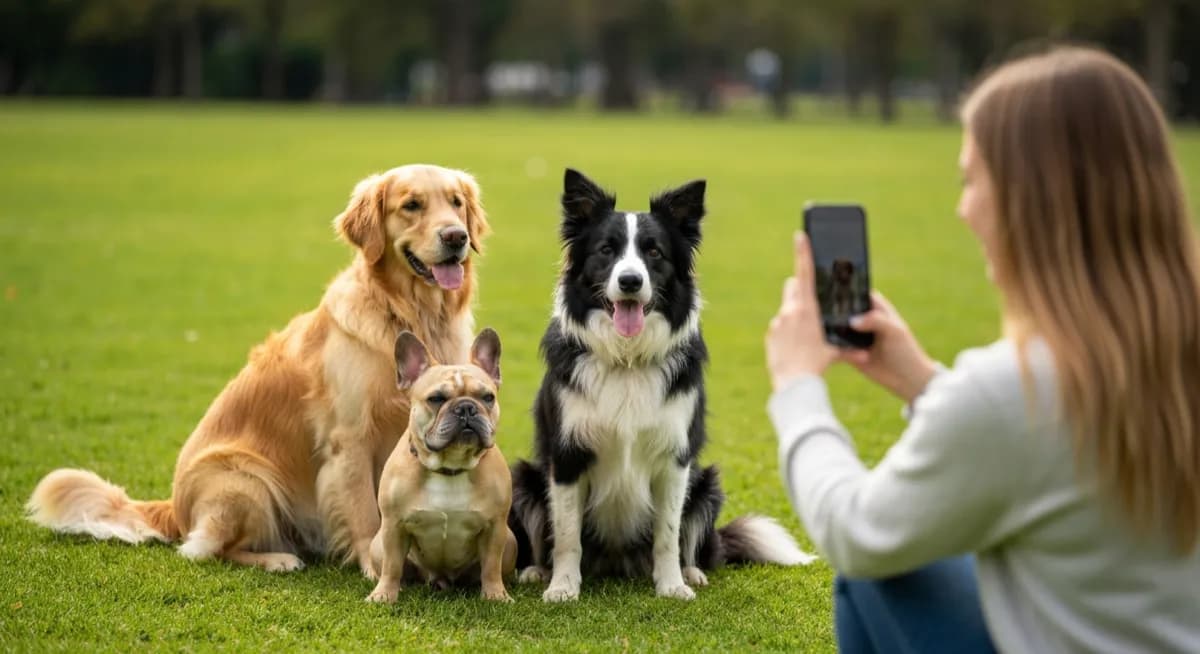
Photograph the dog from the side standing naturally with the full body in frame, plus a front head shot. Upload to an AI breed identifier and you will get the breed (or top 3 breeds for a mix) in seconds, with 90%+ accuracy on purebreds.
Try the Dog Breed IdentifierBreeds recognized
300+
top AI identifiers
Purebred accuracy
90%+
clear side photo
Mixed-breed primary breed
~75-85%
top breed match
How AI Dog Breed Identification Works
AI tools are trained on hundreds of thousands of labeled photos spanning 300+ recognized breeds. The model analyzes head shape, ear type (erect, floppy, folded), muzzle, body build, coat type and color, tail carriage, and leg proportions. For purebreds, accuracy often exceeds 90%. For mixed breeds, the tool returns top breed candidates with confidence percentages.
Commonly Confused Breed Pairs
Some breeds look so similar even experienced dog people get them wrong.
| Pair | Key difference | Tell |
|---|---|---|
| Labrador vs Golden Retriever | Coat texture | Lab short, Golden feathery |
| Siberian Husky vs Alaskan Malamute | Size | Husky 35-60 lbs, Malamute 75-100 lbs |
| German Shepherd vs Belgian Malinois | Build | Shepherd longer, Malinois leaner |
| Shiba Inu vs Akita | Size | Shiba 18-22 lbs, Akita 70-130 lbs |
| Boxer vs Bullmastiff | Size and head | Bullmastiff 100-130 lbs, Boxer 60-80 |
| Border Collie vs Australian Shepherd | Tail | Aussie often docked |
What to Photograph
Side profile of the full body, dog standing naturally. Front head shot for ear placement and facial features. Multiple angles raise confidence on tough mixes. Wet dogs look different from dry, so photograph in natural state.
Mixed Breed Identification
Most dogs are mixes. AI usually nails the dominant breed but secondary breeds with recessive traits are harder. For definitive ancestry, DNA tests (Embark, Wisdom Panel) are accurate to about 95%. For curiosity, AI photo ID is free and instant.
Why Breed ID Matters
Predicting adult size and exercise needs for rescue dogs. Anticipating breed-specific health risks (hip dysplasia in large breeds, breathing issues in brachycephalics). Tailoring training (herding vs retriever vs terrier). And insurance or landlord questions for mixed breeds.
Frequently Asked Questions
What is the best free dog breed identifier app?+
Top free options are Scale to Grams Dog Breed Identifier, Google Lens, and Dog Scanner. For ancestry detail beyond visual breed ID, use a DNA kit like Embark or Wisdom Panel.
How accurate is AI dog breed identification?+
For purebreds with clear photos, AI hits 90-95% accuracy. For mixed breeds, the dominant breed is identified correctly about 75-85% of the time. Secondary breeds in a mix are much harder.
Can a photo really identify my mixed-breed dog?+
It will identify the most visible breed components but cannot give a precise DNA-style percentage. For a 1-2% accuracy ancestry breakdown, use a cheek-swab DNA test for $80-150.
Why does the AI say my dog is part pit bull?+
"Pit bull" is a generic label AI applies to many stocky, short-haired mixes. Actual American Pit Bull Terrier ancestry is much rarer than AI suggests. DNA testing is the only way to confirm.
Can I identify a dog breed from just a head shot?+
Yes for breeds with distinctive heads (Boxer, Bulldog, Husky), but accuracy drops without body proportions. Add a side body shot to push confidence above 90%.
Are dog breed identifier apps better than DNA tests?+
No, DNA tests are far more accurate for ancestry. AI photo ID is free and instant for casual curiosity. DNA is the answer when you need real ancestry breakdown or health-risk panels.
Try These Tools
Put what you learned into practice with our free AI tools: