Scale to Grams
How to Identify Cat Breeds from a Photo: AI Cat ID Guide
Quick Answer
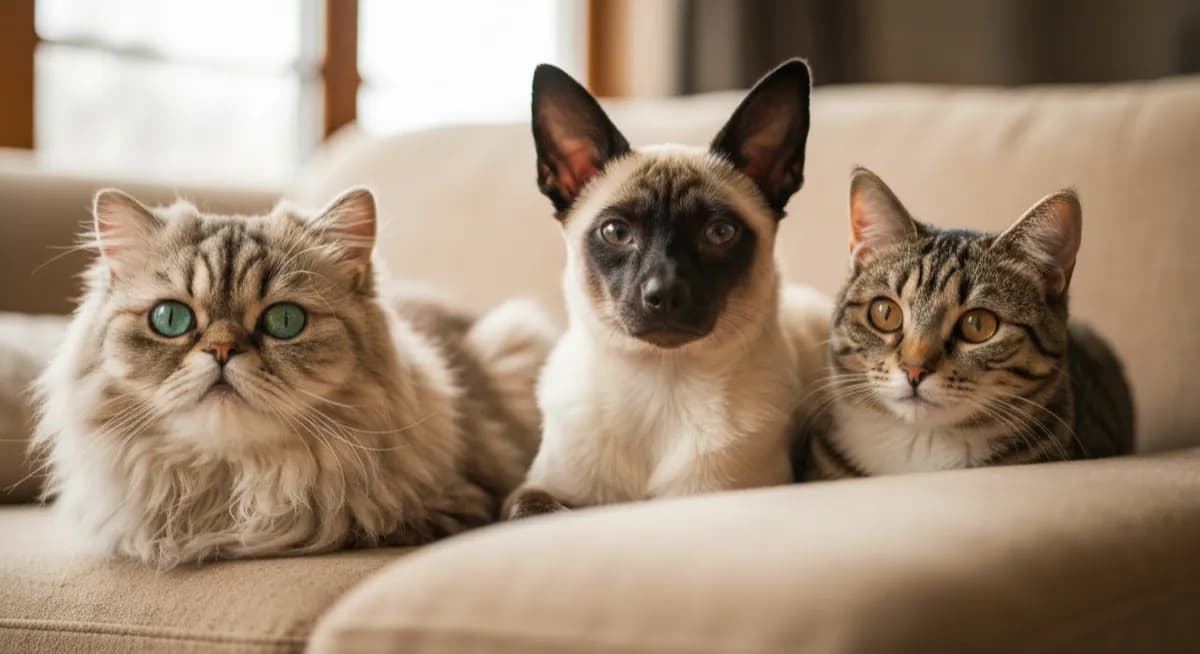
Photograph the cat sitting in good natural light with a face-on shot for ear and eye details. Upload to an AI cat breed identifier for the dominant breed. Note: about 95% of US pet cats are mixed-breed domestic shorthairs, so AI usually returns "looks most like..." rather than a purebred ID.
Try the Cat Breed IdentifierPurebred US pet cats
~5%
95% are domestic shorthair mixes
Distinctive breeds AI nails
90%+
Siamese, Persian, Maine Coon, Sphynx
CFA recognized breeds
45+
TICA recognizes 71
Cat Breeds AI Identifies Most Reliably
These breeds have such distinctive features that AI rarely misses them.
| Breed | Tell | Average size |
|---|---|---|
| Siamese | Color points, blue eyes, wedge head | 8-10 lbs (3.6-4.5 kg) |
| Persian | Flat face, long thick coat | 7-12 lbs (3.2-5.4 kg) |
| Maine Coon | Large size, tufted ears, bushy tail | 10-25 lbs (4.5-11 kg) |
| Sphynx | Hairless | 6-12 lbs (2.7-5.4 kg) |
| Bengal | Wild spotted or marbled coat | 8-15 lbs (3.6-6.8 kg) |
| Scottish Fold | Forward-folded ears | 6-13 lbs (2.7-5.9 kg) |
| British Shorthair | Dense plush coat, round face | 7-17 lbs (3.2-7.7 kg) |
| Ragdoll | Large, blue eyes, color points | 10-20 lbs (4.5-9 kg) |
| Russian Blue | Solid blue-gray, green eyes | 7-12 lbs (3.2-5.4 kg) |
How AI Cat Breed Identification Works
The AI analyzes coat length and texture, color and pattern (color points, tabby, calico), face shape (flat, wedge, round), ear shape (erect, folded, curled), body type (cobby vs oriental), eye color, and tail. Most distinctive breeds get 90%+ confidence.
What to Photograph
Full body sitting or standing in natural light. A face-on shot for eye color, ear shape, and facial structure. Capture coat texture. Tail if distinctive (Manx is short, ragdoll bushy). Cats rarely cooperate, so AI works with casual snapshots as long as the cat is in focus.
The Mixed-Breed Reality
About 95% of US pet cats are mixed (domestic shorthair / medium / longhair). When AI says "mostly Maine Coon," it means your cat shows traits associated with that breed, not that it has Maine Coon ancestry. For real ancestry, use a cat DNA test like Basepaws or Wisdom Panel.
Why Breed Identification Matters
Even for mixes, dominant breed traits hint at health risks (Persian kidney disease, Maine Coon heart disease), grooming needs, vocal tendency, and energy level. Shelters get more adoption interest with a breed in the listing.
Frequently Asked Questions
What is the best app to identify cat breeds from a photo?+
Top free options are Scale to Grams Cat Breed Identifier, Cat Scanner, and the iNaturalist platform. For ancestry beyond visual breed, use a cat DNA kit like Basepaws.
How accurate is AI cat breed identification?+
For distinctive purebreds (Siamese, Persian, Maine Coon, Sphynx), AI hits 90-95% accuracy. For domestic shorthair mixes, the AI returns the dominant breed traits with 60-75% confidence.
What breed is my cat if it is just a regular tabby?+
A "regular tabby" is almost certainly a domestic shorthair (mixed breed). Tabby is a coat pattern, not a breed. AI may identify breed-like traits but most US tabbies have no specific breed ancestry.
Can I do a DNA test on my cat?+
Yes. Basepaws and Wisdom Panel offer cheek-swab cat DNA tests for $80-130 that identify breed ancestry and genetic health risks. More accurate than photo ID for ancestry.
How can I tell if my cat is purebred?+
True purebreds have registration papers from CFA, TICA, or another breed registry. Without papers, your cat is mixed by definition. AI photo ID can confirm physical traits match a breed standard but cannot confirm pedigree.
Does my cat's breed affect its health?+
Yes. Persians are prone to polycystic kidney disease, Maine Coons to hypertrophic cardiomyopathy, Siamese to respiratory issues, Sphynx to skin conditions. Knowing the dominant breed traits helps with preventive vet care.
Try These Tools
Put what you learned into practice with our free AI tools: