Scale to Grams
How to Identify Coins from a Photo: AI Numismatic Guide
Quick Answer
Photograph both sides of the coin on a contrasting background in indirect light. Upload to an AI coin identifier and you will get country, denomination, year, and estimated value in seconds. Most accurate for modern circulating coins and popular collector series.
Try the Coin IdentifierCoin types catalogued
50,000+
top AI databases
Photos needed
Both sides
obverse and reverse
Pre-1965 US silver coin value
$4-25+
silver content alone
US Coin Quick Reference
Common US coins, their composition, and silver dates worth more than face value.
| Coin | Composition | Silver dates | Silver melt value |
|---|---|---|---|
| Penny | Copper-plated zinc (post-1982) | - | - |
| Nickel | Cupronickel | 1942-45 (war nickel) | ~$1.50 |
| Dime | Cupronickel-clad | Pre-1965 | ~$2.00 |
| Quarter | Cupronickel-clad | Pre-1965 | ~$5.00 |
| Half dollar | Cupronickel-clad | Pre-1965 (90%), 1965-70 (40%) | ~$10 / $4 |
| Silver dollar (Morgan) | 90% silver | 1878-1921 | ~$22+ ($25-100+ collector) |
| Silver Eagle | 99.9% silver | 1986-present | ~$30 (1 oz silver bullion) |
How to Photograph Coins
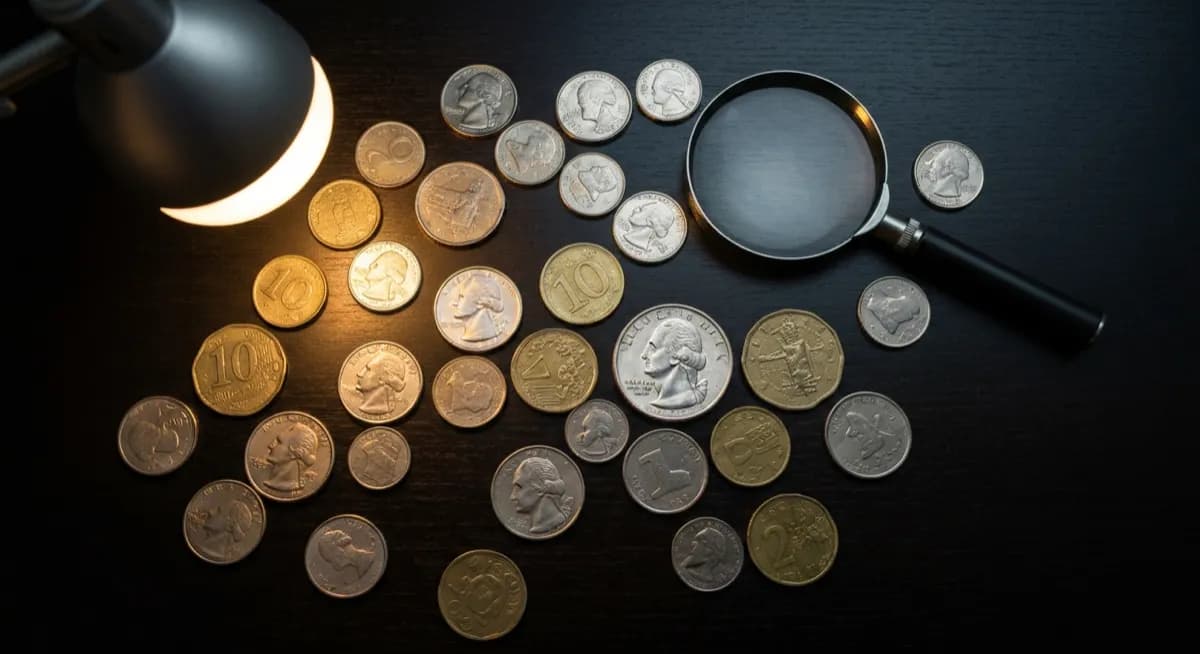
Both sides (obverse / heads and reverse / tails). Plain contrasting background (dark coin on white, light coin on dark). Indirect natural light, never flash (it creates glare). Shoot directly above. Coin fills at least half the frame. For reeded or lettered edges, take an edge photo too.
What AI Coin Identification Returns
Country (from symbols, text, design), denomination (face value), year minted, metal composition (estimated from color), approximate grade, and an estimated market value. Most accurate for modern circulating coins and major collector series like Morgan dollars or Mercury dimes.
Foreign Coin Identification
AI excels at foreign coins because it reads scripts (Chinese, Arabic, Cyrillic, Hindi) and converts dates from local calendars (Buddhist, Hebrew, Islamic). Especially useful for inherited collections from countries that no longer exist (USSR, Yugoslavia, etc.).
Coin Value Factors
Rarity (mintage and survival), condition (mint state can be worth 10-100x circulated), metal content (a 90% silver pre-1965 quarter is worth ~$5 in silver alone), and collector demand. AI gives an estimate. For valuable coins, get a professional numismatic appraisal.
Error Coins and Rare Finds
Error coins (double-die, off-center, wrong planchet, clipped planchet) are among the most valuable casual finds. Never clean a potentially valuable coin. Cleaning cuts value by 50-90%. If AI flags a rare date, place in a soft holder and visit a coin dealer.
Frequently Asked Questions
What is the best app to identify coins from a photo?+
Top free options are Scale to Grams Coin Identifier, Coinoscope, and PCGS CoinFacts. PCGS is most authoritative for US coins, Coinoscope is good for foreign, Scale to Grams works in any browser without an app.
Can AI tell me how much my coin is worth?+
AI gives a ballpark value based on rarity and condition estimated from the photo. For coins worth more than $100, get a professional appraisal. PCGS or NGC grading certifies condition.
How do I identify an old foreign coin?+
Photograph both sides clearly with good lighting. AI tools identify country from script and design patterns, even for currencies from countries that no longer exist. Add weight in grams from a kitchen scale to narrow further.
Are pre-1965 US silver coins valuable?+
Yes. US dimes, quarters, and half dollars dated 1964 and earlier are 90% silver. Their melt value (the silver alone) is roughly $2 per dime, $5 per quarter, $10 per half dollar at current silver prices.
Should I clean an old coin before identifying it?+
No. Cleaning cuts collector value by 50-90%. Photograph as-is. AI handles dirty and worn coins fine. If the coin turns out to be valuable, leave cleaning to a professional conservator.
How can I count and identify a jar of mixed coins?+
Use a tool like the Scale to Grams Coin Counter, which both counts coins and identifies their denominations from a single photo, returning a dollar total in seconds.
Try These Tools
Put what you learned into practice with our free AI tools: