Scale to Grams
How to Identify Rocks and Crystals from a Photo: AI Guide
Quick Answer
Photograph the rock in natural daylight on a fresh broken surface, with a coin or ruler for scale, and upload to an AI rock identifier. Distinctive minerals (quartz, pyrite, malachite) get identified with 90%+ accuracy. Plain gray or brown rocks need physical tests to confirm.
Try the Rock IdentifierMinerals catalogued
5,000+
top AI databases
Accuracy on distinct specimens
90%+
quartz, pyrite, etc.
Best photo conditions
Daylight + fresh break
no artificial light
How AI Rock Identification Works
AI mineral tools analyze color, crystal habit, luster, texture, fracture pattern, and banding against a database of thousands of geological specimens. The best models distinguish look-alikes like real gold vs pyrite or amethyst vs purple fluorite.
Mohs Hardness Quick Reference
Hardness is the single most diagnostic non-visual property. AI cannot test it from a photo, but you can quickly check it yourself with common items.
| Mohs | Reference test | Example mineral |
|---|---|---|
| 1 | Scratched by fingernail easily | Talc |
| 2 | Scratched by fingernail (~2.5) | Gypsum |
| 3 | Scratched by copper penny (~3) | Calcite |
| 4 | Scratched by knife | Fluorite |
| 5.5 | Scratched by glass (~5.5) | Apatite, glass |
| 6.5 | Scratches glass, scratched by file | Feldspar, pyrite |
| 7 | Scratches steel | Quartz, amethyst |
| 9 | Scratches almost everything | Corundum (ruby, sapphire) |
| 10 | Scratches everything | Diamond |
What to Photograph
Use natural daylight, never indoor bulbs. Show a freshly broken surface (the interior often differs from the weathered outside). Capture crystal structure or grain texture in close-up. Include a coin or ruler for scale.
Specimens AI Identifies Well
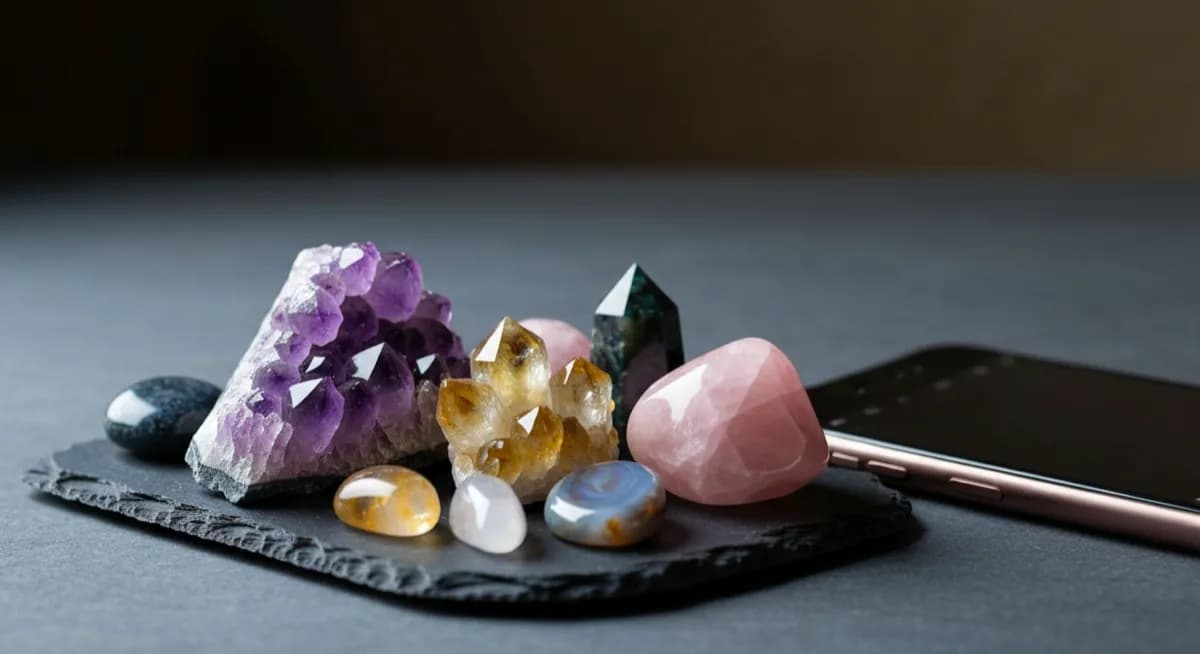
Quartz varieties (clear, rose, amethyst, citrine, smoky), obsidian, pyrite, malachite, lapis lazuli, granite, basalt, pumice, and most common sedimentary rocks all get high-confidence IDs.
When AI Struggles
Plain gray or brown rocks without distinctive features. Heavily weathered specimens. Tiny samples where grain structure is invisible. Look-alike feldspar varieties. Add hardness, streak color, and acid reaction tests for definitive ID.
Crystal Collecting Tips
Photograph specimens before cleaning to note the original find. Record GPS coordinates or general location. Provenance adds value. Clean gently with water and a soft brush before the official ID shot. Label each specimen with mineral, location, date.
Frequently Asked Questions
What is the best free rock identifier app?+
Top free options are Scale to Grams Rock Identifier, Rock Identifier (Next Vision), and the iNaturalist platform. iNaturalist gets human geologist review on tough specimens.
Can AI tell real gold from pyrite (fool's gold)?+
Yes. AI rock identifiers reliably distinguish real gold (soft, no crystal habit, dense yellow) from pyrite (hard cubic crystals, brassier color). For valuation, always confirm with a streak test or a jeweler.
How accurate is rock identification from a photo?+
For visually distinctive minerals like quartz, amethyst, or pyrite, AI hits 90-95% accuracy. For plain gray or brown rocks, accuracy drops below 60% without physical hardness or streak tests.
How do I identify a crystal at home?+
Photograph it in daylight with a scale reference, run it through an AI crystal identifier, then confirm with hardness (knife or glass scratch test) and streak color (rub on unglazed tile).
Can a rock identifier value gemstones?+
AI can identify the mineral and rough quality grade, but accurate gemstone valuation needs a certified gemologist for cut, clarity, color grading, and certification.
Why does my rock keep getting identified as "quartz"?+
Quartz is the most common mineral on Earth's surface. If your specimen is hard (scratches glass), translucent, and has a glassy luster, the AI is probably right. Add a fresh break photo to refine.
Try These Tools
Put what you learned into practice with our free AI tools: