Scale to Grams
How to Identify a Car Model from a Photo: AI Vehicle Guide
Quick Answer
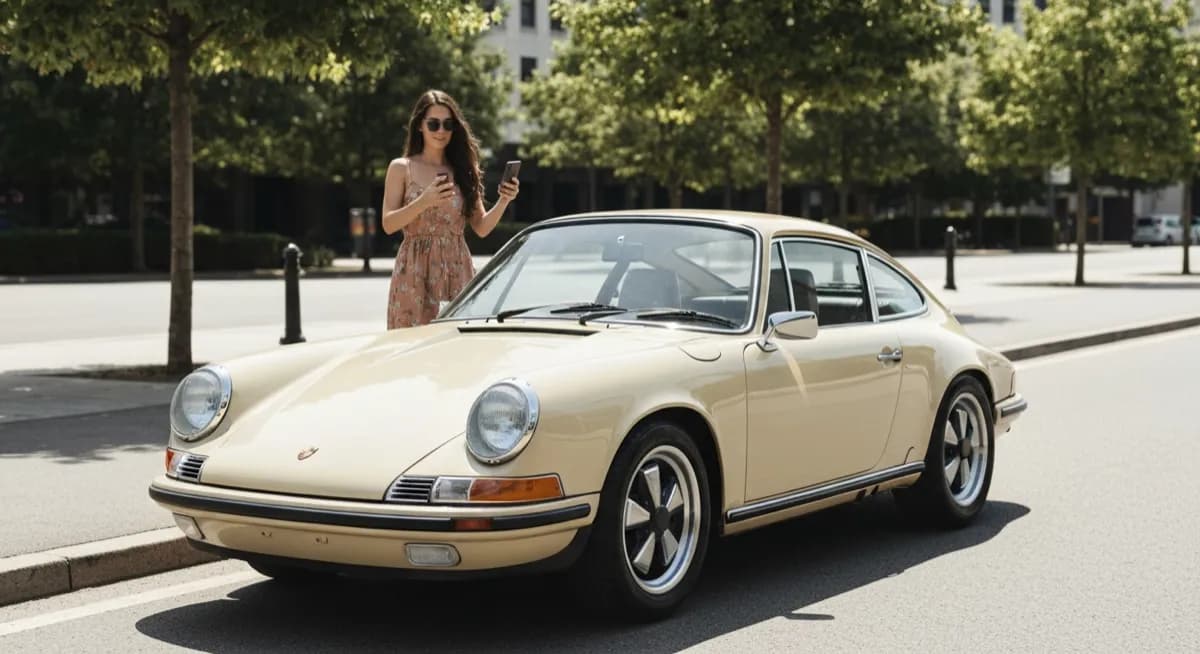
Photograph the front 3/4 angle (showing grille, headlights, and side profile) and an AI car identifier returns the make, model, and approximate year. Modern tools cover 90,000+ models and hit 90%+ accuracy on production cars from the last 30 years.
Try the Car IdentifierModels recognized
90,000+
top AI car identifiers
Best photo angle
Front 3/4
shows grille + side
Modern car accuracy
90%+
1990 to present
Distinctive US Brand Grilles
Brand identification is the first step. Most major manufacturers use a signature grille pattern.
| Brand | Grille tell |
|---|---|
| BMW | Kidney grille (twin oval) |
| Jeep | Seven vertical slots |
| Lexus | Spindle (hourglass) |
| Audi | Single-frame trapezoid |
| Cadillac | Vertical badge crest |
| Rolls-Royce | Parthenon-style upright |
| Mercedes | Three-pointed star + horizontal bars |
| Tesla | Smooth blank panel (no grille) |
| Ford F-150 | Bold horizontal bars |
| Chevrolet | Bowtie badge centered |
How AI Car Identification Works
The AI analyzes body shape (sedan, SUV, truck, coupe, hatchback), front fascia (grille, headlights, bumper), side profile (window line, doors, roofline), and rear design (taillights, badges, exhaust). Modern models distinguish between trim years that differ by minor headlight or bumper changes.
Best Angles to Photograph
Front 3/4 (showing front + one side) is the single best angle. Captures grille, headlights, body lines, and proportions in one shot. Direct front view is second-best. Side profile shows body type and roofline. For classic cars, close-ups of badges and unique trim help nail rare models.
Classic and Vintage Cars
AI performs especially well on iconic classics like the 1965 Mustang, 1957 Bel Air, 1963 Corvette Stingray, VW Beetle, and Porsche 911 because their silhouettes are unmistakable. Less famous models from the same era (1960s Rambler vs 1960s Falcon) are harder and depend on trim details.
Practical Uses
Insurance accident documentation from dashcam footage. Car shopping research after spotting a car you like. Auto journalist coverage of car shows. Parking enforcement. Classic car ID at shows or in old photos. Mechanics decoding cars dropped off without documentation.
Limitations
Heavily modified cars (custom paint, badge deletions, body kits) confuse AI. Extreme angles, low light, and partial views drop accuracy. Distinguishing US vs European spec versions of the same model is hard from photos alone. Modern crossover SUVs from different brands look very similar.
Frequently Asked Questions
What is the best app to identify a car from a photo?+
Top free options are Scale to Grams Car Identifier, Google Lens, and the Hagerty Drivers Club app for classic cars. Hagerty is best for vintage, Google Lens for everyday cars.
Can AI identify the year of a car?+
Yes for production cars from 1990 onward, AI typically nails the model year within 1-2 years. Older cars and minor mid-cycle refreshes are harder. Look for distinctive headlight or bumper changes that mark trim years.
How accurate is car identification by photo?+
For unmodified production cars from 1990 to present in good lighting, modern AI hits 90-95% accuracy on make and model. Year accuracy is 75-85% within ±2 years. Heavily modified or custom cars drop accuracy to 60-75%.
Can I identify a car from a partial photo?+
Yes if the partial photo includes a distinctive feature like the grille, taillights, or wheels. Full body photos give the highest confidence. A close-up of just one wheel or fender is usually too little info.
Will AI identify a classic or vintage car?+
Yes, classic cars are often easier than modern crossovers because their designs are more distinctive. Iconic models (Mustang, Beetle, 911, Bel Air) get near-perfect ID. Obscure 1950s-60s models may need close-up trim shots.
Can a car identifier read a license plate?+
Most consumer car identifiers do not read plates. Plate recognition is a separate technology used by law enforcement and parking systems. Visual ID identifies make, model, and year without needing plate info.
Try These Tools
Put what you learned into practice with our free AI tools: