Scale to Grams
How Much Does a Cup of Rice Weigh? Raw, Cooked & By Type
Quick Answer
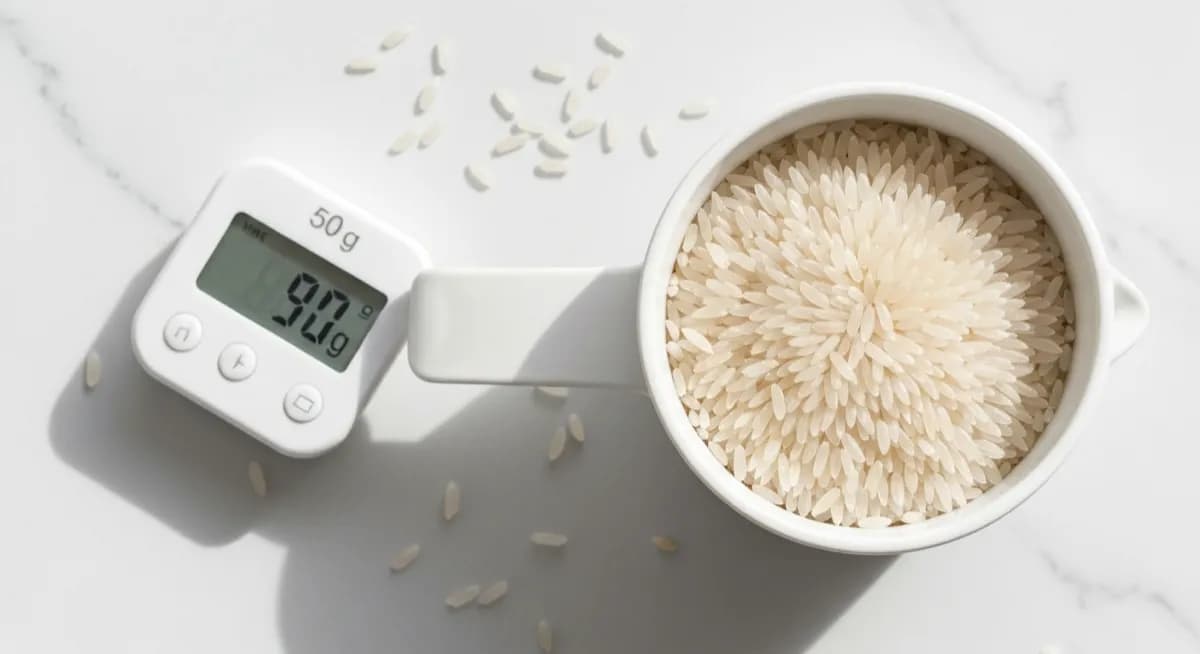
A US cup of raw long-grain white rice weighs about 6.5 oz (185g). Cooked, that same rice yields about 3 cups weighing 7 oz (200g) per cup.
Weigh Rice From a PhotoRaw white rice
6.5 oz
185g per US cup
Cooked white rice
7 oz
~200g per cup, ~240 cal
1 cup raw yields
3 cups cooked
~600g total
Raw Rice Weight by Type
Different rice varieties have different densities, so a cup of basmati does not weigh the same as a cup of sushi rice.
| Type | Per cup (oz) | Per cup (g) | Per lb |
|---|---|---|---|
| White long-grain | 6.5 oz | 185g | ~2.5 cups |
| Basmati | 6.3 oz | 180g | ~2.5 cups |
| Jasmine | 6.5 oz | 185g | ~2.5 cups |
| Sushi (short-grain) | 7 oz | 200g | ~2.3 cups |
| Brown rice | 6.7 oz | 190g | ~2.4 cups |
| Wild rice | 5.6 oz | 160g | ~2.8 cups |
| Arborio (risotto) | 7.1 oz | 200g | ~2.3 cups |
Raw vs Cooked Weight
Rice absorbs water during cooking. One cup raw white rice (185g) becomes about 3 cups cooked weighing roughly 600g total. Brown rice yields 2.5 cups cooked. Sushi rice yields 2.5 cups. Mixing raw and cooked numbers throws calorie counts off by a factor of three.
| Type | Cooked yield | Total cooked weight |
|---|---|---|
| White rice | ~3 cups | ~21 oz / 600g |
| Brown rice | ~2.5 cups | ~17.5 oz / 500g |
| Sushi rice | ~2.5 cups | ~19.5 oz / 550g |
| Wild rice | ~3.5 cups | ~24 oz / 680g |
Rice Calories per Cup
Cooked white rice is 130 cal per 100g, roughly 240 cal per cup (200g). Cooked brown rice is 215 cal per cup with much more fiber. Standard side-dish portion is 1/2 cup cooked (~120 cal).
| Type (1 cup cooked) | Calories | Carbs | Fiber |
|---|---|---|---|
| White rice | ~240 cal | 53g | 0.6g |
| Brown rice | ~215 cal | 45g | 3.5g |
| Wild rice | ~165 cal | 35g | 3g |
| Sushi rice (with vinegar) | ~250 cal | 55g | 0.6g |
Measuring Without a Scale
A US measuring cup (240ml) of raw white rice = 6.5 oz (185g). A large adult fist is roughly 1 cup. Note: rice cooker cups are 180ml, not the US 240ml standard. The included scoop holds about 150g raw, not 185g.
Recipe Conversions
Recipes always mean raw rice unless stated otherwise. 1 lb (450g) of rice = ~2.5 cups raw, yielding 6-7 cups cooked. Plan 1/3 cup raw per person for a side or 2/3 cup raw per person for a main.
Frequently Asked Questions
How much does 1 cup of cooked rice weigh?+
One US cup of cooked white rice weighs about 7 oz (200g). Brown rice is similar at about 7 oz (195g) per cooked cup.
How many calories in a cup of rice?+
A cup of cooked white rice has about 240 calories. A cup of cooked brown rice has about 215 calories with more fiber. A cup of raw white rice has about 675 calories before cooking.
How much does a pound of rice make cooked?+
One pound (450g) of raw white rice yields about 6-7 cups of cooked rice, roughly 3 lbs total weight after absorbing water.
Is a rice cooker cup the same as a US cup?+
No. Rice cooker cups are 180ml (about 150g of raw rice). Standard US measuring cups are 240ml (185g of raw rice). Always check which cup the recipe means.
How much rice per person?+
Plan 1/3 cup raw (60g) per person for a side dish, or 2/3 cup raw (125g) per person if rice is the main component of the meal.
How much does 200g of rice look like?+
200g of raw white rice is just over 1 cup. Cooked, it triples to about 3 cups, enough for 4 side servings or 2 main servings.
Try These Tools
Put what you learned into practice with our free AI tools: