Scale to Grams
Real vs Fake: Common Sneaker Counterfeit Signs
Quick Answer
The 7 universal signs of fake sneakers are: messy stitching, off-spec box labels, visible glue, chemical smell, wrong weight, asymmetric logos, and prices too low to be real. Catching just one of these is enough to walk away.
Authenticate Your SneakersBrand-agnostic signs
7
work for any brand
#1 instant red flag
Price
40%+ off retail
AI confidence
90%+
with good photos
Sign 1: Messy Stitching
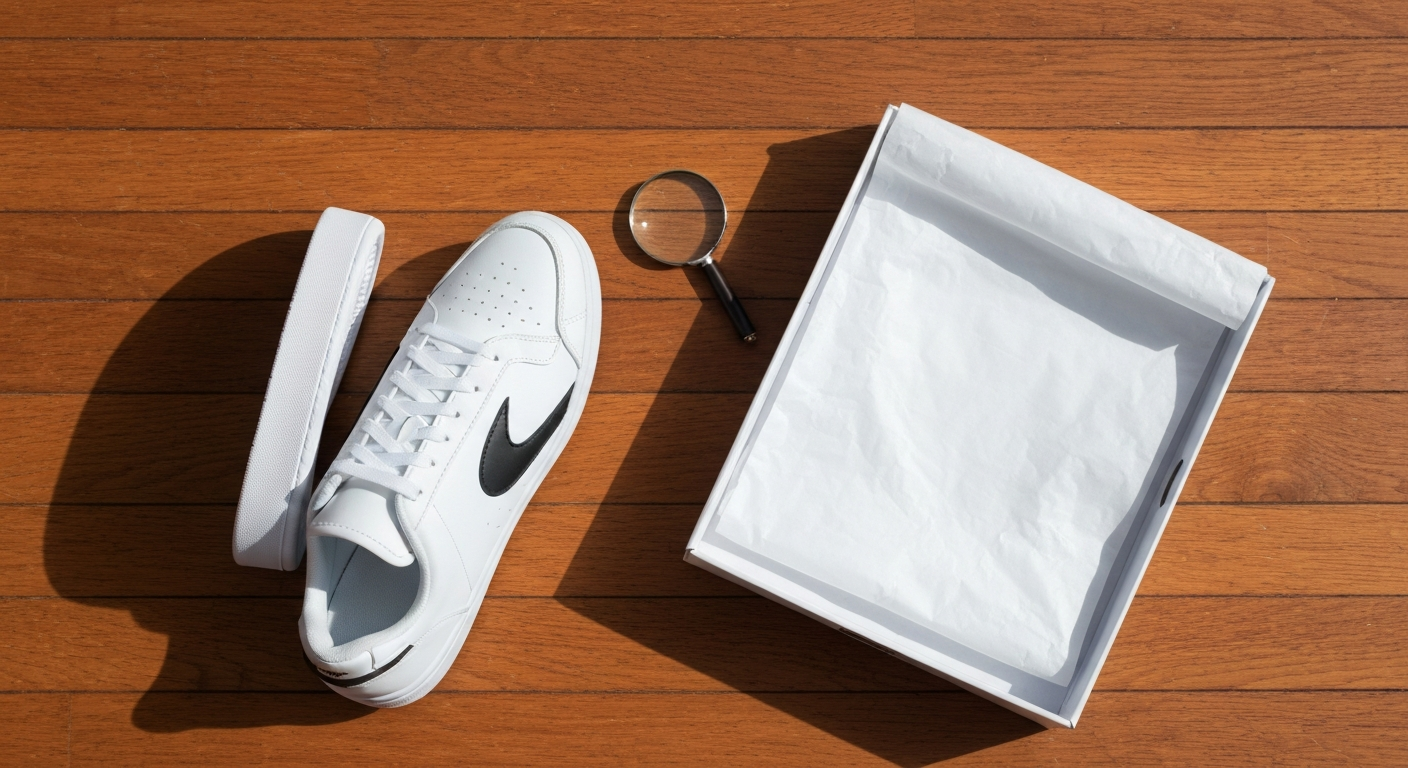
The single most reliable counterfeit tell is messy or uneven stitching. Authentic factory production has tight quality control: stitches should be evenly spaced, perfectly straight along seams, and free of loose threads. Fakes commonly show wandering stitch lines, more than 2-3 loose threads visible per shoe, double stitching where there should be single, and visible glue around stitch endpoints. Run your finger over every seam — anything rough or uneven is a red flag, no matter what brand.
Sign 2: Box Label Issues
The box label is a high-frequency failure point because counterfeiters need to recreate small text and barcodes. Real labels have:
| Element | Real | Fake |
|---|---|---|
| Sticker adhesion | Flush, no bubbles | Lifting at edges |
| Font crispness | Sharp print | Slightly blurry |
| Barcode | Sharp lines, scannable | Blurry or wrong code |
| SKU format | Matches brand standard | Wrong digit count or format |
| Country of origin | Plausible (Vietnam, Indonesia, China) | Vague or unusual |
| Color of label paper | Crisp white or branded color | Yellowed or off-tone |
Sign 3: Visible Glue
Authentic shoe assembly leaves no visible glue. Counterfeit factories cut corners and you can often see dried glue at the seams between the upper and the sole, around the toe box edge, where the heel pad meets the upper, and inside the shoe where the insole meets the sidewall. Hold the shoe up to a strong light and look at every seam. Any visible glue is a major red flag.
Sign 4: The Smell Test
New authentic sneakers smell like leather, rubber, and sometimes a faint hint of glue. Fakes often smell aggressively chemical — like burnt plastic, paint thinner, or industrial solvent. The smell may not show through the box right away, especially in hot weather. Open the box outside or in a well-ventilated room. If your eyes water or it smells like a hardware store, walk away.
Sign 5: Wrong Weight
Authentic sneakers have a specific feel and weight that comes from the materials. Fakes are often noticeably lighter (cheaper foam, thinner leather) or heavier (excess glue, denser plastic). The exact weight varies by model, so the only way to use this test is by comparison — hold a known-real pair next to the suspect pair. Even a quarter-ounce difference per shoe is suspicious. For a quantitative check, weigh both shoes on a digital kitchen scale.
Sign 6: Asymmetric Logos
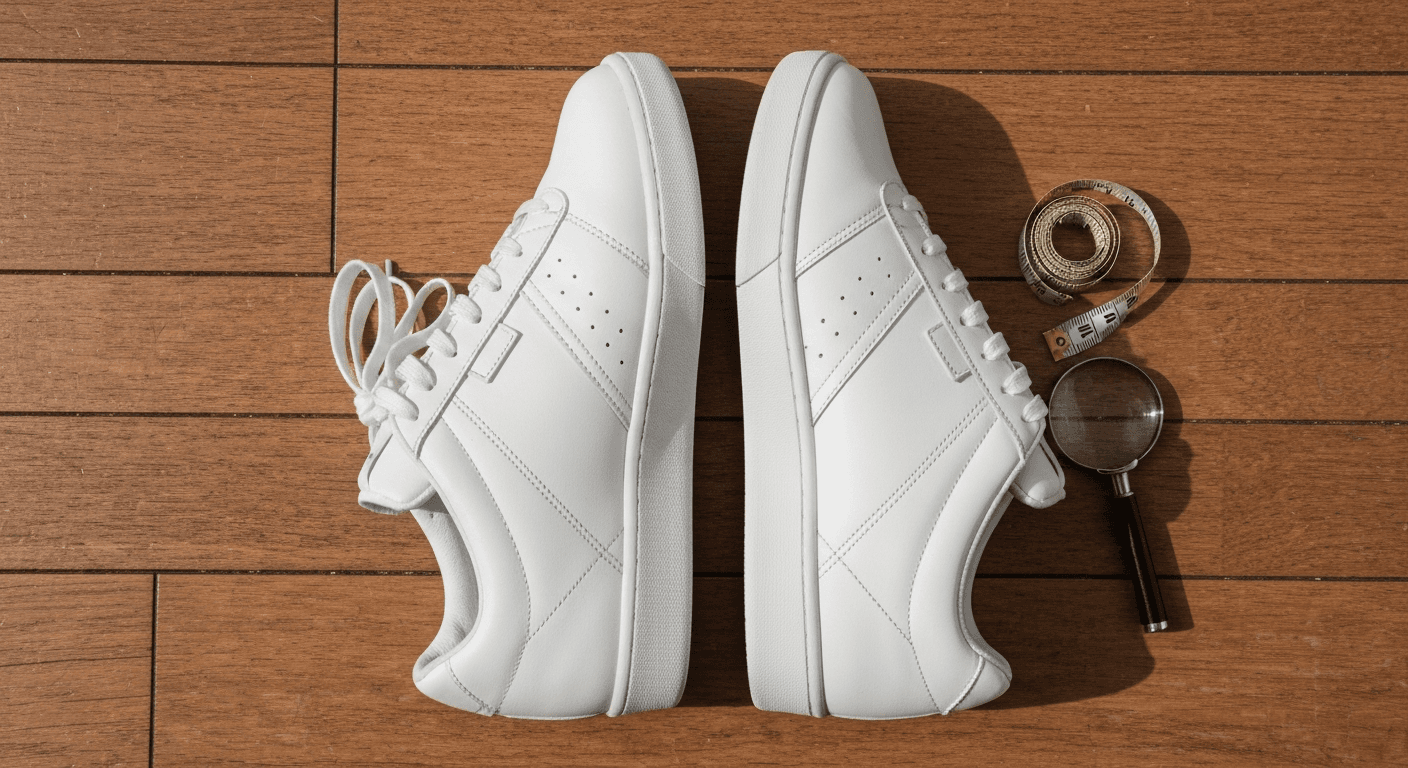
Real factory production keeps the left and right shoes near-identical. Counterfeits often have small asymmetries that show up under inspection: the swoosh, three stripes, or other brand logo is at slightly different angles between left and right; logo embossing is deeper on one shoe; stitching count around the logo differs. Compare the two shoes side by side. Any visible difference larger than a millimeter is a red flag.
Sign 7: Price Too Low to Be Real
The most basic red flag and the easiest to miss when you want a deal. Authentic current-release sneakers are sold within tight ranges: at retail (MSRP), at modest discount through outlets, or at premium on resale. If a current-model Nike, Jordan, or Adidas is offered new at 40-60% below retail by a random seller, it is almost certainly fake. Real "deals" exist but rare — they come from authorized outlets, sales events, or genuine clearance. Every other "deal" is suspicious.
| Item | Retail | Suspicious below |
|---|---|---|
| Air Force 1 Low | $110 | Under $66 (40% off) |
| Air Jordan 1 Retro High | $180 | Under $108 |
| Yeezy Boost 350 v2 | $230 | Under $138 |
| New Balance 990 | $200 | Under $120 |
| Limited drop / hype | $220+ resale only | Below resale market |
When to Use AI Authentication
Photograph all the suspect areas (overall side, stitching close-up, box label, tongue tag, heel logo, and sole). Run them through our AI Sneaker Identifier for a confidence score. The AI is best at flagging differences from known-real reference images. For high-value purchases ($300+), back up the AI with a paid authentication service or only buy through GOAT, StockX, or Stadium Goods, which authenticate every pair before shipping.
Frequently Asked Questions
What is the easiest way to spot fake sneakers?+
Check the stitching first — messy stitches with loose threads almost always mean fake. Then check the price (40%+ off retail = suspicious) and the smell (heavy chemical = suspicious). These three together catch most fakes in under a minute.
Do fake sneakers have wrong weight?+
Often yes. Fakes use cheaper materials (lighter foam, thinner leather) or excess glue (heavier). The difference can be a quarter ounce per shoe or more. The catch: you need a real pair to compare against, since each model has different correct weight.
Is buying fake sneakers illegal?+
Selling counterfeits is illegal under US federal trademark law. Buying for personal use is generally not prosecuted but customs can seize them at international borders. Knowingly selling fakes can result in fines, asset seizure, and criminal charges.
Why do fake sneakers smell so strong?+
Counterfeit factories use cheaper, less-refined glues and synthetic materials that off-gas chemicals like formaldehyde, toluene, and xylene. These smell sharp and chemical. Real shoes use higher-grade adhesives and leather treatments that smell more neutral.
Can a fake sneaker pass GOAT or StockX authentication?+
Rarely, but it happens. Both platforms have professional authenticators and a multi-step process, but super-fakes occasionally slip through. Both offer return policies if their authentication was wrong.
How do I check sneakers authenticity online?+
Take photos of the suspect areas (stitching, label, logo, sole, smell context if you can describe it) and use our AI Sneaker Identifier. For paid options, Legit Check App charges $5-15 per check with human reviewers.
Why are some "fake" sneakers very high quality?+
These are called "super fakes" or "UA" (unauthorized authentic). They often come from the same factories that produce real shoes during off-hours, using rejected materials. They can be nearly indistinguishable from real, but they are still counterfeit, not warrantied, and not legal to resell.
Try These Tools
Put what you learned into practice with our free AI tools: