Scale to Grams
How to Weigh Luggage Without a Scale: 6 Methods
Quick Answer
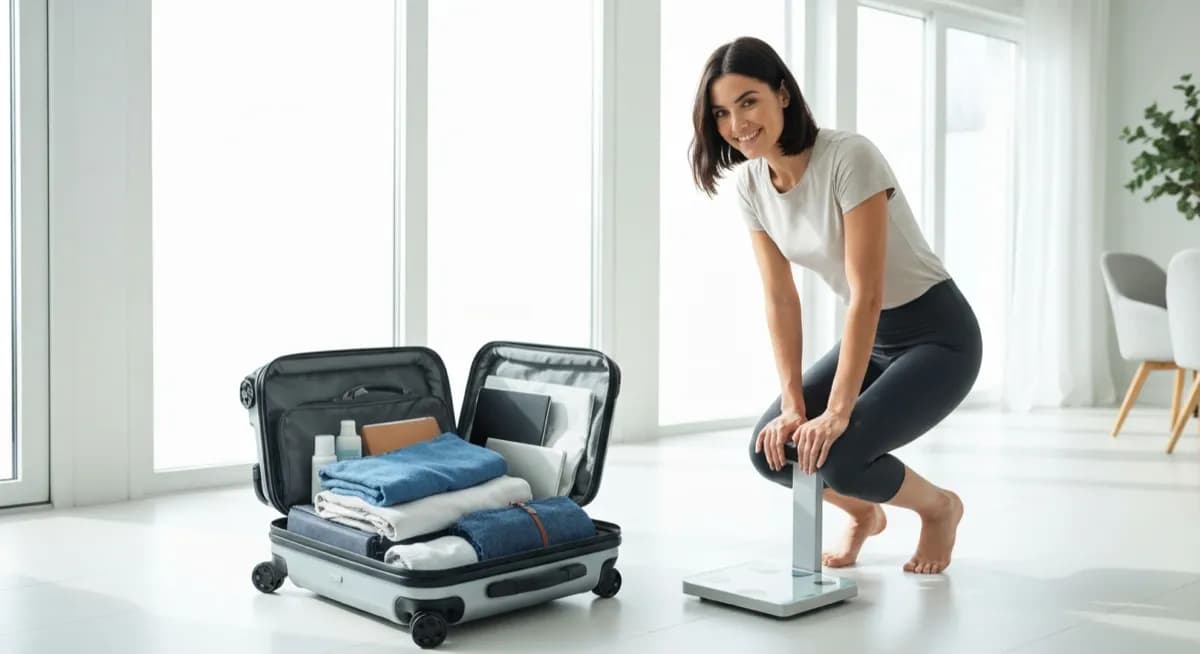
The bathroom scale subtraction trick is the most reliable: weigh yourself, then weigh yourself holding the suitcase. The difference is your luggage weight. Most US airline limits are 50 lbs (23 kg) checked, 22 lbs (10 kg) carry-on.
Try the Luggage Weight ToolUS checked bag limit
50 lbs
23 kg, most US airlines
Carry-on limit
15-22 lbs
7-10 kg
Overweight fee
$50-200
per bag, per leg
Bathroom Scale Method
The most reliable no-tech option. Weigh yourself, then weigh yourself holding the suitcase. Subtract for the bag weight. Take two or three readings and average. Most US bathroom scales handle up to 330 lbs (150 kg) total. Accurate within 1-2 lbs.
AI Photo Estimation
AI tools estimate suitcase weight from a photo using bag type, apparent fullness, and reference objects in the frame. Best as a quick sanity check (am I in the 30 lb or 50 lb range), not for last-pound precision.
Weight-by-Contents Method
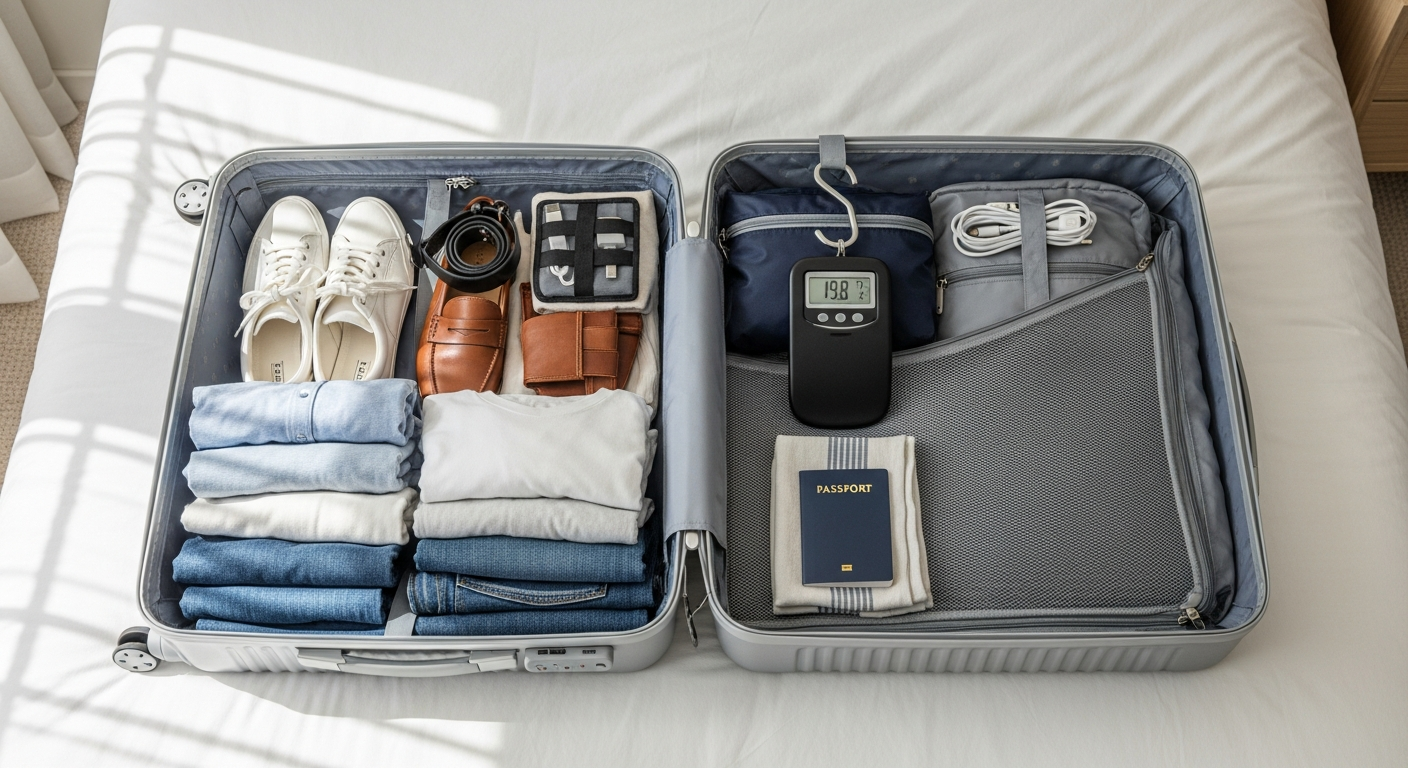
Add up the typical weight of what you packed plus the empty suitcase. Tedious but surprisingly close.
| Item | Weight (oz / lbs) | Weight (g / kg) |
|---|---|---|
| Empty checked suitcase | 5.5-9 lbs | 2.5-4 kg |
| Pair of jeans | 1.5-2 lbs | 700g-1 kg |
| T-shirt | 5-7 oz | 150-200g |
| Pair of sneakers | 1.5-2 lbs | 700-900g |
| Hardcover book | 14 oz - 1.5 lbs | 400-700g |
| Toiletry bag (full) | 2-4 lbs | 1-2 kg |
| Laptop + charger | 3.5-5.5 lbs | 1.6-2.5 kg |
| Winter jacket | 2-3 lbs | 900g-1.4 kg |
Reference Object Comparison
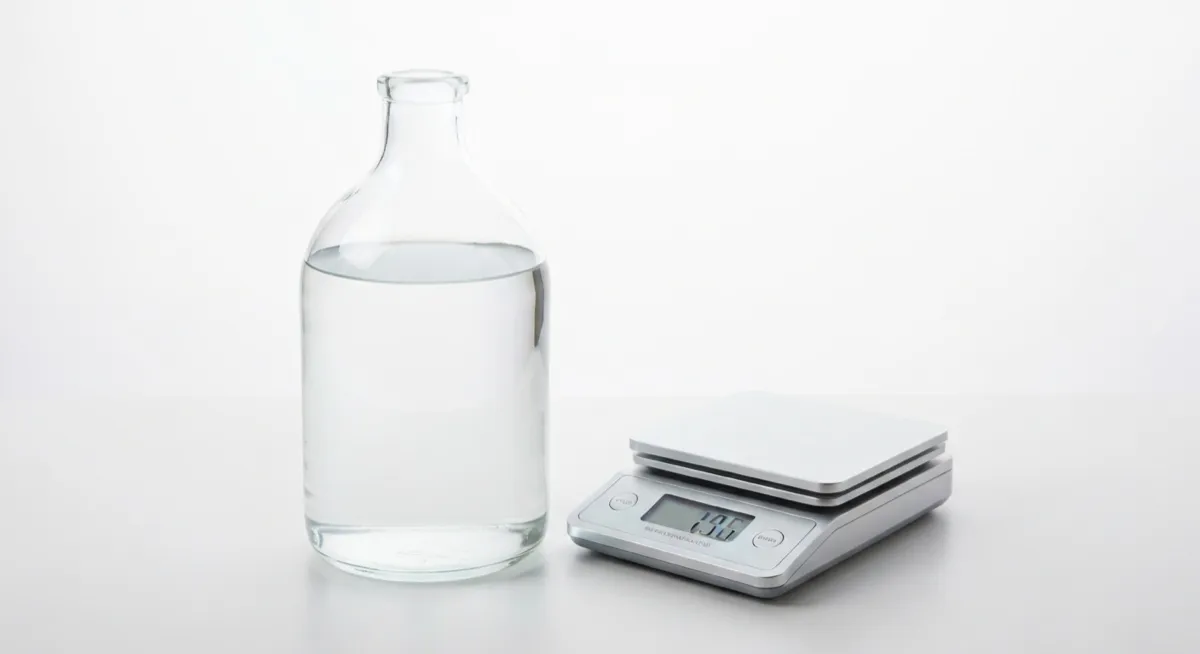
Hold your bag in one hand and a known weight in the other. A gallon of water is 8.34 lbs (3.78 kg). A 24-pack of bottled water is about 26 lbs (12 kg). A standard cat litter jug is 20 lbs (9 kg). Two cat litter jugs = approximately the 50 lb limit.
Hotel and Airport Backup
Most hotels near airports have a luggage scale at the front desk. Some airports have self-service scales before check-in. If you are over at the counter, wear your heaviest jacket and boots, move heavy items to your personal item, and stuff a plastic bag with the rest.
Frequently Asked Questions
How can I weigh my suitcase at home without a luggage scale?+
Step on a bathroom scale and note your weight. Then step on it holding the suitcase. The difference is your luggage weight, accurate within 1-2 lbs.
How much does the average suitcase weigh empty?+
A standard checked suitcase weighs 5.5-9 lbs (2.5-4 kg) empty. Hard-shell luggage is typically heavier than soft-sided. Carry-ons are 4-7 lbs (1.8-3.2 kg) empty.
What is the standard checked bag weight limit?+
Most US airlines allow 50 lbs (23 kg) for economy checked bags. International airlines often allow 70 lbs (32 kg) in business class. Going over costs $50-200 per leg.
How heavy can my carry-on be?+
Major US airlines (American, Delta, United) do not enforce a strict carry-on weight, but international and budget airlines typically cap it at 15-22 lbs (7-10 kg).
Can my phone weigh my luggage?+
Phones cannot weigh objects directly, but AI tools like Scale to Grams estimate weight from a photo within 10-15%. Use the bathroom scale subtraction trick for tighter accuracy.
How much is the overweight luggage fee on US airlines?+
For 51-70 lbs, fees are typically $100-200. For 71-100 lbs, $200-450. Some airlines refuse bags over 100 lbs entirely. Always check your specific airline.
Try These Tools
Put what you learned into practice with our free AI tools: