Scale to Grams
Airline Baggage Weight Limits 2026: Every Major Airline Compared
Quick Answer
US domestic checked bags are 50 lbs (23 kg). Going over costs $100 (51-70 lbs) or $200 (71-100 lbs) per leg. Most US airlines do not enforce carry-on weight, but international carriers limit to 15-22 lbs (7-10 kg) and now actively check at gates.
Check Your Bag WeightUS checked bag limit
50 lbs
23 kg, all major US airlines
Overweight fee 51-70 lbs
$100
per bag, per leg
International carry-on limit
15-22 lbs
7-10 kg, enforced at gate
Checked Bag Limits by Airline (2026)
Economy class limits unless noted. Business and first class typically allow 70 lbs (32 kg).
| Airline | Max weight | Notes |
|---|---|---|
| American Airlines | 50 lbs (23 kg) | $30-40 first bag |
| Delta | 50 lbs (23 kg) | $30-40 first bag |
| United | 50 lbs (23 kg) | $35-40 first bag |
| Southwest | 50 lbs (23 kg) | 2 bags FREE |
| JetBlue | 50 lbs (23 kg) | $35 first bag |
| Alaska Airlines | 50 lbs (23 kg) | $30 first bag |
| Spirit | 40 lbs (18 kg) | $45+ each, lower limit |
| Frontier | 50 lbs (23 kg) | $45+ each |
| Ryanair (Europe) | 44 lbs (20 kg) | $15-50 per bag |
| EasyJet (Europe) | 50 lbs (23 kg) | Pay per kilo over |
| Emirates | 50-70 lbs | Varies by route |
| Singapore Airlines | 66 lbs (30 kg) | Generous economy |
Carry-On Weight Limits
US domestic airlines (American, Delta, United, Southwest, JetBlue, Alaska) officially do not enforce carry-on weight, but they spot-check at the gate during peak travel. International and budget carriers DO enforce.
| Airline | Carry-on limit |
|---|---|
| Ryanair | 22 lbs (10 kg) |
| EasyJet | 33 lbs (15 kg) |
| AirAsia | 15 lbs (7 kg) |
| Emirates / Etihad / Qatar | 15-17 lbs (7-8 kg) |
| British Airways | 51 lbs (23 kg) - generous |
| Lufthansa | 17 lbs (8 kg) |
| Air Canada | 22 lbs (10 kg) |
| ANA / JAL | 22 lbs (10 kg) |
Overweight Bag Fees
On most US carriers: 51-70 lbs = +$100. 71-100 lbs = +$200. Over 100 lbs = often refused. Fees apply per bag, per leg, ON TOP of standard checked bag fees. A 55 lb bag on a round trip = $200 in overweight fees alone, plus the $30-40 standard fee.
How to Weigh Luggage Before Flying
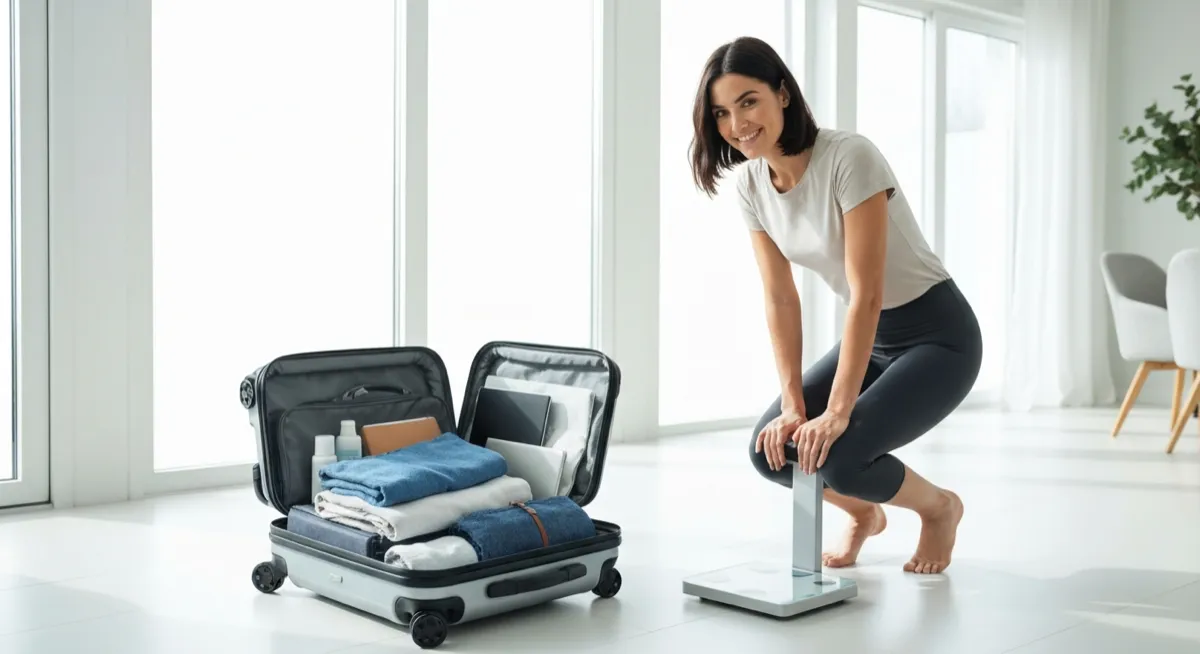
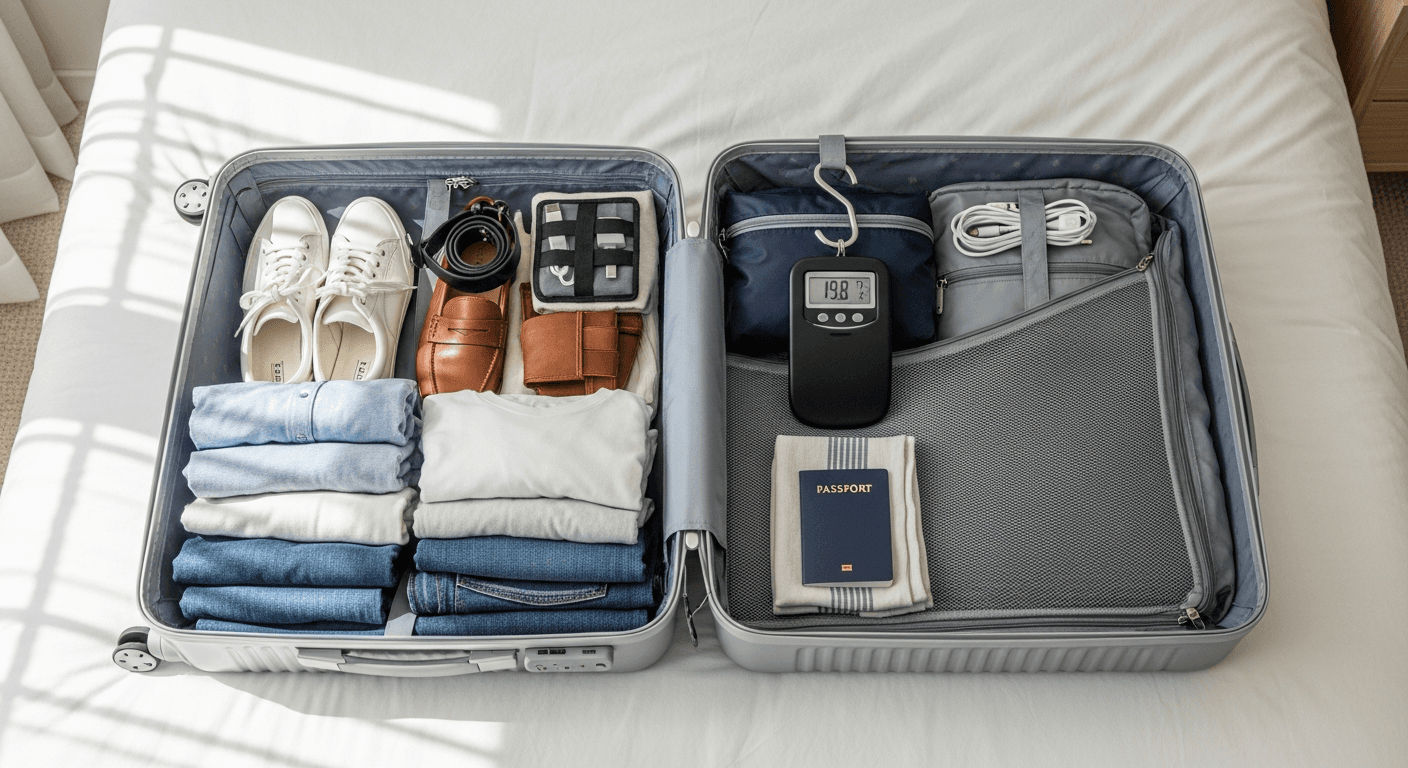
Best: portable luggage scale ($10-15) hooked to the handle. Cheapest: bathroom scale subtraction trick (weigh self, weigh self holding bag, subtract). Quickest at hotels: AI photo weight tool. Always weigh the night before so you have time to repack.
Pack Smart to Stay Under
Wear your heaviest items on the plane (saves 5-8 lbs). Roll clothes, do not fold. Limit shoes to 2 pairs (heaviest packed item). Buy toiletries at destination (a shampoo bottle is ~1 lb). Distribute weight between checked bag and carry-on. Aim 5 lbs under the limit for return-trip souvenirs.
If Your Bag Is Overweight at Check-In
Do not panic. Move heavy items to your personal item or wear them. If traveling with someone, redistribute. Repack stations are near the counters at most major US airports. Last resort: mail items home from the airport post office (cheaper than the fee).
Frequently Asked Questions
What is the standard airline baggage weight limit?+
Most US airlines (American, Delta, United, Southwest, JetBlue, Alaska) cap checked bags at 50 lbs (23 kg) for economy. Business and first class allow 70 lbs (32 kg). Spirit allows only 40 lbs without an upgrade.
How much is the overweight baggage fee?+
Most US carriers charge $100 for bags 51-70 lbs and $200 for 71-100 lbs, per bag and per leg. Bags over 100 lbs are typically refused entirely.
Is there a weight limit for carry-on bags?+
Most US airlines do not enforce carry-on weight, but spot-check at the gate. International airlines do enforce, typically at 15-22 lbs (7-10 kg). Ryanair is 22 lbs, AirAsia is 15 lbs, Emirates is 15-17 lbs.
How can I weigh my luggage at home?+
A portable luggage scale ($10-15) is most accurate. Or use the bathroom scale trick: weigh yourself, then weigh yourself holding the bag, and subtract. Both methods are accurate within 1-2 lbs.
What happens if my checked bag is overweight at the airport?+
You will be asked to either pay the overweight fee, redistribute items to other bags, or remove items at the counter. Most major US airports have repack stations near check-in.
Are weight limits the same for international flights?+
Most are also 50 lbs (23 kg) for economy, though some Asian and Middle Eastern carriers allow 66-70 lbs (30-32 kg). European budget carriers like Ryanair limit to 44 lbs (20 kg) and charge per bag.
Try These Tools
Put what you learned into practice with our free AI tools: