Scale to Grams
How to Measure a Package for Shipping: Dimensions & Weight
Quick Answer
Measure the outside of the box at its widest point and round up to the next whole inch. Carriers charge whichever is higher: actual weight or dimensional weight (L x W x H / 139 for UPS and FedEx).
Try the Package Measure ToolUPS / FedEx DIM factor
139
L x W x H / 139 = lbs
USPS Priority DIM factor
166
L x W x H / 166 = lbs
Empty box weight
0.5-2 lbs
0.2-0.9 kg, varies by size
Dimensional Weight by Carrier
Every US carrier charges by whichever is higher: actual weight or dimensional weight (DIM). For domestic shipments use these formulas with inches in, lbs out.
| Carrier | Service | DIM divisor | Notes |
|---|---|---|---|
| UPS | Ground / Air | 139 | Applies to all packages |
| FedEx | Ground / Express | 139 | Same as UPS |
| USPS | Priority Mail | 166 | Only for boxes over 1 cu ft |
| USPS | Priority Express | 166 | Same threshold |
| DHL international | Express | 139 | Or 5000 metric |
How to Measure a Box
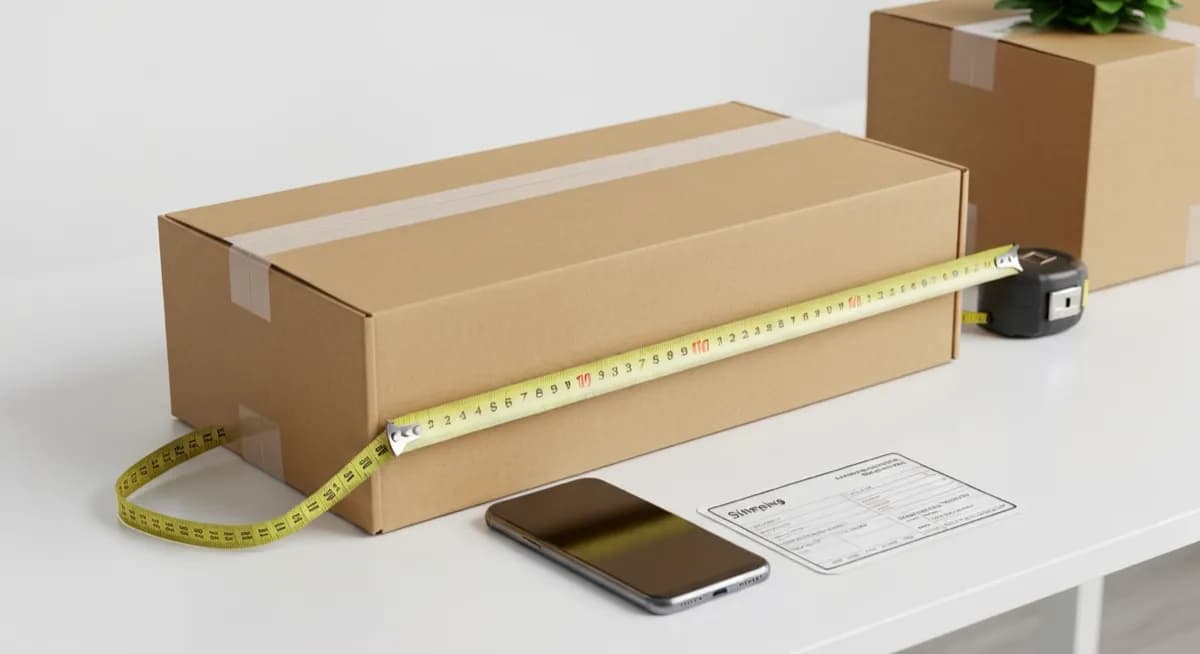
Measure the outside in three dimensions: length (longest), width (second longest), height (shortest). Measure at the widest point including any bulges. Always round up to the next whole inch. A box at 12.3 x 8.7 x 5.1 inches gets entered as 13 x 9 x 6.
Worked DIM Example
A 20 x 15 x 10 inch box: 20 x 15 x 10 = 3,000 / 139 = 21.6 lbs DIM. If the actual weight is only 5 lbs, you pay for 22 lbs. This is why oversized boxes filled with peanuts cost a fortune to ship.
Measuring with AI Photo Tools
No tape? Place the box next to a reference (credit card 3.37 x 2.125 in, standard letter paper 11 x 8.5 in) and snap one photo from above and one from the side. AI dimension tools land within half an inch on standard box sizes, fine for cost estimates.
Weighing Your Package
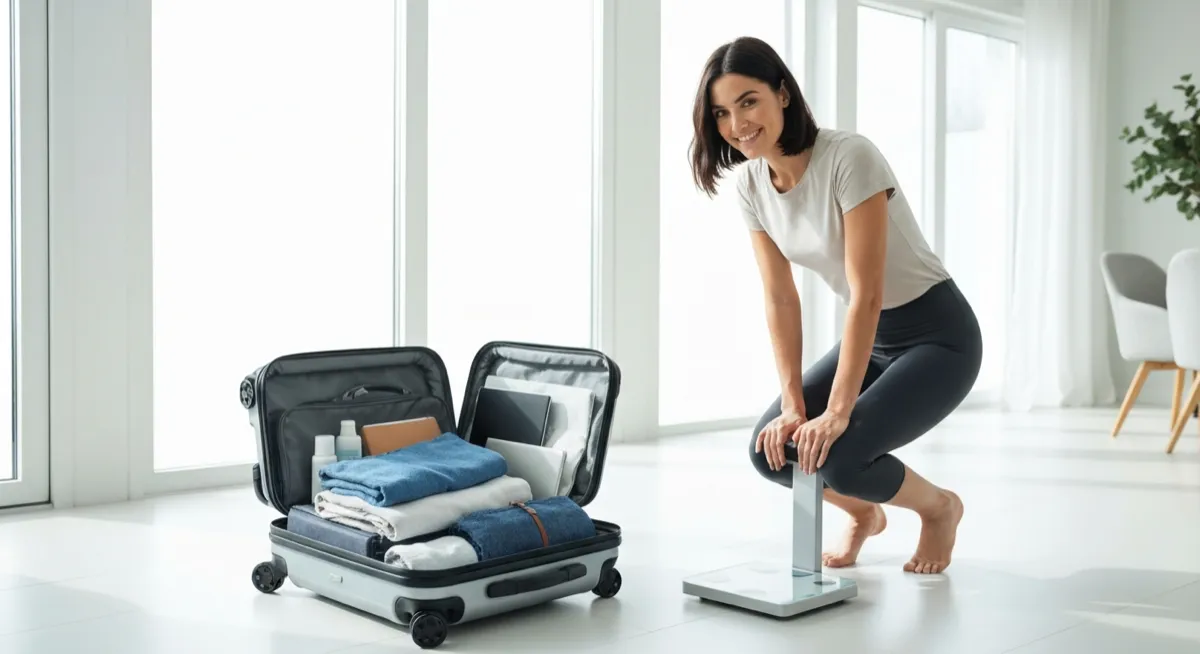
Use a postal scale or kitchen scale for small parcels. For bigger boxes, weigh yourself then weigh yourself holding the box. Include all packing materials in your weight: tape, bubble wrap, label, and the box itself (0.5-2 lbs depending on size).
Tips to Cut Shipping Costs
Right-size the box. Every empty inch adds to your DIM bill. For non-fragile items, poly mailers beat boxes. USPS Flat Rate boxes ignore DIM and weight up to 70 lbs, ideal for heavy compact items. Always compare carriers per shipment.
Frequently Asked Questions
How do I measure a box for shipping?+
Measure the outside of the box: length (longest side), width (second longest), height (shortest). Round each up to the next whole inch and enter all three when buying postage.
What is dimensional weight?+
Dimensional (DIM) weight is L x W x H divided by a carrier-specific divisor. UPS and FedEx use 139, USPS Priority uses 166. You pay for whichever is higher: actual weight or DIM weight.
How do I calculate shipping weight without a scale?+
Weigh yourself on a bathroom scale, then weigh yourself holding the box. Subtract for the package weight, accurate within 1 lb. For small packages, use a kitchen scale.
Does USPS use dimensional weight?+
Yes, but only for Priority Mail and Priority Express packages over 1 cubic foot (1,728 cubic inches). Smaller packages are billed by actual weight only.
How much does an empty shipping box weigh?+
A small corrugated box (10 x 8 x 6 in) weighs about 0.5 lbs (225g). A large box (20 x 16 x 12 in) weighs 1.5-2 lbs (700-900g). Heavy-duty double-wall boxes weigh 30-50% more.
How can I avoid the dimensional weight charge?+
Use the smallest box that fits the item, choose USPS Flat Rate for heavy compact items, and switch to poly mailers for non-fragile soft goods. Each saves 30-60% on dense packages.
Try These Tools
Put what you learned into practice with our free AI tools: