Scale to Grams
How Much Does a Loaf of Bread Weigh? Every Type Compared
Quick Answer
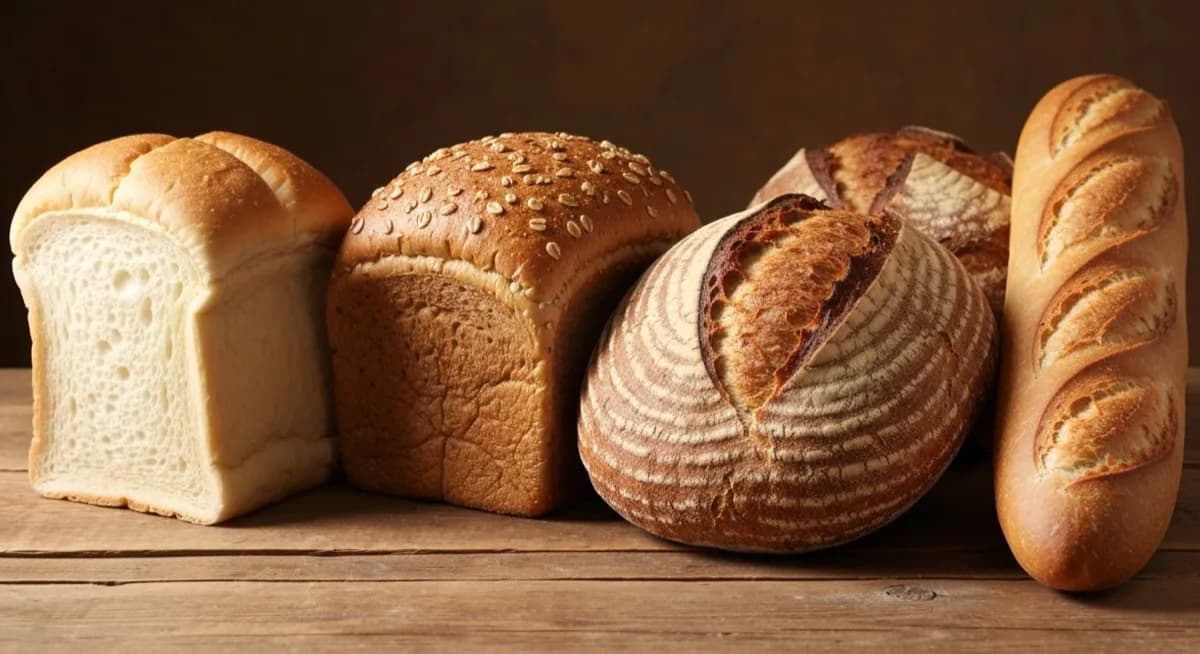
A standard US sliced white bread loaf weighs about 20 oz (567g) and contains 20-22 slices at ~25g each (about 70 calories per slice). Sourdough boules and artisan loaves weigh more (1.5-2 lbs / 680-900g).
Weigh Food From a PhotoStandard sliced loaf
20 oz
567g, 20-22 slices
Slice of white bread
~1 oz
~25g, 70 cal
Sourdough boule
1.5-2 lbs
680-900g
Bread Weight by Type
US standard pre-sliced loaves are 20 oz (567g). Artisan and European loaves vary widely.
| Type | Whole loaf | Per slice | Cal per slice |
|---|---|---|---|
| White sandwich (sliced) | 20 oz / 567g | ~1 oz / 25-28g | 67-75 cal |
| Whole wheat (sliced) | 20 oz / 567g | ~1 oz / 28-32g | 69-80 cal |
| Texas toast | 24 oz / 680g | 1.4-1.6 oz / 40-45g | 100-120 cal |
| French baguette | 9-12 oz / 250-340g | 0.9 oz / 25g | ~68 cal |
| Ciabatta | 12-16 oz / 350-450g | 1.4-2 oz / 40-55g | 110-140 cal |
| Sourdough boule | 1.5-2 lbs / 680-900g | 1.4-2 oz / 40-55g | 100-140 cal |
| Pumpernickel / rye | 1-1.5 lbs / 450-680g | 1.1-1.4 oz / 32-40g | 80-100 cal |
| Brioche / challah | 14-18 oz / 400-500g | 1.4 oz / 40g | 120-140 cal |
| Hamburger bun (each) | 1.4-1.8 oz / 40-50g | - | 110-140 cal |
| Dinner roll (each) | 1-1.2 oz / 28-35g | - | 80-100 cal |
| Bagel | 3.5-4.2 oz / 100-120g | - | 270-350 cal |
Homemade Bread Weight
A standard 3-cup flour recipe makes a 21-25 oz (600-700g) loaf. Bread loses 10-15% weight during baking from water evaporation. A 700g dough becomes about 600-630g baked. Wetter doughs (ciabatta, high-hydration sourdough) shrink up to 20%.
Bread Math for Recipes
1 lb (454g) = 16-18 standard slices = ~80% of a standard loaf. French toast or bread pudding: 12-16 slices (12-16 oz / 350-450g). Breadcrumbs: 1 slice yields ~1/3 cup fresh / 1/4 cup dry. A loaf makes ~6 cups fresh breadcrumbs.
Estimating Without a Scale
Packaged bread lists net weight on the bag. For artisan: one-handed loaf = 9-12 oz (baguette). Two-handed = 1-1.5 lbs (standard). Heavy round = 1.5-2 lbs (boule). Slice as thick as your finger = ~1 oz (25-30g). Slice as thick as your thumb = ~1.6 oz (40-50g).
Frequently Asked Questions
How much does a loaf of bread weigh?+
A standard US sliced white or whole wheat loaf weighs 20 oz (567g) and contains 20-22 slices. Artisan sourdough boules weigh 1.5-2 lbs (680-900g).
How much does a slice of bread weigh?+
A standard slice of white or whole wheat sandwich bread weighs about 1 oz (25-32g) and has 67-80 calories. Texas toast is 1.4-1.6 oz (40-45g) per slice.
How many slices in a loaf of bread?+
A standard 20 oz (567g) US sliced loaf contains 20-22 slices. Thick-sliced or Texas toast loaves contain 16-18 slices.
How many calories in a slice of bread?+
A slice of white bread is 67-75 calories. Whole wheat is 69-80 cal. Sourdough is 100-140 cal per slice. A bagel (one whole) is 270-350 cal, the equivalent of 4-5 slices.
How much does a baguette weigh?+
A French baguette weighs 9-12 oz (250-340g). It has about 800-1,000 calories total, with a thin 2 cm slice weighing about 25g and 68 calories.
How much bread for a turkey stuffing?+
For a 12-15 lb turkey, plan about 12-16 oz (350-450g) of bread, equal to 12-16 standard slices or about 80% of a standard sliced loaf.
Try These Tools
Put what you learned into practice with our free AI tools: