Scale to Grams
How Many Calories in Sushi? Every Roll & Piece Counted
Quick Answer
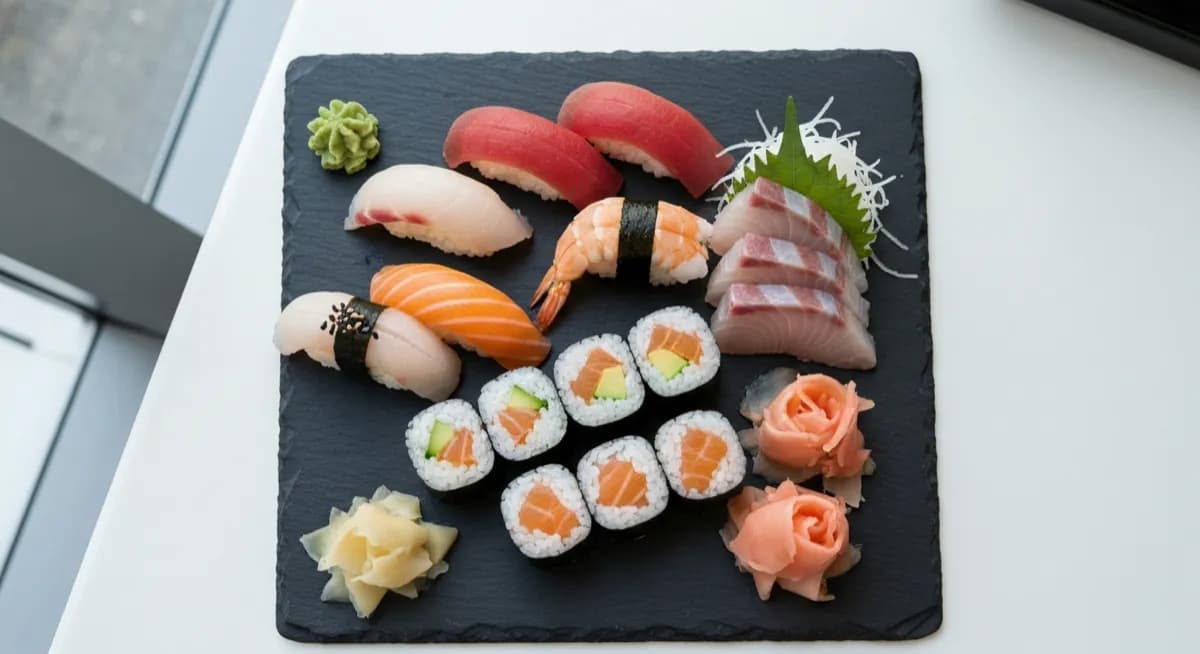
A piece of sashimi has 25-45 calories. Nigiri is 40-70 cal per piece. A California roll is ~255 cal, spicy tuna ~290, shrimp tempura 350-500, dragon roll 500-550. Specialty rolls with cream cheese, mayo, or tempura quickly hit 500-700 calories per roll.
Get Calorie Count From a PhotoSashimi (1 piece)
25-45 cal
salmon ~40, tuna ~31
California roll
~255 cal
whole 8-piece roll
Shrimp tempura roll
350-500 cal
deep-fried adds calories
Sushi Calorie Reference
Per-piece for nigiri and sashimi, per-roll for maki and specialty rolls.
| Item | Type | Calories |
|---|---|---|
| Salmon sashimi (1 piece) | Sashimi | ~40 cal |
| Tuna sashimi (1 piece) | Sashimi | ~31 cal |
| Yellowtail sashimi (1 piece) | Sashimi | ~41 cal |
| Salmon nigiri (1 piece) | Nigiri | ~50 cal |
| Tuna nigiri (1 piece) | Nigiri | ~45 cal |
| Eel nigiri (1 piece) | Nigiri | ~65 cal |
| Cucumber roll (whole) | Maki | ~135 cal |
| Avocado roll (whole) | Maki | ~140 cal |
| Tuna roll (whole) | Maki | ~185 cal |
| Salmon roll (whole) | Maki | ~190 cal |
| California roll (whole) | Maki | ~255 cal |
| Spicy tuna roll (whole) | Maki | ~290 cal |
| Philadelphia roll (whole) | Specialty | ~320 cal |
| Shrimp tempura roll (whole) | Specialty | 350-500 cal |
| Rainbow roll (whole) | Specialty | ~475 cal |
| Dragon roll (whole) | Specialty | 500-550 cal |
Sashimi vs Nigiri vs Maki
Sashimi (raw fish only) is the lowest calorie. Nigiri adds ~37 cal of rice per piece. Maki rolls (6-8 pieces) include nori plus more rice, totaling 130-300 cal per roll for basic options. Specialty rolls with tempura, cream cheese, or sauces double the calories.
Calorie Add-Ons to Watch
Tempura batter and frying = +100-200 cal per roll. Cream cheese = +50-70 cal. Spicy mayo or eel sauce drizzle = +40-80 cal each. Crunchy tempura flakes on top = +50-80 cal.
Sushi Sides
Miso soup 35-45 cal. Edamame ~120 cal per 1/2 cup. Seaweed salad 70-100 cal. Gyoza 40-55 cal each (6 pieces = 240-330 cal). Soy sauce 8 cal per tbsp but 900 mg sodium. Sake 130-200 cal per serving, Japanese beer 150-200 cal per bottle.
Smart Ordering
Start with sashimi or nigiri (more fish per calorie). Pick one basic maki roll, skip the tempura specials. Ask for sauces on the side. Edamame and miso fill you up cheaply. A sashimi appetizer + one basic roll + miso + edamame = 500-600 calories total.
Frequently Asked Questions
How many calories in a California roll?+
A standard 8-piece California roll has about 255 calories with 7g protein, 38g carbs, and 7g fat. Per piece is about 32 cal.
How many calories in a spicy tuna roll?+
A spicy tuna roll has about 290 calories per whole roll (8 pieces), with the spicy mayo accounting for 40-60 of those calories.
How many calories in salmon sashimi?+
One piece of salmon sashimi (about 1 oz / 28g) has about 40 calories with 5g protein and 2g fat. An order of 6 pieces is about 240 calories.
Is sushi healthy for weight loss?+
Sashimi and basic nigiri (salmon, tuna, shrimp) are excellent for weight loss because they are protein-dense and low calorie. Specialty rolls with tempura, mayo, and cream cheese can rival the calories of a fast food meal.
How many calories in a sushi roll?+
A typical 8-piece roll ranges from 135 cal (cucumber) to 290 cal (spicy tuna). Specialty rolls with tempura or cream cheese hit 350-550 cal per roll.
Does soy sauce add calories?+
Barely. Soy sauce has only 8 calories per tablespoon. The bigger concern is sodium (900 mg per tbsp) which can spike water retention.
Try These Tools
Put what you learned into practice with our free AI tools: