Scale to Grams
How Many Calories in a Burger? By Type, Size & Toppings
Quick Answer
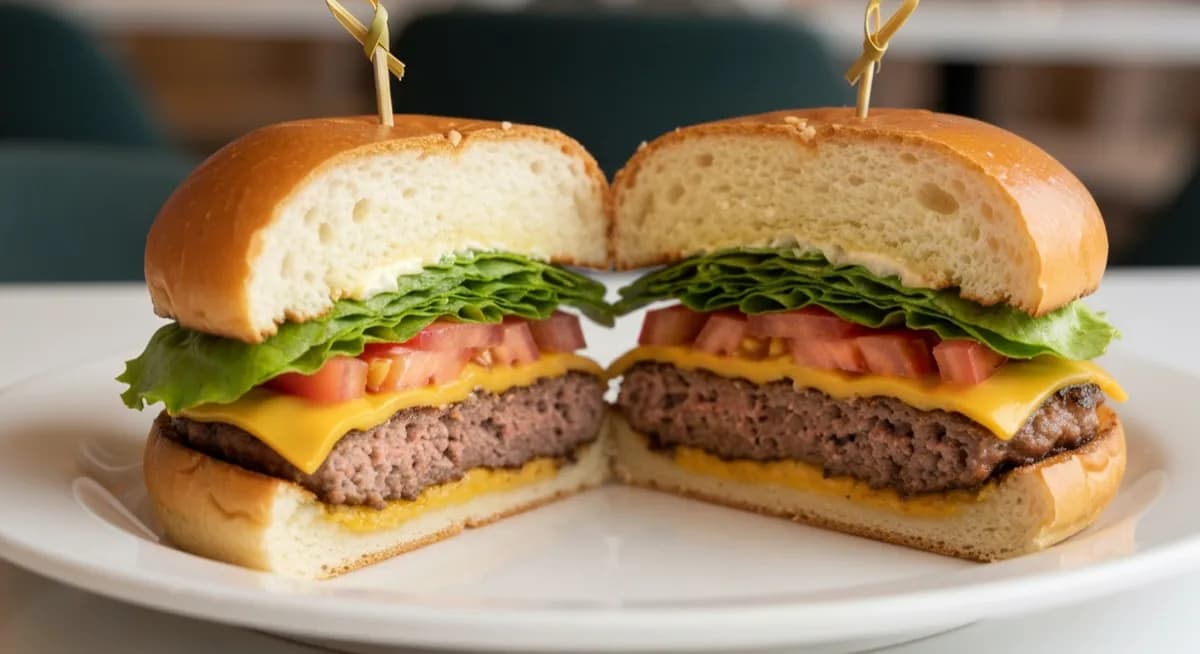
A basic cheeseburger has about 420 calories. A McDonald's Big Mac is 550. A Burger King Whopper with cheese is 740. A loaded double bacon cheeseburger can hit 1,000-1,200 calories.
Get Calorie Count From a PhotoBasic cheeseburger
~420 cal
bun + 1/4 lb patty + cheese
Big Mac
550 cal
McDonald's
Whopper with cheese
740 cal
Burger King
Fast Food Burger Calories
Calories below are for the standard menu item, no add-ons.
| Burger | Chain | Calories |
|---|---|---|
| Hamburger | McDonald's | 250 cal |
| Cheeseburger | McDonald's | 300 cal |
| Big Mac | McDonald's | 550 cal |
| Quarter Pounder with Cheese | McDonald's | 520 cal |
| Whopper (no cheese) | Burger King | 660 cal |
| Whopper with Cheese | Burger King | 740 cal |
| Dave's Single | Wendy's | 590 cal |
| Baconator | Wendy's | 950 cal |
| Little Hamburger | Five Guys | 480 cal |
| Hamburger | Five Guys | 700 cal |
| Double-Double | In-N-Out | 670 cal |
| ShackBurger | Shake Shack | 530 cal |
| SmokeShack | Shake Shack | 720 cal |
Burger Component Calories
Build from the parts and you can estimate any burger.
| Component | Calories | Notes |
|---|---|---|
| Hamburger bun | 120-150 cal | Brioche higher |
| Quarter-pound 80/20 patty | ~200 cal | Cooked |
| Half-pound 80/20 patty | ~400 cal | Cooked |
| Slice American cheese | 70 cal | Per slice |
| 2-3 strips bacon | 80-120 cal | Watch for premium |
| 1 tbsp mayo | 90-100 cal | The sneaky one |
| 1 tbsp ketchup | 15-20 cal | Almost free |
| Mustard | 3-5 cal | Cheapest sauce |
| Special / burger sauce | 100-150 cal | Mayo-based |
| Lettuce, tomato, onion | 10-15 cal | Together |
| Avocado / guac | 60-80 cal | Per serving |
| Fried egg | 90 cal | Per egg |
Lower-Calorie Burger Strategies
Single patty instead of double = -200 cal. Mustard instead of mayo = -85 cal. Skip cheese = -70 cal. Lettuce wrap instead of bun = -130 cal. Turkey patty instead of beef = -50 cal. Avoid the "special sauce" alone = -100 cal.
Estimating Without Nutrition Info
Patty: palm-sized = 1/4 lb (200 cal), thicker than palm = 1/3 to 1/2 lb (270-400 cal). Bun = 130 cal. Each cheese slice = 70 cal. Light sauce = 50-100 cal, heavy sauce = 100-300 cal. Or photograph the burger with our AI calorie tool.
Frequently Asked Questions
How many calories in a Big Mac?+
A McDonald's Big Mac has 550 calories, 30g of fat, 45g of carbs, and 25g of protein. Add medium fries (320 cal) and a medium Coke (210 cal) and the meal hits 1,080 calories.
How many calories in a Whopper?+
A Burger King Whopper has 660 calories without cheese or 740 with cheese. The Whopper Jr is 310 cal, and a Triple Whopper with cheese hits 1,150.
How many calories in a homemade cheeseburger?+
A homemade burger with a bun, quarter-pound 80/20 beef patty, slice of American cheese, and a tablespoon of ketchup is about 420 calories. Add bacon and mayo and it climbs to 600+.
How many calories in a turkey burger?+
A 4 oz (113g) raw 93/7 turkey patty is about 170 cal cooked, so a basic turkey cheeseburger is about 360 cal vs 420 for the same beef burger.
How many calories in a beef patty alone?+
A quarter-pound (113g raw) 80/20 beef patty is about 200 cal cooked. A leaner 90/10 patty is 155 cal. A half-pound 80/20 patty is 400 cal.
Are veggie burgers lower calorie than beef burgers?+
Not necessarily. An Impossible or Beyond patty has similar calories to a beef patty (220-240 cal per 4 oz). The macros differ (more carbs, less saturated fat), but calories are about the same.
Try These Tools
Put what you learned into practice with our free AI tools: