Scale to Grams
BMI vs Body Fat Percentage: Which Matters More?
Quick Answer
Body fat percentage is more accurate than BMI because it measures what actually matters: how much of your weight is fat. BMI is faster, free, and easier to track. The smart approach is to use BMI for quick monitoring and body fat % for the real picture.
Calculate Your Body FatBMI accuracy
~70%
in average adults
Body fat % accuracy
85-95%
depending on method
Time to measure
5 sec vs 5 min
BMI vs body fat
Side-by-Side Comparison
Both numbers describe your weight in a different way. Here is how they stack up:
| Factor | BMI | Body Fat % |
|---|---|---|
| What it measures | Weight relative to height | Fat as % of total weight |
| Inputs needed | Weight, height | Skinfolds, scan, or impedance |
| Time to measure | 5 seconds | 5-15 minutes |
| Cost | Free | $10 (caliper) to $150 (DEXA) |
| Accuracy for averages | Good (~70%) | Very good (85-95%) |
| Accuracy for athletes | Poor | Excellent |
| Sees muscle vs fat | No | Yes |
| Sees fat distribution | No | Partially (waist matters) |
| Easy to track over time | Yes | Less so |
| Used by doctors | Almost always | Sometimes |
When BMI Is Enough
For most sedentary or moderately active adults, BMI gives you 90% of what you need to know. If you are not training seriously and your BMI is in the healthy range (18.5-24.9), there is little reason to chase a more precise number. BMI is also fine for tracking trends: if your number is climbing, that signals real change.
When Body Fat % Is Essential
Body fat measurement matters more than BMI in five specific cases:
| Situation | Why body fat matters more |
|---|---|
| Strength training | Muscle gain skews BMI upward |
| Competitive sports | Lean mass distorts BMI in athletes |
| Cutting/bulking | Weight changes hide composition shifts |
| Older adults | Muscle loss can hide rising body fat |
| Body recomposition | BMI stays flat while you lose fat and gain muscle |
Healthy Body Fat Ranges
Body fat varies more by gender than BMI does. Women naturally carry more fat (essential reproductive function), so the healthy range is higher.
| Category | Men | Women |
|---|---|---|
| Essential fat | 2-5% | 10-13% |
| Athlete | 6-13% | 14-20% |
| Fitness | 14-17% | 21-24% |
| Average | 18-24% | 25-31% |
| Obese | 25%+ | 32%+ |
How They Are Calculated
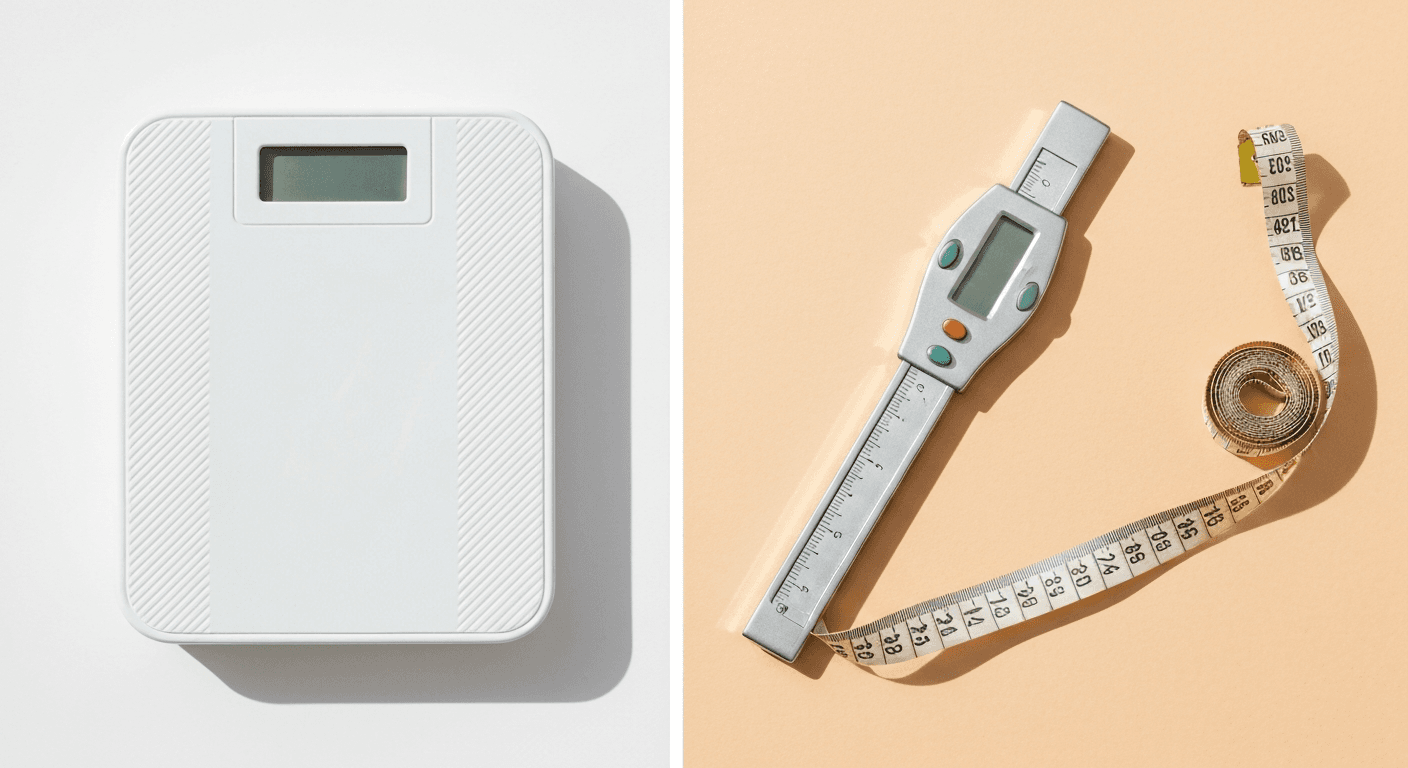
BMI is just math: weight ÷ height squared. Body fat % requires actually measuring something physical. Common methods:
| Method | Accuracy | Cost |
|---|---|---|
| BMI (formula) | ~70% population accuracy | Free |
| Skinfold calipers | ±3-4% | $10-30 |
| Smart scale (BIA) | ±5-8% | $30-150 |
| Navy formula (tape measure) | ±3-5% | Free |
| Bod Pod (air displacement) | ±2-3% | $50-100/session |
| DEXA scan | ±1-2% | $60-150/session |
| Hydrostatic weighing | ±1-2% | $50-100/session |
The Smart Approach: Use Both
Track BMI weekly because it takes 5 seconds. Get a body fat measurement once or twice a year (DEXA or calipers) for the truth. If your BMI changes but your body fat % does not, you are gaining or losing muscle, not fat. If both change in the same direction, you are losing or gaining fat. Together they tell a story neither one tells alone.
Frequently Asked Questions
Is body fat percentage more accurate than BMI?+
Yes. Body fat percentage measures what actually matters for health risk: how much of your weight is fat versus muscle. BMI cannot tell the difference. The trade-off is that body fat is harder and more expensive to measure.
Should I trust BMI or my body fat percentage?+
Trust body fat percentage if you have an accurate measurement (DEXA scan, calipers by a trained person). Trust BMI for tracking trends if you are average build and not training intensely.
Can I lower my body fat without changing my BMI?+
Yes, this is called body recomposition. By gaining muscle and losing fat at the same rate, your weight (and BMI) stays the same while your body fat % drops. This is what happens when sedentary people start strength training and eating well.
What is a good body fat percentage for a man?+
For health: 10-22%. For athletic performance: 6-13%. Below 6% is below the essential fat threshold and not sustainable. Above 25% is classified as obese for men.
What is a good body fat percentage for a woman?+
For health: 20-32%. For athletic performance: 14-20%. Women need more essential fat than men (10-13% minimum) for hormonal function. Above 32% is classified as obese for women.
How often should I measure body fat percentage?+
Once a month is plenty for most people. The number does not change quickly, and frequent measurements introduce noise. If you are tracking a major change (cutting or bulking), bi-weekly is reasonable.
Are smart scales that show body fat accurate?+
Smart scales using bioelectrical impedance are convenient but variable. They can be off by 5-8% based on hydration, body temperature, and time of day. They are best for tracking trends from the same scale, not for absolute numbers.
Try These Tools
Put what you learned into practice with our free AI tools: