Scale to Grams
How to Estimate Body Fat Percentage at Home: 6 Methods Compared
Quick Answer
Best home methods: US Navy tape method (within ±3-4% of DEXA, takes 1 minute), skinfold calipers ($15, most accurate for tracking), or AI photo analysis (fastest). Pick one method and stick with it. Trends matter more than absolute numbers.
Try the AI Digital ScaleNavy method accuracy
±3-4%
vs DEXA, free with tape
Healthy male range
10-20%
fitness 14-17, athletic 6-13
Healthy female range
18-28%
fitness 21-24, athletic 14-20
Body Fat Categories (Adults)
Use this as a baseline interpretation of your number.
| Category | Men | Women |
|---|---|---|
| Essential fat (minimum) | 2-5% | 10-13% |
| Athletic | 6-13% | 14-20% |
| Fitness | 14-17% | 21-24% |
| Average | 18-24% | 25-31% |
| Obese | 25%+ | 32%+ |
Method 1: US Navy Tape Method (Most Practical)
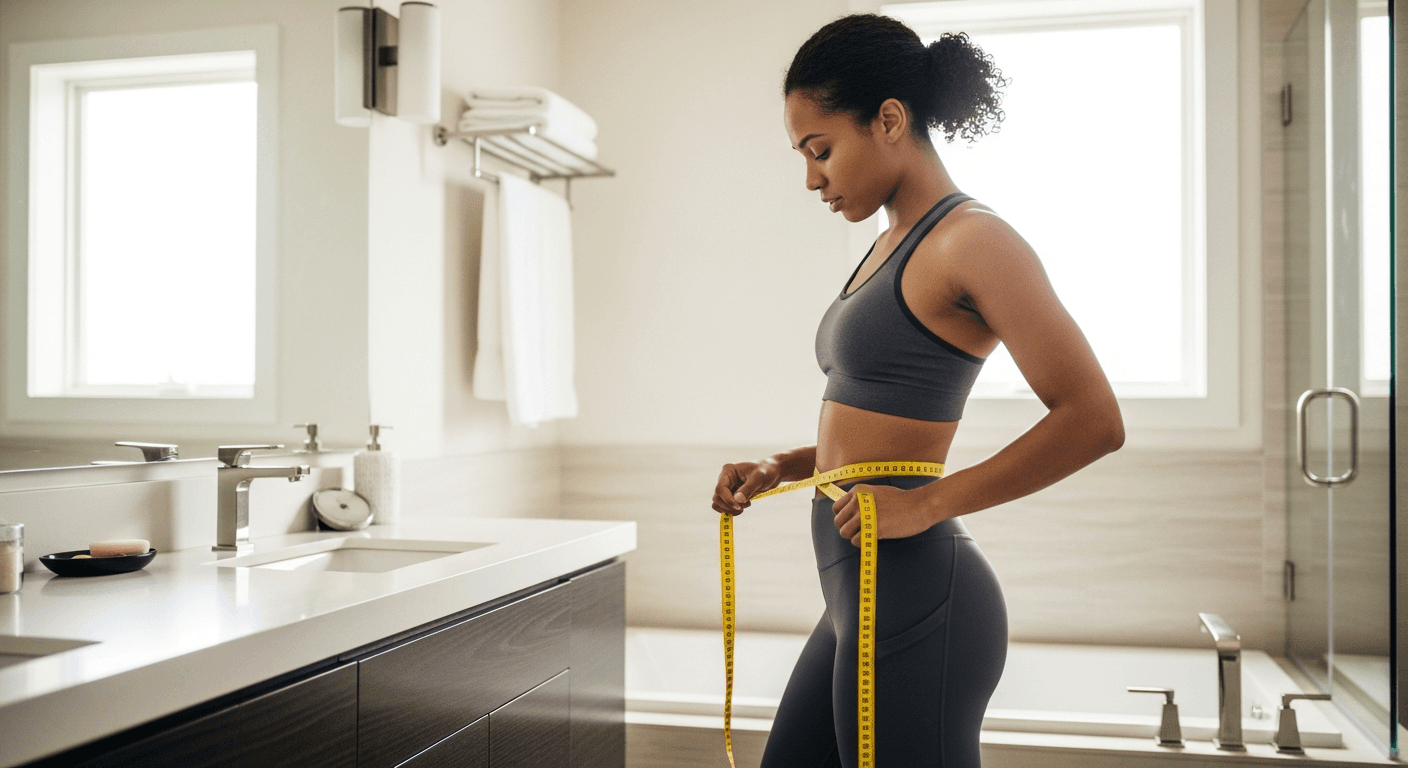
Within ±3-4% of DEXA. Men: measure waist at navel and neck. Women: add hip circumference at the widest point. Plug into the Navy formula. Measure first thing in morning before eating, tape level, snug but not compressing. Take twice and average.
Method 2: AI Photo Analysis (Fastest)
Photograph your body in form-fitting clothing or swimwear from front and side. AI estimates fat % from muscle definition, fat distribution, and proportions. Best for the 10-35% range. Works in seconds with zero equipment. Less accurate for people with unusual fat distribution.
Method 3: Skinfold Calipers ($10-20)
Pinch fat at standard sites (men: chest, abs, thigh; women: tricep, suprailiac, thigh). Calipers cost $10-20. Absolute number may be off ±3-5%, but tracking changes is highly reliable when the same person measures the same way each week.
Method 4: Bioelectrical Impedance (Smart Scales)
Smart scales (Withings, Renpho) cost $25-50 and run a tiny current through your body. Hydration swings results by 3-5%. Always measure at the same time of day, first thing in morning after the bathroom. Watch the trend, not the absolute number.
Method 5: Visual Comparison
Find a body fat % visual chart online showing real men and women at 5% increments. Compare yourself in consistent lighting. Most people place themselves within a 5% range. Take monthly progress photos in the same lighting, same pose, same time of day.
Method 6: BMI-Based Formula (Least Accurate)
Deurenberg formula: BF% = (1.2 x BMI) + (0.23 x age) - (10.8 x sex) - 5.4 (sex = 1 for male, 0 for female). Needs only height, weight, age. Bad for muscular or very thin people because BMI cannot tell muscle from fat. Use only as a starting point.
Which Method to Pick
One-time check: Navy method or AI photo. Ongoing tracking: pick ONE method (calipers or smart scale) and use it weekly at the same time. Trends matter more than absolute precision. A method showing you drop from 22% to 18% over 3 months is useful even if the real numbers are 20% to 16%.
Frequently Asked Questions
What is a healthy body fat percentage?+
For men, 14-17% (fitness) to 18-24% (average). For women, 21-24% (fitness) to 25-31% (average). Athletes are typically 6-13% (men) and 14-20% (women).
How accurate is the US Navy body fat method?+
The Navy method is accurate within 3-4% of DEXA scans for most people. It is the most accurate free at-home method, requiring only a tape measure.
How can I measure body fat at home?+
Best free options: US Navy tape method (waist, neck, hip for women) or visual comparison against body fat charts. Cheap tools: skinfold calipers ($10-20) or smart scale ($25-50). All are within 5% of DEXA when used consistently.
Are smart scales accurate for body fat?+
Smart scales (Withings, Renpho) are accurate within 5-10% of DEXA on average, but hydration swings the reading 3-5%. Always weigh first thing in the morning after the bathroom for consistent trends.
How can I lower my body fat percentage?+
Sustained calorie deficit (300-500 cal/day below TDEE) plus strength training (2-4 sessions/week) and high protein (0.8-1g per lb bodyweight). Expect 0.5-1% body fat drop per month at a moderate pace.
Is BMI the same as body fat percentage?+
No. BMI is just weight divided by height squared. It cannot distinguish muscle from fat, so muscular athletes often have a "high" BMI despite low body fat. Body fat % is the better metric for body composition.
Try These Tools
Put what you learned into practice with our free AI tools: