Scale to Grams
How Many Calories in Chicken? Every Cut & Cooking Method
Quick Answer
Skinless cooked chicken breast is 165 cal per 100g (47 cal/oz). With skin, +20%. Pan-fried adds 30-50 cal per 100g. Deep-fried (KFC-style) jumps to 250-280 cal per 100g. A 6 oz grilled breast = 280 cal, 53g protein.
Try the AI Calorie CounterSkinless breast (cooked)
165 cal
per 100g, 31g protein
Skinless thigh (cooked)
209 cal
per 100g, 26g protein
Deep-fried (battered)
250-280 cal
per 100g, KFC style
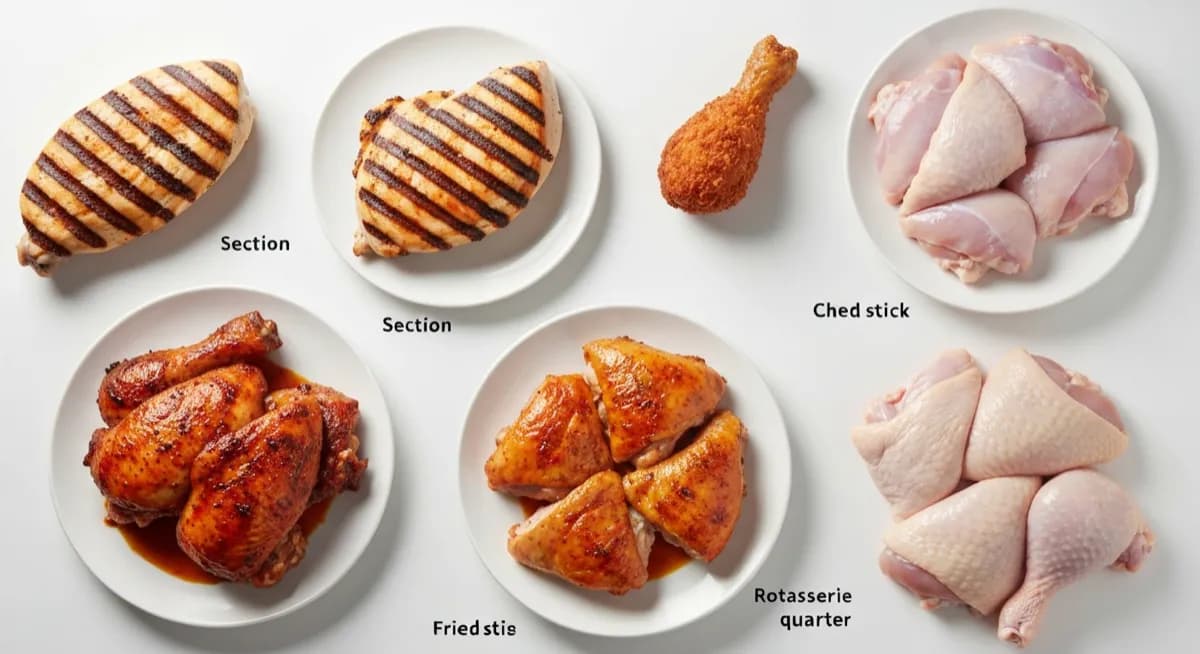
Calories by Chicken Cut
Per 100g (3.5 oz) of cooked chicken with skin removed unless noted.
| Cut | Per 100g (3.5 oz) | Per 6 oz portion | Protein per 100g |
|---|---|---|---|
| Breast | 165 cal | ~280 cal | 31g |
| Breast with skin | 197 cal | ~335 cal | 30g |
| Thigh | 209 cal | ~355 cal | 26g |
| Thigh with skin | 229 cal | ~390 cal | 25g |
| Drumstick | 172 cal | ~292 cal | 28g |
| Drumstick with skin | 216 cal | ~367 cal | 27g |
| Wing (skinless) | 203 cal | ~345 cal | 30g |
| Whole chicken (average) | 190 cal | ~323 cal | 29g |
| Ground chicken (93/7) | 180 cal | ~306 cal | 23g |
Calories by Cooking Method
Method matters more than most people realize.
| Method | Added cal per 100g | Notes |
|---|---|---|
| Grilled / baked plain | +0 cal | Best for tracking |
| Grilled with 1 tbsp oil | +30 cal | 120 cal across portion |
| Pan-fried in oil | +30-50 cal | Varies with oil amount |
| Rotisserie (with skin) | baseline | Self-bastes in own fat |
| Breaded and pan-fried | +80-120 cal | Breadcrumbs absorb oil |
| Deep-fried (KFC-style) | +85-115 cal | Total 250-280 cal/100g |
Fast Food Chicken Calories
KFC Original Recipe drumstick: 130 cal. KFC Extra Crispy breast: 530 cal. Chick-fil-A original sandwich: 440 cal. McDonald's McChicken: 400 cal. Chick-fil-A grilled 8-count nuggets: 140 cal. Subway rotisserie chicken sub 6-in: 350 cal. Restaurant grilled chicken entree: 300-500 cal for the chicken alone, before sides and sauce.
Meal Prep Math
Standard meal-prep portion: 5-6 oz (140-170g) cooked breast = 230-280 cal and 43-53g protein. Five lunches per week = 750-850g cooked, which starts as 1-1.1 kg raw (chicken loses ~25% weight cooking). Bake at 400°F for 20-25 min. Lasts 3-4 days refrigerated.
Frequently Asked Questions
How many calories in a chicken breast?+
A 6 oz (170g) cooked skinless chicken breast has about 280 calories and 53g of protein. With skin, it climbs to about 335 calories.
How many calories in a chicken thigh?+
A 4 oz (113g) cooked skinless chicken thigh has about 235 calories and 29g protein. With skin, it climbs to 260 calories.
How many calories in fried chicken?+
Deep-fried battered chicken (KFC-style) has 250-280 calories per 100g. A KFC Extra Crispy breast is 530 calories. A Chick-fil-A original sandwich is 440 calories.
How many calories in rotisserie chicken?+
Rotisserie chicken with skin has about 190-210 calories per 100g. A standard 6 oz portion is 320-355 calories. Removing the skin drops it to 165-180 cal per 100g.
Is chicken thigh or breast better for weight loss?+
Breast has fewer calories (165 vs 209 per 100g) and more protein per calorie, making it better for fat loss. Thigh is more flavorful and forgiving to cook. Pick what you will actually eat consistently.
How much chicken per day for muscle building?+
For someone targeting 1g of protein per pound of bodyweight, one 6 oz cooked breast (53g protein) covers a third of the daily target for a 160-lb person. Two breasts per day plus other protein sources hits the goal.
Try These Tools
Put what you learned into practice with our free AI tools: